

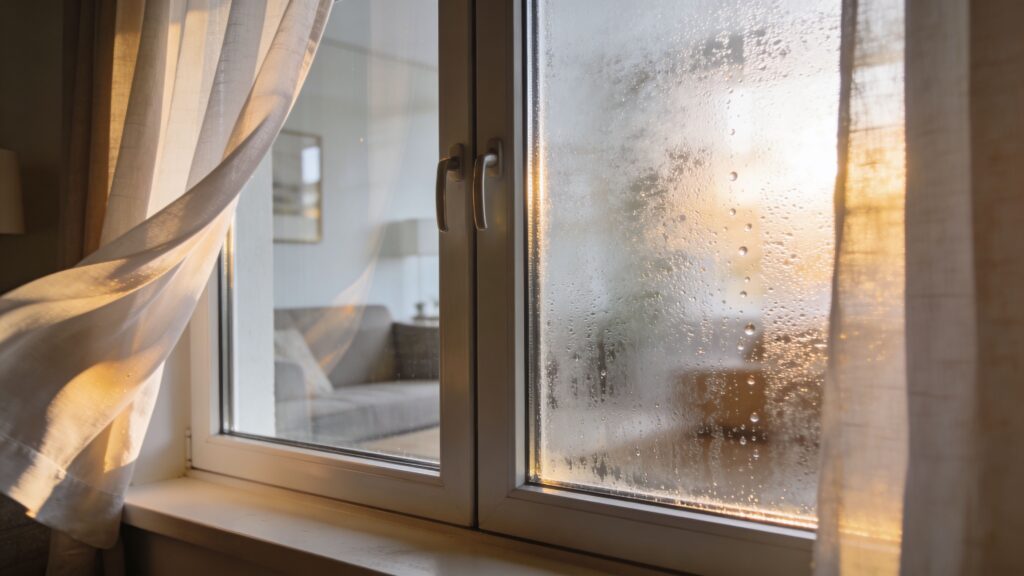
You’re standing in front of a window that looks dirty, except it isn’t. You wipe the glass from the inside. Nothing changes. You clean the outside. The haze is still there. In Phoenix, that usually sends homeowners down the same path: Is this normal condensation, hard water, or a broken window seal?
That confusion makes sense. Double-pane windows can show a few different problems that look similar at first glance. Mineral staining sits on the surface. Normal condensation forms on one side and wipes away. A failed seal traps moisture between the panes, so the cloudiness stays put no matter how much elbow grease you use.
If you’re trying to figure out how to tell if window seal is broken, the good news is you can catch the main signs without special training. A few careful checks will usually tell you whether you’re dealing with surface moisture, frame leakage, or a true insulated glass problem. In Arizona homes, that distinction matters because long stretches of heat put more stress on sealed glass than many homeowners realize.
Indoor moisture also plays a role in what you see on the glass. If you’re trying to sort out normal condensation from a seal issue, it helps to understand the best humidity level for home so you can rule out simple indoor air conditions before assuming the window itself has failed.
Is That Fog on the Inside? An Introduction
Homeowners often notice the problem in ordinary moments. Morning light hits the bedroom window and a dull patch shows up in one corner. In the afternoon, the patio door looks milky. By evening, the haze is still there, even after cleaning. That persistent, trapped look is what makes homeowners start asking whether the seal is gone.
What a broken seal actually means
A double-pane window isn’t just two pieces of glass. The panes are sealed around the perimeter to create an insulated space. When that perimeter seal fails, outside air and moisture can work their way into the gap.
Once that happens, the problem usually stops being a cleaning issue and starts being a glass unit issue. You can scrub the surface all day and the fog won’t clear if the moisture is inside the sealed space.
A quick rule at home: if the cloudiness won’t wipe off from either side, treat it like a seal failure until proven otherwise.
Why Phoenix windows fail sooner
Arizona sun is hard on materials. Windows expand in the heat, cool off at night, and repeat that cycle over and over. That movement stresses sealants, spacers, and frame components more aggressively than in milder climates.
For homeowners here, the first goal isn’t guessing. It’s narrowing the problem down with a few reliable checks. Look for trapped moisture, compare one window to another, and pay attention to drafts, distortion, and temperature differences around the glass.
That practical approach keeps you from confusing a broken seal with dirt, hard water, or ordinary indoor condensation.
The Telltale Signs of a Failed Window Seal
The clearest sign is still the one homeowners notice first: fog or condensation between the panes. According to this window seal repair guide, condensation between double-pane panes is the primary indicator in up to 70-80% of reported seal failures. The same source notes that modern insulated glass is typically filled with argon gas, and when the seal fails, moisture enters the space. In Phoenix, with over 110 days annually exceeding 100°F, seals can degrade 2-3 times faster than in milder climates, contributing to a 15-25% loss in R-value insulation within 10-15 years.

The fog that won’t wipe away
This is the symptom that matters most. Surface condensation can form on the room side or the exterior side of the glass, especially during big temperature swings. But surface moisture wipes off. Seal failure does not.
Look for these patterns:
- Persistent haze inside the unit that stays visible after cleaning both sides.
- Cloudy corners or edges that seem to spread slowly over time.
- Droplets or a milky film trapped between the panes.
- Changing visibility by time of day, where the window looks clearer in one light and foggier in another.
If you also have mineral spotting on the outer surface, that can make diagnosis harder. In that case, cleaning the exterior first helps separate a surface problem from an internal one. If you’re dealing with etching or buildup too, this guide on removing water stains from windows can help you rule out surface damage before blaming the seal.
Distortion, waviness, and an odd view through the glass
A failed unit doesn’t always look foggy first. Sometimes the first clue is visual distortion. Straight lines outside may look slightly bent. Reflections can seem uneven. Through some windows, objects look subtly wavy, almost like heat shimmer.
That often points to a pressure change inside the insulated unit. Once the sealed space is compromised, the glass can behave differently than an intact unit.
If one window looks “off” but the one beside it looks normal, compare the reflections. Distortion shows up faster in reflected light than in direct view.
A simple way to check is to stand at an angle and look at fence lines, roof edges, or window grids through the glass. If one panel looks warped while nearby panes look crisp, that’s a red flag.
Here’s a visual walkthrough that helps homeowners recognize those clues in real conditions:
Drafts and more outside noise
Not every failed seal creates a dramatic draft at the frame, but many homeowners notice the room feels less stable. A chair near the window gets hotter in the afternoon. The glass feels unusually warm. Street noise seems sharper than it used to.
Those comfort changes matter because they often show up before people realize the insulated glass has lost performance. In Phoenix, west-facing windows usually reveal this first because they take the harshest afternoon load.
Watch for a pattern, not a single symptom. One little cloudy patch might be enough. But fog plus distortion, or haze plus comfort loss, usually points in the same direction.
Simple DIY Checks to Confirm Your Suspicions
Once the signs are there, a few home checks can help confirm them. None of these replace a full inspection, but they’re useful if you want a better answer than “this window looks weird.”

Use the ice cube test correctly
The most useful homeowner check is the ice cube test. According to this field-test explanation of the method, it shows 85-90% accuracy for detecting seal breaches when done properly. The method is simple: place ice on the pane for 45-60 seconds, then check whether the resulting fog or moisture wipes away. If a fog ring appears to be trapped inside the glass and does not wipe away, that points to inter-pane moisture from a failed seal.
Do it like this:
- Choose the right time. Pick a moderate day and test in the shade if possible.
- Place one ice cube on the interior glass for about 45 to 60 seconds.
- Remove the cube and inspect immediately.
- Wipe the surface with a microfiber cloth.
- Interpret the result. If the moisture wipes away, it’s surface condensation. If the fogged effect appears trapped and stays put, the seal is likely compromised.
A lot of homeowners rush this test and do it in direct sun. That can skew what you see. Shade gives you a cleaner read.
Check for frame leaks and air movement
Not every comfort complaint means the insulated glass itself is bad. Sometimes the issue is air leakage around the frame or sash.
Try these checks:
- Damp-hand test. Lightly wet your hand and move it around the edges of the closed window. Moving air is easier to feel on damp skin.
- Tissue test. Hold a tissue near the frame and watch for subtle movement.
- Flashlight angle check. Shine light across the glass at an angle to spot haze, internal streaking, or corner moisture you miss in flat daylight.
If you want to compare what “normal” double-pane glass should look like after proper cleaning, this article on cleaning double-pane windows is helpful because it shows the difference between surface mess and sealed-unit issues.
Test more than one window. A suspect pane next to a healthy pane is easier to judge than a single window by itself.
What not to rely on
Homeowners sometimes use a knock test or just trust their gut based on appearance. Those can be clues, but they’re weak on their own. A dull sound might come from construction differences, not seal failure. And “it looks dirty” can mean hard water, screen shadow, or failed low-E coatings.
Use a combination of visible fog, a wipe test, and one temperature or draft check. That gives you a more reliable answer than any single trick.
Understanding the Damage What a Broken Seal Really Means
A broken seal is more than an appearance issue. The cloudy look is what gets your attention, but the bigger problem is what the window stops doing once the insulated space fails.
Lost insulation and a hotter room
Double-pane glass works because the sealed unit slows heat transfer. When that seal fails, the window no longer performs like it was designed to. In a Phoenix summer, that usually shows up as a room that heats up faster, uneven comfort near the glass, and an AC system that has to fight harder in the afternoon.
According to this overview of window seal failure indicators, glass distortion and draft infiltration are common in older dual-pane installations. The same source notes that drafts can increase energy use by 15-30%, and the loss of inert gas can reduce sound insulation by 25-40 dB.
That means the problem isn’t just that the window looks bad. It may also be costing you comfort every day the sun hits that wall.
More noise and a weaker barrier
A healthy insulated unit helps buffer outside sound. Once the gas fill is gone and the seal is compromised, many homeowners notice traffic, barking dogs, or neighborhood noise more clearly.
That change can be subtle at first. Then one day you realize the bedroom facing the street doesn’t feel as quiet as it used to. If the affected window also shows waviness or trapped moisture, those clues usually connect.

Moisture problems can spread
When moisture hangs around windows, homeowners should also pay attention to surrounding materials. The seal failure itself is one issue. The bigger concern is whether repeated moisture exposure has started affecting trim, drywall, or framing nearby.
If you see staining, bubbling paint, soft trim, or musty odors around the opening, it’s worth comparing what you’re seeing with these signs of water damage in walls. That helps separate a glass-seal issue from a larger moisture problem in the wall assembly.
Here are the practical consequences homeowners usually care about most:
- Comfort loss from hot spots near west- and south-facing windows.
- Reduced noise control that makes indoor spaces feel less settled.
- Ongoing visibility issues because the trapped haze cannot be cleaned away.
- Potential secondary damage if moisture is collecting around frames or adjacent finishes.
A failed seal rarely fixes itself. Once moisture gets into the unit, the usual direction is worse, not better.
Repair or Replace Weighing Your Options
Once you know the seal has failed, the question becomes what to do with it. Homeowners usually have three paths: live with it for a while, try defogging, or replace the insulated glass unit or the full window.
The right answer depends on the frame condition, the age of the window, how visible the damage is, and how long you plan to stay in the home.

Why diagnosis matters before spending money
A lot of people jump straight to the most expensive solution because they assume the whole window is bad. Sometimes that’s true. Often it isn’t.
According to this professional guide to spotting broken window seals, professional diagnosis of seal failure has 92% precision using a multi-symptom protocol that includes inter-pane condensation checks, an IR thermometer for thermal deviations, and visual review for optical distortion. That level of diagnosis helps homeowners choose a more cost-effective long-term fix, such as replacing the insulated glass unit instead of replacing the entire window.
That distinction matters. If the frame, hardware, and operation are still good, a full replacement can be overkill.
Comparing the main options
Some options address appearance. Others restore performance. Those are not the same thing.
| Window Seal Solution Comparison | Typical Cost (per window) | Longevity | Best For |
|---|---|---|---|
| Defogging service | Varies by provider | Usually temporary | Homeowners who want a cosmetic improvement and understand insulation may not be fully restored |
| IGU replacement | Varies by glass size and type | Long-term when frame is still sound | Windows with failed seals but solid frames, trim, and operation |
| Full window replacement | Highest of the three options | Long-term, whole-system reset | Homes with damaged frames, poor operation, multiple issues, or owners planning a full upgrade |
Defogging versus real restoration
Defogging can improve the look of the glass. It may remove visible moisture or reduce haze. But it’s usually best thought of as a cosmetic measure, not a full reset of the original insulated performance.
That can make sense in a few situations:
- You’re preparing a home for sale and want the window to look better.
- The failed pane is in a low-priority area like a garage side room.
- You need a short-term visual fix before making a bigger decision.
Where defogging falls short is energy performance. If your goal is to restore the way the unit was meant to insulate, it often won’t do that the way a proper glass unit replacement can.
When IGU replacement is the sweet spot
For many homes, replacing the insulated glass unit is the best middle ground. The original frame stays in place, but the failed sealed glass assembly gets replaced.
This works best when:
- The frame is square and still in good shape.
- The sash operates normally.
- There’s no significant rot, warping, or chronic water damage.
- You want the appearance and insulation fixed without rebuilding the whole opening.
That’s often the most sensible path in Arizona homes where the sun has punished the glass unit harder than the frame.
The best value usually comes from replacing only the part that failed, as long as the surrounding window is still worth keeping.
When full replacement makes more sense
A full window replacement is the right call when the seal failure is only one piece of a larger problem. If the frame is deteriorated, the sash doesn’t close correctly, or several components are failing at once, replacing just the glass may not solve enough.
Choose full replacement when the window has turned into a system problem, not just a pane problem.
When to Call a Professional Window Service
Some window checks are safe for a homeowner. Some aren’t worth the risk. If the affected glass is on a second story, very large, or hard to access over landscaping, skip the ladder work and call a pro.
You should also get professional help when more than one window is showing symptoms. A single failed seal can be isolated. Several failing at once can point to age, installation issues, or broader exposure problems on one side of the house.
Good reasons to stop at diagnosis
DIY identification is useful. DIY repair is where people get into trouble.
Call a professional if you notice any of these:
- Multiple failed windows in the same elevation of the home.
- Frame damage such as soft wood, cracked trim, or visible warping.
- Windows that don’t open or lock correctly, along with fogging or drafts.
- Upper-story glass that would require ladder work.
- Unclear symptoms where you can’t tell whether it’s a seal issue, frame leak, or water intrusion.
Professionals can separate a glass failure from a cleaning issue, a sash alignment issue, or a moisture problem in the wall. That saves time and prevents spending money on the wrong fix.
Why professional help is usually worth it
A trained crew brings the right tools, safer access methods, and better judgment about whether the frame is still worth keeping. That matters more than people think. Replacing glass in a bad frame can waste money. Replacing a whole window when only the IGU failed can also waste money.
If you’re already evaluating upkeep for the home, it also helps to look at the broader condition of the glass, tracks, screens, and surrounding components. Homeowners comparing maintenance options often find it useful to review what a home window cleaning service typically includes, since that gives context for what cleaning can solve and what it can’t.
A good service visit should leave you with a clear answer, not a sales pitch.
Frequently Asked Questions About Window Seals
Can a broken seal make the glass crack?
It can contribute to stress on the unit, especially in harsh heat, but fogging alone doesn’t automatically mean the glass will crack. The bigger issue is lost performance, trapped moisture, and reduced comfort.
Will a warranty cover a failed window seal?
Sometimes, but it depends on the manufacturer, the age of the window, and whether the failure falls inside the warranty terms. Check your original paperwork first. Many homeowners assume the whole window is covered when only certain parts or time periods are.
How long should a window seal last in Arizona?
Seal life varies by window quality, installation, sun exposure, and maintenance. In hot climates like Phoenix, extreme heat and daily expansion and contraction put more stress on seals than milder regions do, so they often fail sooner than homeowners expect.
Can I permanently fix a broken seal myself?
Not in a way that fully restores the original insulated unit the way factory-sealed glass does. Home tests can help you confirm the issue, and temporary cosmetic approaches exist, but a permanent fix usually means replacing the insulated glass unit or, in some cases, the whole window.
Is every foggy window a failed seal?
No. Surface condensation and exterior hard water can both mimic seal problems. The key difference is location. If it wipes off the surface, it’s not trapped between the panes.
If you’d like a clear, honest assessment of foggy or failing windows in the Valley, Sparkle Tech Window Washing can help. We’re a family-owned Arizona company serving homeowners across the Phoenix area and beyond, and we understand what desert heat does to glass, frames, and seals. If you’re not sure whether you need cleaning, diagnosis, or a next step for damaged windows, reach out and we’ll help you sort it out.