

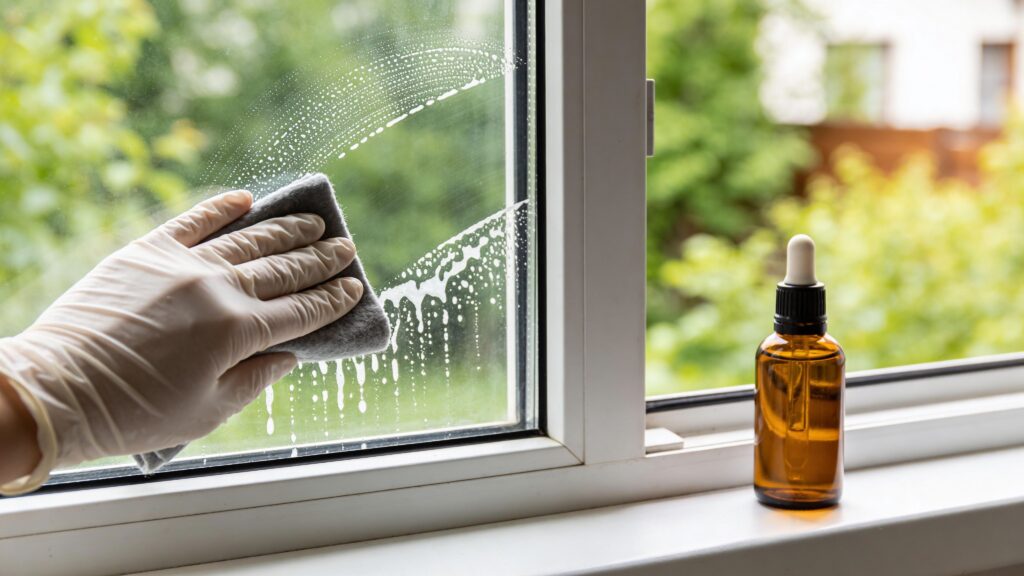
You clean the glass. It looks great. Then the sun shifts, and there it is. A dried paint speck near the edge, sticker glue in the corner, or a greasy smear that normal glass cleaner keeps skating over.
That is when people start scrubbing too hard.
On plain glass, acetone can be one of the most effective tools you can use. It cuts through paint transfer, adhesive residue, oils, and other stubborn messes that standard window spray will not touch. Used the right way, it helps you solve the problem quickly. Used the wrong way, particularly in Arizona heat, it can flash off before it does its job, flood a room with fumes, or damage nearby coatings and finishes.
The trick is not just knowing that acetone works. The trick is knowing where it belongs, where it does not, and how to control it on hot glass.
That Stubborn Splatter on Your Perfect View
A common call starts the same way. The windows were just cleaned, maybe after a remodel or repaint, and now the homeowner notices small dots all across the lower panes. Sometimes it is fresh latex overspray. Sometimes it is sticker residue left from manufacturer labels. Sometimes it is mystery gunk from tape, caulk handling, or hands that touched the same spot for months.
Regular glass cleaner does little to these messes.
It might make the window shinier around the problem, but the residue stays put. Then people reach for a razor, a scrub pad, or a random household chemical under the sink. That is where small cleanup jobs turn into scratched glass, smeared tint, or damaged frames.
Acetone on glass has a solid place in professional work because it targets the residue instead of attacking the glass itself. On plain, uncoated glass, it can soften dried paint, loosen adhesive, and lift oily contamination quickly. It also evaporates quickly, which helps when you want a clean finish without a gummy film left behind.
In Arizona, that rapid evaporation is both the benefit and the challenge.
On a cool day, you have a little working time. On a hot pane in direct sun, acetone can disappear so rapidly that people keep reapplying it, breathe too much of it, or start scraping before the residue has softened. That is when technique matters more than force.
The best results come from patience, not pressure. Let the solvent do the work, then use the gentlest tool that will finish the job.
If the glass is plain and the mess is localized, acetone can be the right move. If the surface has tint, specialty coating, solar panel treatment, or uncertain factory finish, you need to slow down and identify the surface first. That decision is what separates a clean window from an expensive mistake.
Why Acetone Works Wonders on Glass and Its Limits
Acetone works because it is good at dissolving many organic residues. Paint binders, adhesive resins, greasy films, tape residue, and similar messes often respond well because acetone breaks down the material holding them to the surface.
Glass is different.

A glass surface is safe in the presence of acetone because acetone does not etch, corrode, or damage the inert silica structure of glass, which is why it is widely used for degreasing and residue removal on glass surfaces (chemical explanation of acetone and glass inertness).
What acetone is good at
If the problem sitting on the glass is organic, acetone often provides a significant advantage. Good examples include:
- Paint transfer and overspray on plain glass
- Sticker glue and tape residue
- Grease and oily fingerprints that have built up over time
- Adhesive smears left after labels or temporary coverings are removed
This is why pros often keep acetone for spot work instead of using it as an all-purpose cleaner. It is a precision solvent.
What acetone does not fix
Acetone is not a cure-all. It will not repair scratches, remove mineral etching, reverse hard water damage, or correct failed seals. If the glass has haze from abrasion or mineral deposits bonded into the surface, acetone is the wrong tool.
It also has clear limits around surrounding materials.
- Painted frames can be affected
- Vinyl, plastics, and some sealants may react badly
- Tinted film and some coatings can be damaged
- Hot surfaces shorten working time and increase fume concentration around you
Why Arizona changes the job
In a dry climate, acetone flashes off rapidly. That helps reduce residue, but it also makes sloppy application ineffective. If you soak a rag and wave it across hot glass in direct sun, you often waste solvent and get poor penetration into the mess.
The better approach is controlled contact. Small area. Small amount. Short dwell time. Then removal.
On plain glass, acetone is effective because it attacks the contamination, not the silica underneath. The moment coatings or films enter the picture, treat the job as a different category.
That is the fundamental limit of acetone on glass. It is excellent on the right surface and risky on the wrong one.
Essential Safety Protocols for Using Acetone at Home
A lot of acetone mistakes happen in the first 60 seconds. Someone opens the bottle in a closed bathroom, works on sun-heated glass, and finds out quickly that the fumes build more quickly than expected, particularly in Arizona.

Acetone evaporates rapidly and ignites easily. OSHA classifies it as a flammable liquid, and that matters at home just as much as it does on a jobsite. In practice, the risk goes up in garages, laundry rooms, enclosed bathrooms, and Arizona sunrooms where heat concentrates vapor and shortens your safe working window.
Use less product than you think you need. More solvent does not make the job safer or quicker. It often means more runoff, more vapor, and more chances to hit frames, seals, or finishes that should stay dry.
Gear that is worth using every time
Keep the setup simple and protective.
- Nitrile gloves help prevent skin contact and hold up better than bare hands or thin household gloves.
- Safety glasses protect against splashback, which is common when you fold or press a damp cloth.
- Microfiber cloths or cotton pads let you control where the acetone goes.
- A plastic scraper or plastic razor blade reduces the odds of scratching glass after the residue softens.
If the space is enclosed and you cannot keep air moving, stop there. Acetone is a poor choice for that setup.
Ventilation needs to be active, not casual
One cracked window is often not enough. Open two points if possible so air can move through the room, and add a fan that pushes fumes away from you and out of the workspace. Do not aim a fan so hard that it spreads solvent onto nearby trim or painted surfaces.
This matters even more in hot, dry climates. In Arizona, acetone flashes off rapidly on warm glass, countertops, and metal frames. That sounds convenient, but it can create a sharper burst of fumes right where you are standing.
Bathrooms, stairwells, closets, sealed offices, and enclosed patios are poor places to use it.
Fire risk is the part homeowners often miss
Keep acetone away from:
- Pilot lights
- Space heaters
- Cigarettes
- Power tool sparks
- Gas appliances
- Any open flame or hot surface
Do not use it near a running dryer, water heater, or garage appliance. I have seen people focus on the glass and forget the ignition source three feet away.
Protect the surfaces around the glass
Acetone is typically chosen for spot work, not broad cleaning, because surrounding materials are often the primary problem. Window frames, fresh paint, vinyl, plastic hardware, caulking, tinted film, and some sealants can soften, dull, or discolor on contact.
That is one reason I tell homeowners to apply acetone to the cloth, not directly to the glass. You get tighter control, less dripping, and fewer surprises at the edges.
If you want a broader list of products that can damage windows and nearby materials, review these window cleaning chemicals to avoid before testing anything stronger than standard glass cleaner.
A short pre-check before you start
Run through this before opening the container:
- Is the glass plain and uncoated? If you are unsure, do not assume. Coated glass and solar panel surfaces need a different approach.
- Can you create real airflow through the space? If not, wait or move the work outside.
- Are heat and ignition sources under control? Check the whole area, not just the window.
- Can you keep acetone off frames, seals, films, and trim? If not, mask them or skip acetone.
- Is the glass cool to the touch? Hot glass in direct Arizona sun is a bad surface for solvent work.
If any one of those answers is no, pause and reassess. For coated glass, insulated units with unknown films, and solar panels, getting the material wrong costs a lot more than the stain is worth.
A Step-by-Step Guide to Removing Tough Messes
You are standing at a patio door at 7:30 in the morning, trying to remove paint specks before the Arizona sun turns that glass into a warm skillet. That is a different job than doing the same work in a cool garage. Acetone can still help, but the window gives you less time, less margin for error, and more risk around edges, coatings, and nearby finishes.

The job frequently fails in the middle. A homeowner gets some residue to budge, starts rubbing harder, then turns a small spot into a larger mess. Controlled contact works better. Let the solvent soften the material, then lift it with patience.
The basic tool kit
Keep the setup simple and easy to control:
- Acetone
- Microfiber cloths or cotton pads
- Plastic scraper or plastic razor
- A secondary glass cleaner for final cleanup
- Gloves and eye protection
I also like having a second dry cloth ready before I start. In dry heat, softened residue can dry rapidly and smear if you stop to hunt for another towel.
How to remove paint, glue, and greasy buildup
Start with a spot test
Test a small area near the residue, particularly if the spot sits close to painted trim, sealant, vinyl, or any film edge. Use a cloth with a little acetone on it and check for softening, color transfer, or dulling on surrounding materials.
That quick check saves expensive callbacks.
Dampen the cloth and hold it on the spot
Apply acetone to the cloth, not the pane. Press it onto the paint, adhesive, or greasy film for a short dwell time so the residue starts to soften. On fresh paint, that may be quick. On old sticker glue, it may take a few careful passes.
On Arizona glass, work in shade whenever you can. If the pane is warm, shorten your working area to a spot about the size of your hand so the solvent does not evaporate before it does its job.
Lift with a plastic edge
Use a plastic scraper at a low angle and keep the pressure light. The goal is to lift softened residue off the surface, not force the tool under material that is still bonded tight.
If it resists, stop and reapply. More dwell time beats more pressure.
For paint-specific jobs, this guide on how to remove paint from window glass covers safe scraping technique in more detail.
Wipe clean before the residue spreads
Use a clean section of cloth to pick up what you loosened. Do not push dissolved glue or paint wash across a larger area of glass. Change to a fresh part of the cloth often.
This matters on hot days. Solvent and residue can dry rapidly, and once they redeposit, the cleanup gets harder.
Repeat in small sections
Treat one small patch at a time and finish it before moving on. Broad wiping wastes solvent and increases the chance of touching a frame, gasket, or film edge.
That is also the safer approach near treated glass. If a homeowner has added a ceramic coating for glass, or if the pane has any unknown surface treatment, small-area work makes it easier to catch a bad reaction early.
Finish the pane completely
Once the residue is gone, clean the glass with your regular ammonia-free glass cleaner and buff it dry with a fresh microfiber cloth. That removes leftover solvent, haze, and any oily transfer from the mess you just lifted.
A proper finish step is what makes the repair disappear instead of leaving a dull patch.
What works better in Arizona
Heat changes the timing more than expected.
- Work early in the day or on the shaded side of the house
- Keep each work area small
- Refresh the cloth often instead of over-wetting it
- Lift softened residue immediately before it re-bonds
- Stop if the glass gets hot to the touch
A pane in direct desert sun can be much hotter than the air around it. If the cloth dries very quickly, conditions are wrong for clean solvent work.
When to stop and call for help
Stop if you see cloudiness that looks below the surface, lifting at the edge of tint or film, tacky trim, or residue that will not soften after a few careful attempts. Those are signs you may be dealing with a coating issue, cured construction material, or a surface that should not be treated with acetone at all.
At that point, forcing it often costs more than the stain is worth.
Special Considerations for Coated Glass and Solar Panels
Here, generic advice gets people into trouble.
Plain glass and coated glass are not the same job. Acetone on glass can be safe and effective when the pane is uncoated. The moment you are dealing with solar panels, Low-E glass, aftermarket tint, decorative films, or specialty coatings, the risk changes.

While acetone is safe for uncoated glass, solar panel anti-reflective coatings can be damaged. These coatings are essential for efficiency, and acetone can dissolve their organic binders, potentially reducing energy transmittance by 5-10% and voiding warranties. The National Renewable Energy Laboratory attributes 15% of solar panel field failures to improper cleaning (acetone risks on solar panel coatings).
Why coatings change everything
Coatings are there to do a job. Some reduce glare. Some improve energy performance. Some help with solar efficiency. Those layers are far more sensitive than plain silica glass.
The common DIY mistake is thinking, “It is glass, so acetone should be fine.” That shortcut ignores the surface treatment sitting on top of the glass.
Low-E windows can have delicate coatings. Tinted windows often rely on film layers and adhesives. Solar panels depend on anti-reflective performance. A strong solvent may not crack the glass, but it can still ruin the surface system.
A practical test-first rule
If you cannot confirm the surface is plain, uncoated glass, treat it as sensitive.
Use this order:
- Check manufacturer care guidance first
- Test the least aggressive cleaner first
- Choose a tiny hidden area if any solvent test is allowed
- Stop immediately if you see haze, drag, lifting, or visual change
For solar, caution matters more than speed. If you want general maintenance advice that stays focused on safer panel care, review this guide on how to clean solar panels.
Protective coatings deserve different thinking
On glass railings, shower glass, and specialty architectural glass, some owners install protective treatments to improve water behavior and reduce buildup. If you are comparing surface protection options, this overview of ceramic coating for glass gives useful context for how these treatments change cleaning expectations.
The bigger point is simple. Once a glass surface has a treatment or coating, the cleaner has to fit the coating. You do not force the coating to survive the cleaner.
The most expensive acetone mistake is not on the glass itself. It is on the invisible layer you forgot was there.
Safer Alternatives and Responsible Cleanup
Acetone is not invariably the smartest first move. Sometimes it is the right move. Sometimes it is just the strongest thing within reach.
If the residue is light, the surface is questionable, or you are working indoors without ideal ventilation, choose the least aggressive option that can still solve the problem.
Choosing the right solvent for your glass cleaning job
| Solvent | Best For | Safety Level | Risk to Coatings |
|---|---|---|---|
| Acetone | Paint transfer, adhesive residue, heavy grease on plain glass | Lower than mild cleaners because of fumes and flammability | Higher risk on coated, tinted, or specialty surfaces |
| Isopropyl alcohol | Light grease, fingerprints, light adhesive residue | Safer for many routine jobs when used carefully | Lower risk than acetone, but still test first |
| Citrus-based adhesive remover | Sticker residue and label glue | Gentler in many home situations | Varies by product, so test first |
| Soapy water with plastic scraping | Loose debris, fresh residue, basic cleanup | Highest safety for most users | Lowest risk when used gently |
For some protected architectural surfaces, prevention helps more than aggressive cleanup. If you want a practical look at how surface treatments can reduce buildup and simplify maintenance, this page on ceramic coatings for glass is a useful reference.
Responsible cleanup matters too
Do not wad up an acetone-soaked rag and toss it onto a hot garage floor or into a packed indoor trash can.
Instead:
- Let used cloths air out safely in a well-ventilated area away from ignition sources, following local disposal rules.
- Seal the container tightly after use.
- Keep it away from children and pets.
- Do not pour leftover solvent where it does not belong. Follow local household hazardous waste guidance.
This is one part of the job where “small amount” is a real strategy. Use only what the spot requires, and you make cleanup easier, safer, and more controlled.
Frequently Asked Questions About Acetone on Glass
Can I use nail polish remover instead of pure acetone
Sometimes, but it is not my first choice. Nail polish remover may contain additives, fragrances, oils, or other ingredients that are not ideal for glass cleanup. Pure acetone is more consistent.
How long should acetone sit on the residue
Long enough to soften the mess, not long enough to spread risk. For paint overspray, a short hold on the spot works better than flooding the whole pane. In Arizona, hot glass shortens that window.
What if the smell is strong right away
Stop and improve ventilation. Strong odor buildup is a warning that the workspace is not set up well enough for the job.
Is there a pro blend that works better in dry climates
Yes. For some professional applications, cleaners use a 10-20% acetone-in-isopropanol blend to reduce evaporation time by 40% while improving grease removal, and it is followed by a deionized water rinse for a streak-free finish in arid climates (professional acetone and isopropanol blend guidance).
Can I use acetone on tinted windows or solar panels
That is where DIY confidence causes damage. If the glass has tint, film, anti-reflective treatment, or any uncertain coating, do not assume acetone is safe.
When should I call for help
Call for help when the residue covers a large area, the glass is coated, the mess is near delicate trim, or you are not sure what surface you are dealing with. That is especially true for solar panels, high glass, custom railings, and post-construction cleanup.
If you want the job handled without guessing, Sparkle Tech Window Washing can help. We serve the Phoenix valley and anywhere in Arizona, and we handle residential windows, solar panels, glass railings, screens, and detailed cleanup work with the right tools, proper insurance, and a safety-first approach.