

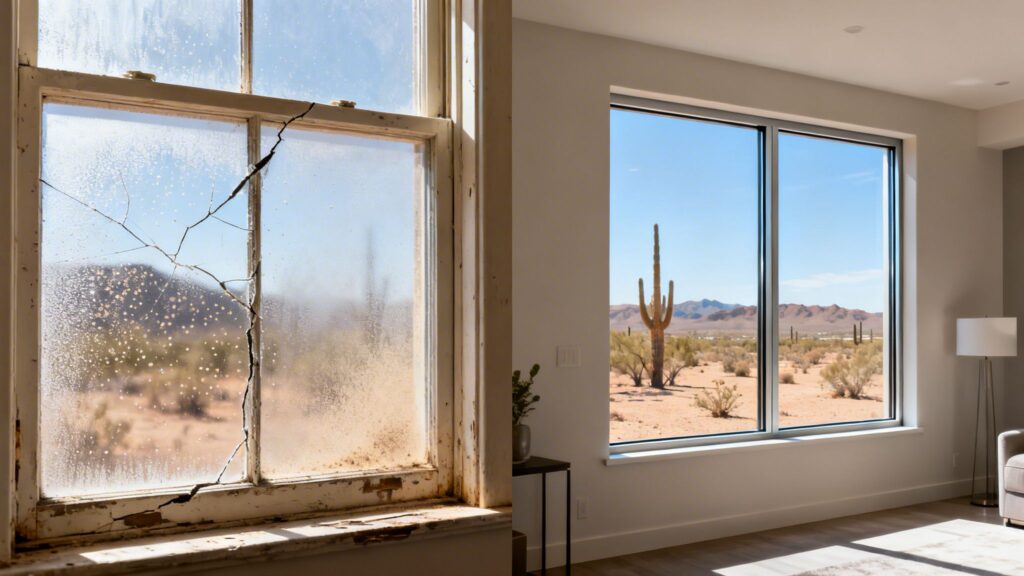
Your home's windows do more than just offer a view; they are a critical barrier against Arizona's extreme heat, dust, and noise. But like any part of your home, they have a lifespan. As they age, their performance degrades, leading to higher energy bills, reduced comfort, and even potential security risks. Ignoring the subtle warnings can cost you dearly, especially in a climate like Phoenix where an inefficient window is a constant drain on your air conditioning.
How can you tell if your windows are still doing their job or if they're quietly costing you money? This guide details the top 8 signs you need new windows, providing the clarity you need to make an informed decision. We'll explore each sign in-depth, offering Phoenix-specific insights, repair vs. replacement guidance, and actionable steps to protect your home and wallet. To further understand if your home's windows are signaling a need for replacement, you can also review these 7 unmistakable signs you need new windows. Recognizing these problems early not only saves money but also improves your home's comfort, value, and security for years to come.
1. Drafts and Air Leaks Around Window Frames
One of the most apparent and frustrating signs you need new windows is feeling a distinct draft when you walk past them. This unwanted airflow is a clear indicator that your window's seals have failed, allowing your conditioned indoor air to escape and the extreme outdoor temperatures to invade your home. Over time, the materials that seal windows, like caulk and weatherstripping, break down from exposure to the elements, creating gaps and cracks.
In a place like Phoenix, where summer heat is relentless, these small leaks have a massive impact. Your air conditioning system must work significantly harder to maintain a comfortable indoor temperature, leading to noticeably higher energy bills. A homeowner in Scottsdale with original, 20-year-old single-pane windows might see their cooling costs spike dramatically in July and August, a direct result of hot air seeping in around the frames. This issue also creates uncomfortable temperature inconsistencies between rooms, making some areas feel stuffy and warm while others are cool.
How to Identify and Address Air Leaks
If you suspect your windows are drafty, you can confirm it with a few simple tests. These checks help pinpoint the problem and determine the urgency of a replacement.
- The Candle Test: On a windy day, carefully hold a lit candle or an incense stick near the edges of your closed window. If the flame flickers or the smoke wavers and blows away from the window, you have an air leak.
- Review Your Energy Bills: Look for unexplained spikes in your utility costs that correlate with peak hot or cold seasons. A sudden jump in your electricity bill during summer is a strong sign your AC is overworking to combat heat gain from leaky windows.
- Professional Energy Audit: For a definitive diagnosis, a professional energy audit can use tools like blower doors and infrared cameras to identify every air leak in your home's thermal envelope, not just those around windows.
Phoenix-Specific Concern: The fine dust and sand common in Arizona can accelerate the deterioration of window seals. This grit gets into the tracks and around the seals, grinding away at the materials every time a window is opened or closed. Regular window cleaning helps remove this abrasive dust, but once the seals are compromised, replacement is the only permanent solution.
2. Visible Condensation and Moisture Between Window Panes
Seeing fog, haze, or moisture droplets trapped between the panes of your double-pane windows is a definitive sign that the window's seal has failed. Modern multi-pane windows are manufactured with a hermetic seal that creates an air-tight space, typically filled with an insulating gas like argon. When that seal is broken, the insulating gas escapes, and moist air seeps into the gap. You'll notice it as a persistent fogginess that you can't wipe away from either the inside or outside surface.
While Arizona's dry climate makes this less frequent than in humid regions, it's a serious indicator of window failure when it occurs. A home built in the late 1990s in a community like Chandler might have original double-pane windows where these seals are now reaching the end of their lifespan. The failure not only creates a permanent, unsightly blemish but also completely negates the window's energy efficiency. Your window is now just two panes of glass with a pocket of air, offering little more insulation than a single-pane unit and making it one of the clear signs you need new windows.
How to Identify and Address Seal Failure
Confirming that your window seals have failed is usually a visual process, but documenting it correctly is important for warranty claims or planning a replacement.
- The Wipe Test: The simplest check is to try and clean the foggy area from both the inside and the outside. If the condensation remains, it's trapped between the panes, confirming seal failure. The issue often appears worse on cooler mornings or on shaded sides of the home.
- Check Your Warranty: Before calling for a replacement, locate the manufacturer's warranty for your windows. Many window companies offer long-term or lifetime warranties that cover seal failure, though they may not cover the labor for installation.
- Professional Inspection: A professional window company can quickly verify seal failure. They can also use thermal imaging cameras to demonstrate the loss of insulating properties, showing a clear temperature difference compared to your other functional windows.
Phoenix-Specific Concern: The extreme temperature fluctuations between a sun-baked exterior and a cool, air-conditioned interior put immense stress on window seals. The constant expansion and contraction of the frame and glass materials can cause even high-quality seals to break down prematurely. This thermal stress is a leading cause of seal failure in the desert climate.
3. Difficulty Operating Windows (Sticking, Jamming, or Resistance)
A window that fights you every time you try to open or close it is more than just an annoyance; it's a serious sign that its core components are failing. Windows that stick, jam, or refuse to lock are indicating significant wear on their frames and hardware. Over time, materials can warp from moisture exposure and constant temperature changes, preventing the sash from moving smoothly within its tracks. This is a common sign you need new windows, as it often points to issues beyond a simple fix.
In a climate like Arizona's, the intense heat causes thermal expansion, where window frame materials swell and can become permanently distorted. This is especially true for older homes in Phoenix or Tempe, where original windows may now stick stubbornly during hot summer afternoons, only to operate slightly better on a cool winter morning. Beyond the frustration, a window that won’t close or lock properly is a major security risk and a safety hazard, as it may block a crucial escape route during an emergency.
How to Identify and Address Operational Issues
If your windows are becoming a workout to operate, systematically checking them can help you understand the scope of the problem and decide on the next steps.
- Systematic Testing: Test every window in your home. Try opening, closing, and locking each one. Do this during the hottest part of a summer day and again on a cool morning to see if temperature affects their operation.
- Check for Obstructions: Before assuming the worst, check for simple fixes. A window might stick due to layers of built-up paint or debris clogging the tracks. You can learn more about how to properly clear these channels by reading about how to clean window tracks. If cleaning doesn't solve the problem, the issue is likely structural.
- Document the Difficulties: Make a list of which windows are problematic and exactly what they're doing. For example, note if a casement window crank is hard to turn or if a sliding window jumps its track. This detailed information is invaluable when consulting with a window contractor.
Phoenix-Specific Concern: Warping is a primary cause of operational failure in the desert. Wood frames are susceptible to drying out and changing shape, while older vinyl or composite frames can sag and deform under the persistent, high heat. Once a frame has lost its original shape, repairs are often temporary at best, making a full replacement the most reliable and secure long-term solution.
4. Visible Rot, Decay, or Water Damage to Window Frames and Sills
Few issues are as alarming as discovering rot, decay, or water stains on your window frames and sills. Unlike minor drafts, this is a serious sign that your window’s structural integrity has been compromised. Water intrusion, whether from rain or sprinklers, can cause wooden or composite frames to soften, discolor, and literally fall apart. This decay not only prevents the window from sealing properly but can also spread to the surrounding wall structure, leading to much more extensive and expensive home repairs.

In Arizona, this problem is particularly pronounced during the monsoon season. An older home in a historic Phoenix neighborhood with original wooden windows might experience significant water intrusion during a single intense storm, causing paint to peel and the wood to swell. Once moisture gets in, the frame becomes a breeding ground for mold and mildew, which poses a health risk. Noticeable discoloration or water stains can also be a sign of hard water mineral buildup. Addressing the root cause is critical, as simply painting over the damage will not stop the underlying deterioration.
How to Identify and Address Water Damage
Catching water damage early can save you from major structural issues. Look for these telltale signs and take immediate action.
- Physical Inspection: Gently press on your window frames and sills, especially at the corners and along the bottom edge. If the wood feels soft, spongy, or crumbles under pressure, you have significant rot.
- Visual Cues: Look for peeling, bubbling, or cracked paint on the frame. Dark streaks, discoloration, or visible mold growth are also clear indicators that water is getting in where it shouldn't.
- Check for Contributing Factors: Examine the area around the window. Is a sprinkler head constantly spraying the frame? Is there poor drainage causing water to pool against the foundation? Identifying the source of the moisture is the first step toward a permanent fix. To learn more about how water affects your glass, check out our guide on how to deal with hard water spots on windows.
Phoenix-Specific Concern: The intense monsoon storms in Arizona can overwhelm older windows that lack proper flashing and sealing. Wind-driven rain forces water into tiny crevices, saturating wooden frames. Furthermore, north-facing windows that receive little direct sun can stay damp longer after a storm, accelerating rot and decay. When replacing damaged windows, choosing modern materials like vinyl or fiberglass, which are impervious to moisture, is a smart long-term investment.
5. Single-Pane or Outdated Window Systems No Longer Meeting Performance Standards
If your home was built before the early 2000s, there's a good chance your windows are no longer meeting modern performance standards. Single-pane windows, and even early double-pane models with aluminum frames, are essentially obsolete in a climate as demanding as Arizona's. These outdated systems provide minimal insulation against outdoor temperatures, acting as thermal holes that allow solar heat to flood your home.
This is one of the most critical and impactful signs you need new windows. For example, a 1980s ranch home in Chandler with its original single-pane windows will experience dramatic solar heat gain, forcing the air conditioner to run constantly just to keep up. Upgrading to modern, energy-efficient windows with advanced features can slash cooling costs by 20-30%, a significant return on investment. The difference in comfort is immediate, eliminating hot spots near windows and creating a more stable, pleasant indoor environment year-round.
How to Identify and Address Outdated Windows
Determining if your windows are underperforming is key to making a cost-effective upgrade. Look for specific labels and physical characteristics to understand what you currently have.
- Check for NFRC Labels: Look for a National Fenestration Rating Council (NFRC) label on the window glass or frame. If there's no label, your windows likely predate modern efficiency standards. If there is a label, pay close attention to the U-Factor (measures insulation) and the Solar Heat Gain Coefficient (SHGC), which measures how much solar heat is blocked.
- Identify Single-Pane Glass: Look at the window glass from an angle. If you see only a single reflection of an object, you have single-pane windows. Double-pane windows will show two distinct, slightly offset reflections.
- Request a Professional Energy Audit: An energy audit can quantify exactly how much energy your old windows are losing. Auditors use specialized equipment to provide data that shows the potential savings from an upgrade, helping you make an informed financial decision.
Phoenix-Specific Concern: For Arizona, the most important rating on a new window is the Solar Heat Gain Coefficient (SHGC). You want this number to be as low as possible (ideally 0.25 or less) to block the intense solar radiation. A low SHGC, combined with Low-E (low-emissivity) coatings, acts like sunglasses for your home, rejecting heat before it can enter while still allowing visible light through.
6. Excessive Outside Noise Penetration Despite Closed Windows
Your home should be a sanctuary from the outside world, but if you can hear every passing car, neighbor's conversation, or distant siren as if they were in the next room, your windows are failing to provide adequate sound insulation. This constant barrage of noise is more than just an annoyance; it disrupts sleep, hinders concentration, and erodes your sense of peace and privacy. Older, single-pane windows or those with degraded seals offer very little resistance to sound waves, turning your living space into an amplifier for outdoor disturbances.
For many Phoenix residents, this is a significant quality-of-life issue. Homeowners in neighborhoods along the I-10 or I-17 corridors deal with constant highway hum, while those in Tempe near Sky Harbor Airport experience frequent aircraft noise. Even in otherwise quiet suburban areas, sound from nearby commercial centers in Scottsdale or Chandler can travel easily through outdated windows. Modern windows, especially those with multiple panes of glass and advanced sealing, are a key indicator that you need new windows, as they can reduce noise transmission by a staggering 50-80%, restoring tranquility to your home.
How to Identify and Address Noise Issues
If you suspect your windows are the culprit behind a noisy interior, you can take a few steps to confirm the problem and find the right solution.
- The Listening Test: The simplest check is to stand near a window, close it, and listen carefully. If the drop in outside noise is minimal, your windows lack sound-dampening properties. Do this in different rooms to identify the worst offenders.
- Ask for Acoustic Data: When shopping for new windows, ask manufacturers for their products' acoustic ratings, such as the Sound Transmission Class (STC) or Outdoor-Indoor Transmission Class (OITC). A higher number indicates better sound insulation.
- Choose Laminated Glass: For superior sound dampening, specifically request laminated glass. This option features a polymer interlayer between two panes of glass, which is exceptionally effective at absorbing sound vibrations.
Phoenix-Specific Concern: In densely populated urban areas like Downtown Phoenix or bustling Tempe, street-level and neighbor noise can be relentless. Acoustic windows are not a luxury but a necessity for creating a livable environment. A professional installation is critical; even the best soundproof window will fail if it's not sealed perfectly with high-quality caulk and insulation to block every potential pathway for sound.
7. Cracks, Chips, or Damage to Glass Panes
Beyond simple drafts, visible damage to the window glass itself is one of the most urgent signs you need new windows. Physical flaws like cracks, significant chips, or spiderweb patterns are not just cosmetic issues; they fundamentally compromise the window's performance and your home's safety. While a tiny chip might seem harmless, it creates a weak point that can easily spread due to thermal stress or minor impacts, leading to a full-blown fracture.

This is a serious concern in places like Tempe or Mesa, where extreme temperature swings from day to night put constant thermal stress on glass. A small crack can quickly expand as the glass heats and cools. Furthermore, a damaged window pane is a security risk, offering an easy entry point for intruders. A home in a new development near active construction could suffer impact damage from flying debris, while intense summer monsoon storms can hurl hail or branches into windows, causing immediate and severe breakage.
How to Identify and Address Glass Damage
Promptly addressing glass damage is crucial for safety and preventing further issues. If you notice any flaws in your window panes, take these steps to assess the situation and protect your home.
- Document and Secure: Immediately take photos of the damage from multiple angles for any potential insurance claims. Apply clear packing tape over cracks on both sides of the glass to temporarily stabilize it and prevent it from spreading.
- Avoid Operation: Do not try to open or close a window with cracked glass. The movement and pressure can cause the crack to expand rapidly or lead to the pane shattering completely.
- Assess the Cause: Note whether the damage was from a direct impact (like a stray baseball) or appeared without an obvious cause. Stress fractures, which often start at the edge of the pane, can indicate the window is failing due to age, poor installation, or thermal pressure.
Phoenix-Specific Concern: The violent winds and hail associated with Arizona's monsoon season are a primary cause of impact damage to windows. When replacing a damaged window, consider upgrading to impact-resistant or tempered glass, especially for large picture windows or sliding glass doors. These safety glass options are designed to be much stronger and will crumble into dull, pebble-like pieces if broken, rather than shattering into dangerous shards.
8. Window Frames Pulling Away from Walls or Visible Settling and Gaps
A particularly alarming sign you need new windows is seeing the frame itself physically separating from the wall. When visible gaps appear between the window unit and your home’s structure, it signals a significant problem that goes beyond simple wear and tear. These gaps are direct entry points for air, water, and pests, but more importantly, they can indicate serious installation failures or foundational movement.
This issue is more than just an eyesore; it's a breach in your home's protective envelope. In Arizona, where homes contend with expansive clay soils and subtle ground shifts, this kind of structural stress can manifest around windows. For example, a 30-year-old Phoenix home might experience differential settling, causing one side of the house to move slightly more than the other, putting immense pressure on window frames. This movement can crack drywall, break seals, and create the very gaps you're seeing, completely undermining your home's energy efficiency and structural integrity.
How to Identify and Address Structural Gaps
If you notice your window frames are pulling away, a careful assessment is crucial to determine the root cause. This isn't a problem to be covered with caulk; it requires a proper diagnosis.
- Document and Measure: Use a tape measure to record the width of the gaps around your windows. Take clear photos from multiple angles to show a contractor or structural engineer. Check several windows to see if the issue is isolated to one area or is happening throughout the house.
- Check for Other Signs: Look for related symptoms of structural movement, such as cracks in the foundation, uneven floors, or doors that no longer latch properly. A pattern of issues points toward a foundational problem rather than just a bad window installation.
- Professional Assessment: Do not attempt to fix this yourself. Hire an experienced general contractor or a structural engineer to evaluate the situation. They can determine if the problem is a poorly installed window that needs to be reset and replaced or a more significant structural issue that must be addressed first.
Phoenix-Specific Concern: In new construction communities across the Valley, rushed installations can lead to windows that aren't properly flashed, sealed, or secured to the framing. If your home is still under a builder's warranty and you see these gaps appearing, document everything and contact the builder immediately. A proper installation is key to ensuring a window can handle the minor shifts and thermal expansion common in the Arizona climate.
8 Signs You Need New Windows — Comparison
| Item | Implementation Complexity 🔄 | Resource Requirements ⚡ | Expected Outcomes ⭐📊 | Ideal Use Cases 💡 | Key Advantages ⭐ |
|---|---|---|---|---|---|
| Drafts and Air Leaks Around Window Frames | 🔄 Low–Moderate — caulking/weatherstripping or full frame replacement | ⚡ Low–Moderate — materials or new energy-efficient windows; possible pro labor | ⭐📊 Reduced HVAC load, fewer drafts, measurable energy savings | 💡 Homes with visible gaps, high AC bills, temperature variance | ⭐ Quick comfort gains; clear ROI when upgraded |
| Visible Condensation and Moisture Between Window Panes | 🔄 Moderate — sealed-unit failure generally requires replacement | ⚡ Moderate — new sealed units or full window; check warranties | ⭐📊 Restored clarity and insulation; prevents mold and mineral damage | 💡 Persistent fogging between panes, failed insulating gas | ⭐ Obvious visual failure; replacement resolves insulation loss |
| Difficulty Operating Windows (Sticking/Jamming) | 🔄 Low–Moderate — may be repairable or need replacement if warped | ⚡ Low–Moderate — lubrication/adjustment or hardware/frame replacement | ⭐📊 Improved safety and function; may be temporary or permanent fix | 💡 Windows that stick, resist locking, or impede egress | ⭐ Addresses safety concerns; easy to document for contractors |
| Visible Rot, Decay, or Water Damage to Frames and Sills | 🔄 High — frame replacement plus water intrusion remediation | ⚡ High — new frames, wall/structural repairs, mold remediation | ⭐📊 Restored structural integrity; prevents further water damage | 💡 Soft spots, staining, peeling paint after monsoon or leaks | ⭐ Resolves structural risk; may qualify for insurance coverage |
| Single-Pane or Outdated Window Systems | 🔄 Moderate–High — retrofit or full system upgrade to modern windows | ⚡ High — multi‑pane Low‑E windows, professional installation, possible rebates | ⭐📊 Significant energy savings (≈20–30%), better comfort and UV protection | 💡 Homes with single‑pane or low‑performance windows seeking efficiency | ⭐ Major long‑term cost and comfort benefits; increases home value |
| Excessive Outside Noise Penetration | 🔄 Moderate — acoustic glazing and improved sealing required | ⚡ Moderate–High — laminated/acoustic glass and quality installation | ⭐📊 Noticeable noise reduction (≈50–80%); improved sleep and privacy | 💡 Properties near highways, airports, or busy commercial areas | ⭐ Large quality‑of‑life improvement; also improves thermal performance |
| Cracks, Chips, or Damage to Glass Panes | 🔄 Low–High — from simple pane replacement to emergency full replacement | ⚡ Low–Moderate — pane/unit replacement; possible urgent service | ⭐📊 Restored safety, security, and structural integrity | 💡 Visible cracks, impact damage, or rapidly spreading fractures | ⭐ Immediate safety remediation; may be insurance‑covered |
| Window Frames Pulling Away from Walls or Visible Gaps | 🔄 High — requires professional/structural assessment and corrective work | ⚡ High — structural engineer, reinstallation, possible foundation repair | ⭐📊 Restored building envelope; prevents air/water/pest intrusion | 💡 Daylight or gaps around frames, misalignment, caulk separation | ⭐ Addresses root installation/structural issues; prevents escalation |
From Assessment to Action: Your Next Steps for Better Windows
Recognizing the subtle and not-so-subtle signs you need new windows is the crucial first step toward a more comfortable, secure, and energy-efficient home. Throughout this guide, we've explored the critical indicators, from persistent drafts and condensation between panes to physical damage like rot and frame separation. Each sign tells a story about your home's performance and protection against the elements, especially in a demanding climate like Phoenix.
Ignoring these warnings doesn't just mean living with discomfort; it translates to tangible financial losses. Leaky, inefficient windows force your HVAC system to work overtime, leading to inflated energy bills month after month. They can also compromise your home’s structural integrity and diminish its market value. The decision to replace your windows is a significant one, but viewing it as an investment rather than just an expense is key. The returns are measured in lower utility costs, a quieter indoor environment, and a notable boost to your property's curb appeal and overall worth.
From Identification to a Confident Decision
You've now learned to spot the problems, but what comes next? The most reliable path forward is a professional assessment. An expert can validate your observations, uncover less obvious issues, and provide a clear, data-driven recommendation. This step removes the guesswork, ensuring you don't replace windows that could be repaired or, worse, ignore a critical failure point. For property owners, proactive care is essential, and consulting comprehensive home maintenance guides for rental properties can offer valuable insights into managing and preventing common issues, including those related to windows. This planned approach helps maintain property value and tenant satisfaction.
Ultimately, your windows are a fundamental component of your home's building envelope. They are your first line of defense against summer heat, winter chills, dust storms, and outside noise. By acting on the signs of failure, you are not just buying new glass and frames; you are upgrading your daily quality of life, strengthening your financial position through energy savings, and investing in the long-term health and security of your home. Don't let uncertainty lead to inaction. Take the knowledge you've gained and move confidently toward a solution.
Your journey to better windows often starts with a clear view of their current condition. The team at Sparkle Tech Window Washing does more than just clean; our detailed service includes a careful inspection for many of the warning signs discussed here. Let us help you identify potential problems early so you can plan for the future with confidence.