

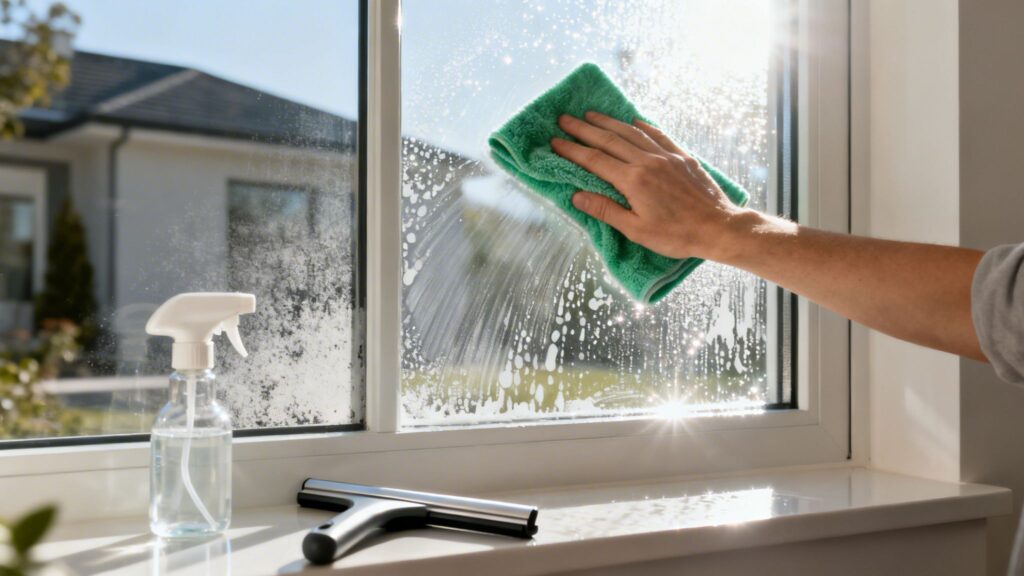
When you're dealing with stubborn, chalky residue on your windows, you need more than just a standard cleaner—you need an effective window water spot remover. These aren't just ugly smudges; they're mineral deposits actively damaging your glass. If you let them sit, they can permanently etch the surface, which means you're looking at costly repairs and a perpetually cloudy view.
Why You Can't Ignore Stubborn Water Spots
Those seemingly harmless white spots are a slow-motion threat to your home's glass. They form when hard water evaporates, leaving behind minerals like calcium and magnesium. But these deposits don't just sit on top of the window. Over time, their alkaline nature lets them chemically bond with the glass, literally etching into the surface.

This process, called mineral etching, creates microscopic pits and divots in the pane. At first, it might just look a little hazy. But if you don't deal with it, the damage becomes irreversible, permanently clouding your view and even weakening the integrity of the glass itself.
The Hidden Costs of Neglect
Putting off this chore leads to more than just a bad view. It can have real financial consequences that hit your property value and your wallet.
- Permanent Damage: Once glass is etched, no amount of scrubbing can bring back its original clarity. At that stage, your only option is a full, expensive window replacement.
- Reduced Curb Appeal: Let's face it, hazy, stained windows make a house look poorly maintained. This can seriously detract from your home's curb appeal and even lower its market value.
- Energy Inefficiency: Etched glass doesn't let sunlight pass through as cleanly. It scatters the light, which can subtly affect your home’s natural lighting and thermal performance.
The need for good solutions is obvious. The global water spot remover market was valued at around $439.6 million in 2022 and is only expected to grow. A lot of that demand comes from the automotive world, where car owners know how critical it is to protect their vehicle’s finish from the exact same kind of mineral damage. You can find more data on the growing demand for these products over at datainsightsmarket.com.
Think of it this way: tackling water spots isn't just about cleaning. It's preventative maintenance for one of your home's most expensive components. A little effort now can save you a major expense down the road.
For homeowners in areas with persistent hard water, bringing in a pro can be a game-changer. We at Sparkle Tech Window Washing use specialized purified water systems that prevent mineral deposits from ever forming in the first place—a long-term solution that DIY methods just can't replicate. You can learn more about the hidden dangers of neglecting window cleaning in our dedicated article.
Effective DIY Methods for Removing Water Spots
When you're staring at those milky-white water spots on your windows, your first instinct might be to grab the strongest cleaner you can find. But hold on. For most light to moderate spotting, you don’t need a specialized chemical solution. In fact, some of the best tools for the job are probably already sitting in your kitchen pantry.
The secret lies in simple, acidic ingredients that are fantastic at dissolving the alkaline mineral deposits—mostly calcium and magnesium—that have stubbornly bonded to your glass.

But before you start spraying, here's a crucial piece of advice from the field: always test your solution on a small, inconspicuous area first. A quick spritz in a bottom corner can save you from accidentally damaging any special tints or coatings on your windows. Trust me, it’s a simple step that can prevent a major headache.
The Classic Vinegar and Water Solution
This is the old faithful of window cleaning for a reason—it's incredibly effective and couldn't be simpler. The acetic acid in plain white vinegar is a natural enemy of mineral buildup, breaking it down without being harsh on your glass.
All you need to do is mix equal parts distilled white vinegar and distilled water in a clean spray bottle. Here’s a pro tip: use distilled water. It's completely free of minerals, which means you won't be accidentally creating new spots while you're trying to get rid of the old ones.
Spray the solution generously over the water spots, making sure they're fully saturated. Now for the most important part: let it sit for at least 10-15 minutes. This dwell time is when the magic happens, giving the acid time to dissolve the deposits. Once it’s had time to work, give the area a gentle scrub with a microfiber cloth or non-abrasive sponge, then rinse and dry.
A Powerful Lemon Juice Paste for Tougher Spots
What if the vinegar spray just isn't cutting it? For those more stubborn, caked-on spots, it's time to bring out the heavy hitter: a paste. A paste has more concentrated cleaning power and, because it's thick, it stays put right where you need it, giving the ingredients more time to work on the stain.
You can whip this up using baking soda and water, but I prefer adding lemon juice for an extra acidic kick. The citric acid in lemon juice is another fantastic mineral-buster.
- Make the Paste: Mix a few tablespoons of baking soda with just enough lemon juice (or water) to create a thick paste, something like the consistency of toothpaste.
- Apply It: Dab the paste directly onto the hard water stains, making sure you cover them completely.
- Let It Dwell: Let the paste sit and do its thing for 10-15 minutes. You might even see a little fizzing action as the acid reacts with the minerals.
- Scrub and Finish: Using a soft cloth, gently scrub the area. Then, rinse thoroughly with clean water and finish with a high-quality squeegee for that perfectly clear, streak-free look.
A common mistake I see is people scrubbing way too hard, especially with something like baking soda. You want to let the chemical reaction do the heavy lifting, not brute force. A gentle, circular motion is all that's needed to lift the loosened minerals.
Comparing DIY Water Spot Remover Solutions
Here’s a quick look at these two popular homemade solutions, highlighting where they shine and what to watch out for.
| Method | Ingredients | Best For | Pros | Cons |
|---|---|---|---|---|
| Vinegar & Water Spray | Distilled White Vinegar, Distilled Water | Light to moderate, widespread spots | Easy to mix and apply; inexpensive; great for general cleaning. | May not be strong enough for severe, etched-in stains. |
| Lemon Juice & Baking Soda Paste | Lemon Juice, Baking Soda | Tough, concentrated spots | Provides concentrated power; the paste clings to the glass, increasing contact time. | Can be messy; requires more effort to apply and rinse off. |
Both methods are fantastic starting points for tackling water spots yourself. Just pick the one that best matches the severity of the stains you're dealing with.
Essential Tools and Techniques for Success
The best cleaning solution in the world won't give you great results if your tools and technique aren't up to snuff. Getting a crystal-clear finish is about more than just what’s in the spray bottle.
- High-Quality Microfiber Cloths: Forget old rags. Invest in a few plush, lint-free microfiber towels. They absorb an incredible amount of water and won't leave scratches or lint behind. I always keep one for cleaning and a separate, perfectly dry one for a final buff.
- A Professional-Grade Squeegee: This is non-negotiable for a streak-free finish. A cheap squeegee will just frustrate you. When you use it, overlap each stroke by about an inch and be sure to wipe the blade clean after every single pass.
- Work on a Cloudy Day: This is a simple but game-changing tip. Cleaning windows in direct, hot sunlight is a race against the clock. Your solution will evaporate almost instantly, leaving behind ugly streaks before you even have a chance to wipe it away.
By pairing these potent homemade recipes with the right approach, you can banish most common water spots for good. And while these methods are safe and effective, it’s just as important to know what not to use on your glass. To dive deeper, check out our guide on the dos and don'ts of window cleaning chemicals to avoid.
When Stubborn Water Stains Won't Budge
So, you've tried the vinegar spray and the lemon juice paste, but those stubborn, chalky spots are still clinging to your glass. Don't throw in the towel just yet. When years of mineral buildup have left their mark, sometimes you just need to bring in bigger guns.
This is where we move past basic household remedies and into the world of commercial-grade products and techniques. These methods are incredibly effective for severe water stains, especially those that have started to etch into the glass itself. But a word of caution: with greater power comes a greater risk of damaging your windows if you’re not careful. The trick is to know what you're doing and proceed methodically.
Choosing a Commercial-Grade Water Spot Remover
A quick trip down the cleaning aisle will show you that not all "water spot removers" are the same. They generally fall into two categories: chemical cleaners and polishing compounds. Knowing the difference is key to getting the results you want without creating a new problem.
- Chemical Cleaners: These are typically acid-based formulas designed to dissolve the mineral deposits—think calcium and magnesium—on a chemical level. They're fast and don't require a lot of muscle, but they can be harsh. You'll definitely need gloves and good ventilation, and you have to be careful not to let them drip onto painted sills or sensitive window frames.
- Polishing Compounds: These are completely different. Instead of dissolving minerals, they use a very fine abrasive (like cerium oxide) to physically buff the deposits off the glass. This is the go-to solution when stains have left the glass feeling rough or slightly hazy, even after a good cleaning. It takes more elbow grease, but you have a lot more control over the process.
So which one should you grab? If you're dealing with thick, chalky buildup sitting on the surface, a chemical cleaner is probably your best first move. If the glass feels etched or rough to the touch, a polishing compound is what you need.
A Pro's Two Cents: I always, always start with the least aggressive method that could possibly work. Give a good chemical cleaner a shot before you even think about grabbing a polisher. You can always step up your attack, but you can't un-scratch a window.
The Pro Tactic: Ultra-Fine Steel Wool
Alright, for the most stubborn, seemingly permanent water spots that have etched into the glass, there's one last trick up the professional's sleeve before calling for a full glass replacement: #0000 steel wool.
Let me be crystal clear: this is an expert-level technique and you have to be extremely careful. The "0000" grade is absolutely critical—it's the finest grade available and is specifically designed to be non-abrasive on glass. Anything coarser will scratch it.
You also absolutely cannot use it on dry glass. You need a good lubricant. A simple mix of dish soap and water or even your vinegar solution will do the job perfectly.
Here’s how you do it, carefully:
- Get the Area Soaked: Spray the window generously with your lubricant. Don't be shy with it.
- Use a Gentle Touch: Take a small piece of the #0000 steel wool and, using very light pressure, rub the stained area in small, circular motions. Let the steel wool and the lubricant do the work. You should feel the surface go from gritty to smooth as the minerals are sheared away.
- Stop, Rinse, and Check: Every 30 seconds or so, stop. Rinse the area with clean water and wipe it dry with a squeegee or microfiber cloth to check your progress.
This struggle against mineral buildup is a huge deal. In North America alone, consumers account for a massive 35.4% of the global water spot remover market. That market, valued at a whopping USD 1.2 billion, is heavily influenced by the auto industry, where car enthusiasts are constantly fighting mineral etching on paint and glass. You can get the full rundown on this research from Reports and Data. It just goes to show how widespread and frustrating this problem really is.
Ultimately, these advanced methods are for those moments when home remedies just aren't enough. They can deliver incredible results for a determined homeowner, but they demand a steady hand and a healthy respect for the glass you're working on.
How to Keep Water Spots From Coming Back
You've just spent all that time and effort scrubbing away those stubborn water spots. The glass is finally crystal clear. The last thing you want is to see them creep back in a week. Winning the battle is one thing; winning the war is another.
The real secret is to stop hard water from drying on your windows in the first place. This means getting a handle on where that water is coming from and making a few key adjustments. It's all about shifting from constantly cleaning up a mess to preventing the mess from ever happening.
Quick Fixes You Can Do Today
You can start making a difference right now with a few simple tweaks to your routine and your home's setup. These small habits can stop the problem at its source.
- Check Your Sprinklers: This is hands-down one of the most common causes I see. Walk your property while the sprinklers are running. Are the heads spraying your windows and glass doors? A quick adjustment to the angle or spray pattern can solve the problem instantly.
- Embrace the Squeegee: Never, ever let your windows air dry after washing them. That's just an invitation for spots to form. Grab a quality squeegee and get every last drop. For a pro-level finish, overlap your strokes by about an inch and wipe the blade clean after each pass.
- Wipe Away Condensation: That morning condensation on your bathroom or kitchen windows might seem harmless, but it can leave behind faint mineral deposits. Over time, they build up. Keep a microfiber cloth handy and give them a quick wipe.
If you feel like you're fighting this battle every summer, you're not alone. We see a huge uptick in calls for this exact issue. In fact, search data shows that terms like "glass water spot remover" can jump by as much as 200% in late summer, particularly in hotter, drier regions where sprinklers are working overtime. It's a widespread seasonal headache.
Long-Term Strategies for Spot-Free Glass
For a more "set it and forget it" defense, you'll want to look at solutions that either change the water itself or change how it behaves on your glass.
The ultimate goal is to make your glass so slick that water has no chance to linger. By creating a surface that repels water, you effectively stop mineral deposits from ever gaining a foothold.
A professional-grade hydrophobic sealant is a fantastic long-term investment. These coatings create an invisible shield that makes water bead up and roll right off, taking all those pesky minerals with it. If you're curious about the science, we dive deeper into it in our article on the difference between hydrophilic and hydrophobic glass.
Of course, the most comprehensive fix is a whole-home water softening system. This tackles the problem at its root by removing minerals like calcium and magnesium from your water supply entirely.
This proactive approach is especially critical for solar panels. Water spots on solar panels are more than just an eyesore—they actively block sunlight and slash your energy production. Regular cleaning from a pro service like Sparkle Tech keeps them performing at their best, protecting your investment and ensuring you get every watt of power you're paying for.
When to Trust a Professional Window Washing Service
Those DIY tricks are great for tackling fresh or light water spots. But let's be honest, sometimes you hit a wall where no amount of vinegar or scrubbing seems to make a dent. Knowing when to wave the white flag and call in a pro isn’t giving up—it’s the smart move for protecting your glass and your sanity. The best window water spot remover is often an expert with the right gear.
The most obvious red flag? Stains that are deeply etched into the glass. Run your fingers over the spot. If you've tried everything and the glass still feels rough or looks cloudy when the light hits it just right, those mineral deposits have likely started to corrode the surface. At this point, more aggressive scrubbing on your part is more likely to cause scratches than solve the problem.
Safety and Scale of the Job
Then there’s the issue of access. Are we talking about second-story windows or a hard-to-reach skylight? Balancing on a wobbly ladder is a recipe for disaster, and no crystal-clear window is worth a trip to the emergency room. Professional crews like Sparkle Tech Window Washing come equipped with the right safety harnesses, ladders, and insurance to handle those high-up jobs without any risk.
This is a good time to think about prevention, which can save you from having to deal with this in the first place.

You also have to consider the sheer size of the job. If years of sprinkler overspray have left mineral deposits on every window of your home, you could be looking at a whole weekend of grueling work. A professional team can knock that out in just a few hours and deliver a much better result.
Don't underestimate the value of peace of mind. Handing the job over to insured experts who can handle it safely and correctly frees you from the stress, risk, and hard labor.
The Professional Advantage
When you're dealing with stubborn water spots, pros bring out the heavy artillery. You can see how a top-ranking window cleaning company gets such flawless results by using specialized tools that go far beyond what you have in your garage.
Here at Sparkle Tech, our secret weapon is a purified water system. This technology strips water of all its minerals—the very things that cause spots in the first place. This deionized water not only blasts away existing buildup more effectively, but it dries completely clear. It leaves behind a level of clarity that’s virtually impossible to get with a garden hose and a squeegee.
Your Top Questions About Window Water Spots, Answered
Even after you've armed yourself with the right techniques, you're bound to run into some questions when facing down those stubborn spots. I get it. Dealing with them can be frustrating, so let's clear up a few of the most common concerns I hear from homeowners.
"Will these water spots permanently damage my windows?"
I hear this one all the time, and unfortunately, the answer is yes, they absolutely can. When hard water dries, it leaves behind minerals like calcium and magnesium. Over time, these minerals don't just sit on the surface—they chemically bond with the glass.
This process is called etching. It creates tiny, microscopic pits in the glass, leaving it looking cloudy and hazy. Once etching sets in, no amount of scrubbing will bring back that perfect clarity. That's precisely why tackling water spots early is so critical.
"Is it safe to use store-bought cleaners on all my windows?"
This is a great question, especially if you have tinted or coated windows. Many commercial water spot removers use mild acids or fine abrasives to get the job done. While they're usually fine for standard window glass, they can be a nightmare for aftermarket tints or special low-E coatings, potentially scratching or stripping them.
My number one rule of thumb: Always test a new product on a small, hidden corner first. Let it sit for a bit and check for any discoloration or damage before you commit to the whole window.
A quick spot test can save you a world of hurt and a very expensive replacement bill. When in doubt, you can't go wrong with the simple distilled water and vinegar solution—it's the safest bet for more delicate glass.
"How often should I have my windows professionally cleaned?"
If you live somewhere with hard water (and many of us do), getting your windows professionally cleaned isn't just a cosmetic touch-up; it's preventative maintenance for your home. How often you need it really depends on your specific situation.
As a general guideline, I suggest a professional cleaning at least twice a year. However, if your windows are constantly getting blasted by sprinklers or you're in a dry, dusty area with high mineral content, you might want to bump that up to every quarter. A good pro doesn't just clean; they can also apply a sealant that helps repel water and prevent new spots from forming.
Here’s a quick way to think about it:
- Light Spotting: A deep, professional clean once a year should keep things in check.
- Moderate Buildup: Every six months is a good rhythm to stay ahead of any potential etching.
- Severe Hard Water: You'll likely need quarterly service to protect your glass long-term.
At the end of the day, consistency is what matters most. Whether you do it yourself or bring in the pros, regular cleaning is the only way to avoid permanent damage and keep your windows looking their best.
When you're tired of fighting the spots and just want a perfect, lasting shine, trust the experts at Sparkle Tech Window Washing. Our professional-grade tools and purified water systems cut through the toughest buildup for a flawless finish. Learn more about our services at sparkletechwindowwashing.com.