



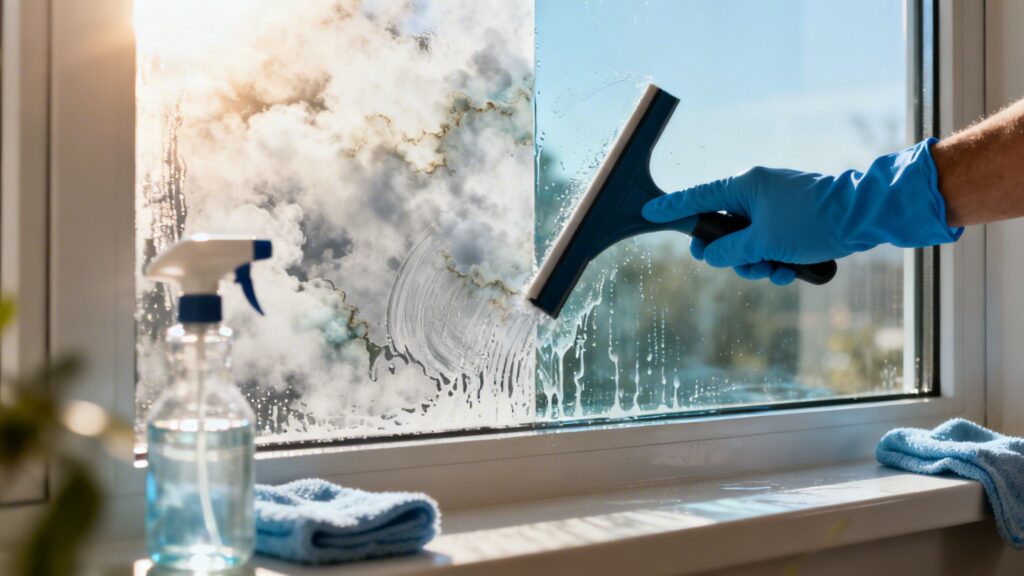
You scrub the glass. You squeegee it clean. The sun hits the window ten minutes later, and the same cloudy dots are still staring back at you.
This is common in Arizona. Homeowners think they missed a spot, used the wrong cleaner, or need a better microfiber towel. The problem is different. Those marks are not loose dirt anymore. They are deposits or damage left behind by water, heat, metal screens, or repeated runoff.
In the field, the hardest part is not wiping the glass. It is identifying what kind of mark you are dealing with before you start rubbing on it. Water marks on windows can look similar from across the yard, but they do not behave the same once you put a tool on the glass. Some come off with light cleaning. Some need polishing. Some are not water spots at all.
Why Your Windows Still Look Dirty After Cleaning
A Phoenix window can look clean at 8 a.m. and look blotchy by lunch. We see that on homes where the glass was scrubbed well, but the marks come back as soon as the water dries and the sun hits the pane.
Hard water is part of the problem, but it is not the only reason windows stay hazy in Arizona. Spot-free results depend on low-mineral rinse water. Professional pure water systems are built around that principle, as explained by the International Window Cleaning Association's guide to pure water cleaning. If the rinse water carries dissolved minerals, those minerals stay behind on the glass after evaporation.
What is happening on the glass
Calcium and magnesium residue can dry into a light film that makes the window look dusty even after a careful cleaning. In Arizona, the heat speeds that process up. Water flashes off quickly, especially on west-facing glass, and that leaves less margin for error.
I also see windows blamed on "hard water" when the underlying problem is runoff from somewhere else. AC condensation lines, sprinkler overspray, and metal screens can all leave marks that regular glass cleaner will not solve. If a window looks clear while it is wet and cloudy again the moment it dries, the problem is likely in the residue or the surface itself, not in your technique.
Why normal cleaning keeps falling short
The usual homeowner approach has limits:
- Tap water rinse: Often leaves minerals behind, especially in Phoenix-area conditions.
- More scrubbing: Can remove loose buildup, but it does not fix bonded deposits or light etching.
- Household glass cleaner: Works for fingerprints, dust, and light grime. It has limited effect on mineral stains.
- Pure water rinse: Reduces spotting because it removes the mineral load that causes the haze.
That is why two windows can get the same effort and dry with completely different results. One has surface dirt. The other has mineral residue, drip marks from the AC line, or early screen-related staining that has already started to bite into the glass.
What's Really Causing Those Stubborn Window Marks
Some marks are fresh mineral spots. Some are etched damage. Some come from places homeowners seldom suspect, especially in the Phoenix area. If you identify the pattern before you start cleaning, you avoid wasting an afternoon on the wrong fix.

Early hard water spots
These are the easiest ones to recognize once you know the signs. They often look white, chalky, or dusty. On smooth glass, they may feel slightly rough when you drag a fingertip across a dry panel.
They often show up where sprinklers hit the window, where runoff drips from stucco or trim, or where hose water dries in the sun. If the spots are recent, they can still respond to mild cleaning and agitation.
Typical clues:
- Powdery look: The mark sits on top of the glass rather than blending into it.
- Round droplet pattern: You can often see the outline of dried beads.
- Heavier on lower panes: Especially near landscaping or irrigation overspray.
Mineral etching
Etching is where homeowners lose time. The glass still looks dirty, but it is not merely dirty anymore.
Glass is porous enough that mineral deposits can work into the surface. Once that happens, the stain shifts from removable residue to surface damage. The panel may look dull, gray, or permanently cloudy, especially at an angle.
Use this quick comparison:
| Mark type | What it looks like | How it feels | Likely response |
|---|---|---|---|
| Fresh mineral spot | White or chalky dots | Slightly rough | May improve with home cleaning |
| Baked-on deposit | Hazy patches with defined drip paths | Rougher texture | Harder to remove |
| Etched glass | Cloudy, dull, faded appearance | Often smoother than expected | Cleaning may not fix it |
AC condensation drips
This is frequently missed in hot climates. An overlooked cause of spotting is AC condensation, especially in the Phoenix Valley. Condensation can run down the glass and create shadowy spots near the bottoms of windows, and those marks can lead to permanent etching within months if not addressed (discussion of AC condensation spotting on windows).
These marks often look different from sprinkler damage. They are often concentrated at the lower edge of the pane or follow a narrow vertical path where water repeatedly drips from the same area.
Watch for these signs:
- Bottom-edge staining: The heaviest spotting sits low on the pane.
- Repeat pattern: One or two vertical trails instead of broad spray coverage.
- Nearby HVAC line or drainage issue: Water keeps feeding the same section of glass.
Field note: If the marks keep coming back in the exact same place after cleaning, look up before you look for a stronger cleaner.
Screen burn from corroded aluminum screens
Another cause that frequently misleads people is screen burn. It can resemble water marks, but the source is the screen, not the rinse water.
When aluminum screens corrode, light oxide deposits can transfer onto the glass. Wind and rain help plaster that material against the pane. In dusty, alkaline conditions, the problem can build slowly until the glass carries a ghosted pattern that seems impossible to wash off.
The giveaway is the shape. The stain may line up with the screen frame or appear in a pattern that matches where the screen sits rather than where water normally lands.
A simple way to diagnose before you scrub
Try this sequence:
Look at the location
Bottom edge suggests AC condensation. Random droplet scatter suggests sprinklers or rinse water.Check the shape
Round spots point to dried beads. A grid-like or framed pattern can point to screen-related transfer.Feel the glass when dry
Rough often means deposit. Smooth but cloudy can mean etching.Notice whether the mark changes when wet
If it nearly disappears wet and reappears dry, minerals are likely involved. If it stays dull even when wet, damage may already be in the glass.
Your Action Plan for Removing Water Marks at Home
If the marks are light and the glass is still in decent shape, you can often improve it yourself. The key is to work from the least aggressive method up. Starting too harsh is how homeowners scratch good glass while trying to fix a bad spot.

Start with the mildest setup
For basic DIY work, gather:
- A spray bottle: Use one dedicated to glass work.
- White vinegar and water: Mixed in equal parts.
- Microfiber towels: Clean, lint-free, and not fabric-softener coated.
- A squeegee: Helpful for final drying.
- A non-abrasive applicator pad: For gentle pressure on surface deposits.
- Distilled or purified rinse water if available: Better than hard tap water for final cleanup.
The vinegar mix is the common first step, but expectations matter. For severe staining, vinegar has an approximately 5% success rate and fails in 95% of cases once the mineral deposit has moved beyond minimal staining (vinegar limitations on severe mineral deposits).
That does not mean vinegar is useless. It means it is a first test, not a cure-all.
How to handle light spots
Use this method on recent spots or chalky residue that still feels like buildup:
- Spray the vinegar and water mix generously.
- Let it dwell briefly so the surface stays wet.
- Agitate with a microfiber towel or soft applicator.
- Rinse lightly.
- Dry immediately with a squeegee or lint-free cloth.
Drying matters. Leaving water to evaporate on the pane can restart the same problem you were trying to solve.
Pro tip: The final drying pass is not optional in Arizona heat. Fast evaporation leaves minerals behind fast.
When the spots need more pressure
If light wiping does nothing, you may be dealing with a thicker surface deposit. At that stage, homeowners sometimes step up to more friction. If you do, keep the glass lubricated and test a small corner first.
A careful escalation looks like this:
- Repeat the vinegar application once more: Some spots soften on the second pass.
- Use a dedicated non-scratch pad: Better than a random kitchen scrubber.
- Work in small sections: One panel at a time keeps you from chasing dry cleaner across hot glass.
- Rinse and inspect in side light: Marks often show more clearly at an angle.
A lot of DIY damage happens because someone works in direct sun, lets the cleaner flash dry, and scrubs harder to compensate.
What not to use
Some mistakes create bigger problems than the original spot:
- Razor blades on unknown glass: Risky on coated, tempered, or already damaged surfaces.
- Harsh abrasive powders: They can haze the surface.
- Random steel wool from the garage: If it is not the right material and grade, you are gambling with the pane.
- Dirty towels: Embedded grit scratches quickly.
This video gives a helpful visual on the general removal process and what stubborn spotting can look like in practice.
Match the approach to the surface
Not every piece of glass should be treated the same way.
Standard residential windows
These give you the most room for DIY work, but only if the staining is still on the surface. Stop if the panel stays cloudy after cleaning.
Glass railings and exterior panels
These often collect overspray and runoff more aggressively. Clean them in smaller sections and dry each section fully before moving on.
Delicate or expensive surfaces
Solar panels, specialty coatings, and some tinted glass deserve more caution. If you are not sure what coating is on the surface, avoid aggressive experimentation.
One practical option for homeowners who want help without guessing is Sparkle Tech Window Washing, which handles residential glass cleaning, screen service, and related exterior glass work in Arizona. That matters when the marks involve more than simple dirt, especially if the screens or runoff pattern are part of the problem.
What to Do When DIY Methods Fail
If the glass still looks stained after repeated cleaning, the question changes. You are no longer asking how to wash the window. You are asking whether the glass has been altered.
That is where a lot of frustration from. Homeowners keep changing products when the panel needs restoration, or in some cases replacement, not another round of spray and scrubbing.

Surface stain versus etched damage
A removable stain sits on the glass. Etching changes the glass surface itself.
One frequently misdiagnosed example is screen burn. Corroded aluminum screens can leave oxide deposits on the pane, and those marks can etch the surface over time. In dusty, alkaline conditions like Phoenix, the result often resists normal cleaning and may require professional polishing with cerium oxide. DIY attempts can fail or scratch the glass further (screen burn and cerium oxide polishing guidance).
If the stain lines up with the screen and refuses to respond to normal mineral-removal efforts, that is a strong clue.
When commercial compounds make sense
There are stronger hard-water removal compounds on the market. Some are meant to dissolve mineral residue. Others are polishing products intended to correct mild surface damage.
Used correctly, they can help. Used casually, they can leave swirl marks, uneven polishing, or visible distortion in sunlight.
Think through the trade-off:
| Option | Upside | Risk |
|---|---|---|
| Household cleaner | Low risk | Usually too weak for bonded minerals |
| Hard-water remover compound | Stronger on deposits | Can damage nearby surfaces if misused |
| Glass polishing compound | May improve mild etching | Easy to create haze or uneven finish |
| Professional restoration | Better diagnosis and tool control | Higher upfront cost |
Signs it is time to stop DIY work
A few clues tell you the project has crossed into restoration territory:
- The panel stays cloudy after cleaning and drying
- The marks match the screen outline or frame area
- You can see damage most clearly in direct morning or afternoon sun
- Every new attempt changes the appearance but does not restore clarity
- The affected glass is high, large, or expensive to replace
Good rule: If you are thinking about getting more aggressive, pause and decide whether you are still cleaning or starting to refinish glass.
At this stage, professional work is not about stronger soap. It is about controlled correction and knowing when not to keep grinding on the pane.
How to Keep Your Windows Crystal Clear
A common Phoenix pattern looks like this. The glass gets cleaned, looks good for a few days, then the same corner starts spotting again. In the field, that often points to repeat exposure from something nearby, not a cleaning mistake. Sprinkler mist, AC condensation drips, and oxidized screens are the repeat offenders I see most often on Arizona homes.

Prevention that makes the biggest difference
Start by finding the water source. If marks keep returning in one area, follow the pattern instead of recleaning the whole pane and hoping for a different result.
These habits prevent the majority of repeat spotting:
- Adjust sprinklers: Irrigation overspray is one of the fastest ways to build mineral spots on exterior glass.
- Dry panes after rinsing: Arizona water often leaves minerals behind as it evaporates in the heat.
- Clean screens on their own schedule: Dust, oxidation, and screen burn residue can transfer back onto clean glass.
- Check AC runoff and condensate lines: A slow drip above one window can keep feeding stains into the same path.
- Use a glass protectant only where it fits the glass type and condition: It can help water sheet off, but it will not fix existing etching.
Why maintenance matters beyond appearance
Routine prevention protects clarity first. It also helps you catch the early signs of bigger problems, like runoff from a blocked drain line, moisture collecting near frames, or corrosive screen contact that starts showing up as a shadow pattern on the pane.
That distinction matters in Arizona heat. Minerals bond faster, residue bakes on harder, and small repeat drips turn into stubborn marks sooner than homeowners expect.
A practical rhythm for Arizona homes
A workable routine is simple and specific:
- After monsoon dust or visible overspray: Inspect the lower panes and the sides of the house facing irrigation.
- During peak cooling season: Check windows below AC lines, roof edges, and condensate outlets.
- When screens look faded, chalky, or packed with dust: Wash or replace them before they start marking the glass.
- After exterior washing or hose-downs: Finish by drying the glass, especially on sun-heavy elevations.
I tell homeowners to focus on patterns, not just frequency. Clean the windows when needed, but pay closer attention to the spots that keep coming back in the same place. That is often where the actual cause is hiding.
When to Trust the Experts at Sparkle Tech
A lot of Arizona homeowners reach the same point. They clean the glass, the window looks better for a day or two, then the same white trails or dull patches show back up in the exact same spot. At that stage, the problem is often no longer simple surface spotting.
Professional service makes sense when the marks suggest etched glass, a repeat source you have not identified, or a safety issue with access. In Phoenix-area homes, I see this most often under AC drain lines, near sprinkler overspray zones, and behind aging screens that have started leaving baked-on residue on the pane. Those are the jobs where another round of scrubbing frequently wastes time and can make the glass look worse.
Cases where a pro is the safer call
Call a professional when:
- The glass is on a second story or in a hard-to-reach location
- The marks keep returning in the same pattern after cleaning
- The pane looks cloudy or rough, which can point to etching
- The glass has a specialty coating or is part of an expensive window package
- The staining may be tied to a leak path, failed seal, or drainage problem
- The screen appears chalky, corroded, or is leaving a shadow-like burn pattern on the glass
Some stains are the visible clue. The underlying problem may be runoff from above, moisture getting into the wrong part of the assembly, or glass damage that needs restoration instead of washing. Professionals can also spot signs that belong to a larger water-penetration issue. Intertek’s overview of AAMA 501.1 testing for water penetration explains how window assemblies are evaluated for leak performance, which helps separate ordinary spotting from installation or sealing problems.
What professional service changes
The difference is not stronger chemicals. It is accurate diagnosis, controlled agitation, and rinse water that will not leave a fresh layer of mineral spotting behind.
For Arizona homes, that diagnosis matters. A mineral stain from irrigation behaves differently from AC condensate runoff. Screen burn needs a different response than hard water. Etched glass may improve with restoration work, but no cleaner will wash etching away.
That is where experience saves homeowners money. The goal is to identify the source, choose the least aggressive method that fits the glass, and avoid turning a removable stain into permanent damage.
If your windows still look spotted after cleaning, or the marks keep returning in the same places, Sparkle Tech Window Washing can help identify whether you are dealing with surface minerals, screen-related staining, AC runoff, or damage that needs restoration instead of another DIY attempt.