




You’ve seen them before—those chalky, milky-white spots that refuse to budge from your windows, no matter how much you scrub. These stubborn blemishes are mineral deposits, primarily calcium and magnesium, left behind when water evaporates. They chemically bond with the glass, creating a resilient stain that typical soap and water just can't touch.
This is a classic sign of "hard" water.
Understanding What Causes Hard Water Stains on Windows
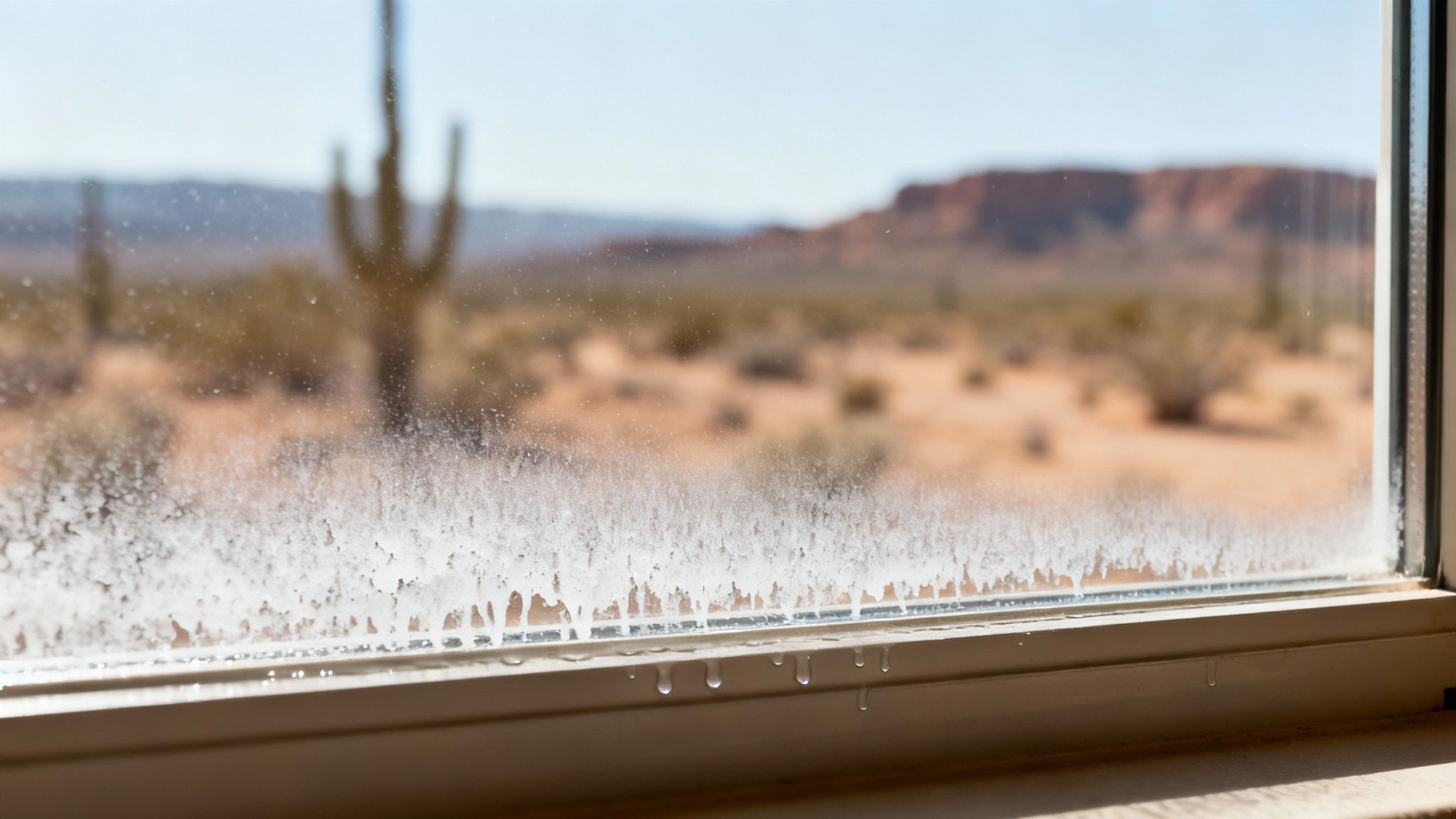
If you've ever felt like you're cleaning your windows only to have those frustrating white blemishes reappear, you're not alone. The problem isn't your cleaning method; it’s the water itself. Hard water is simply water with a high concentration of dissolved minerals.
When a sprinkler, hose, or even rain hits your windows, the water eventually dries up in the sun. But the mineral particles don't go anywhere. Over time, they actually fuse with the porous surface of the glass, creating a semi-permanent, hazy layer that looks awful. This is precisely why ordinary window cleaners often seem useless against them—they aren't designed to break down those tough mineral bonds.
Why Location Matters For Hard Water Stains
The severity of your hard water problem often boils down to your zip code. Here in Phoenix, Arizona, for instance, the water is notoriously hard because it comes from mineral-rich sources like the Colorado River. This makes fighting hard water stains on windows a constant battle for local homeowners.
The science is simple: the more minerals in your water, the faster and tougher the stains will be. This is why knowing how to prevent the stains is just as important as knowing how to remove them.
To get a better handle on this, the industry uses a scale that measures water hardness in Grains Per Gallon (GPG). Here’s a quick breakdown of what those numbers mean for your windows.
Water Hardness Levels and Their Impact on Windows
| Hardness Level (GPG) | Classification | Expected Impact on Windows |
|---|---|---|
| 0 – 3 | Soft | Minimal to no visible staining. Easy to clean. |
| 3.1 – 7 | Moderately Hard | Light spotting may occur over time but is usually removable with standard cleaners. |
| 7.1 – 10.5 | Hard | Noticeable white spots and cloudiness will form. Requires specialized cleaners. |
| > 10.5 | Very Hard | Aggressive, stubborn staining that can etch glass if left untreated. |
With around 85% of American homes dealing with some level of hard water, it's a widespread challenge. The problem is most acute in the Southwest, where mineral content is naturally through the roof. For a deeper dive into these stubborn blemishes, check out a detailed guide to removing hard water marks on windows.
Common Causes of Window Staining
So, where is all this hard water coming from? A few everyday scenarios are the most likely culprits:
- Misdirected Sprinklers: This is the number one cause I see in the field. Irrigation systems repeatedly douse windows with mineral-heavy water, letting it bake on in the sun.
- Rain Runoff: Water that rolls off your roof, siding, or metal screens can pick up extra minerals and dirt before it dries on the glass below.
- Hosing Down Siding: When you're washing the exterior of your home, it's easy to accidentally splash hard water onto the window panes.
Getting to the bottom of these root causes is the first real step toward achieving—and keeping—those crystal-clear windows you're after.
Gearing Up: Your Hard Water Stain Removal Toolkit
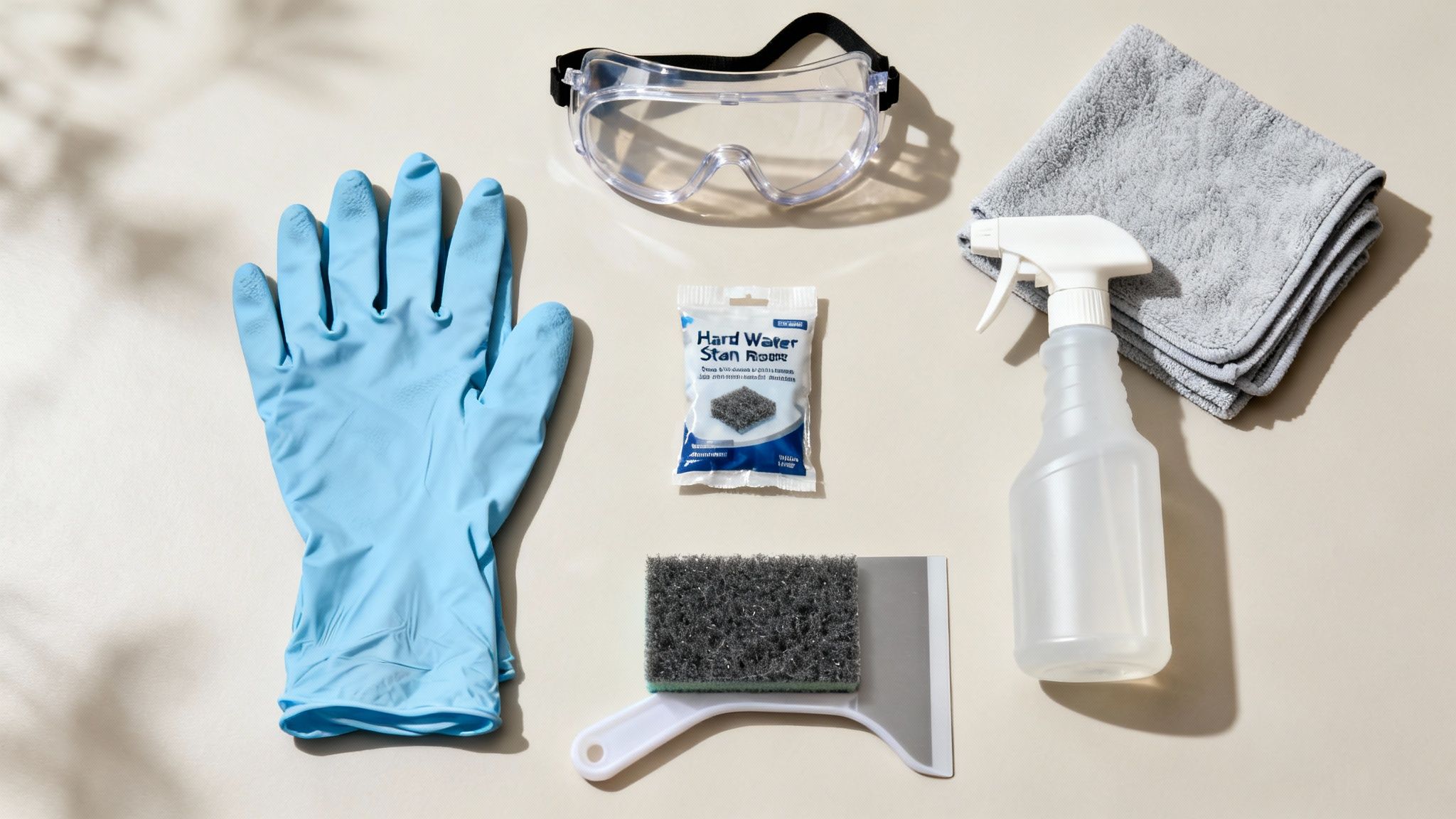
Before you even think about tackling those stubborn mineral deposits, let's get your gear in order. Trust me, having the right supplies on hand makes the entire process smoother and far more effective. It's the difference between a frustrating afternoon and a job well done.
First things first: safety. We're often dealing with acidic solutions or fine abrasives, so protecting yourself is non-negotiable.
- Gloves: A sturdy pair of waterproof rubber or nitrile gloves is a must to keep cleaning agents off your skin.
- Eye Protection: Don't skip this. A simple pair of safety glasses or goggles can save you from a world of hurt if a solution splashes.
The Right Tools for the Job
The applicator you choose is just as important as the cleaner itself. Grabbing the wrong tool can, at best, be ineffective and, at worst, leave your glass with permanent scratches. The trick is to be tough on the stains but gentle on the glass.
I've seen it countless times—someone uses a standard green kitchen scouring pad and ends up with a window full of micro-scratches. The right tool makes all the difference. Always start with the gentlest option and only escalate if needed.
For wiping down surfaces and applying your cleaning solution, nothing beats high-quality microfiber cloths. They soak up liquid like a sponge and won't leave annoying lint behind.
When you hit a stubborn patch that needs a bit more muscle, reach for a non-abrasive scrub pad. These are typically white or blue and give you the extra friction you need without harming the glass.
Now, for those really tough, baked-on mineral deposits, the secret weapon is #0000 steel wool (that's "quadruple-ought"). It might sound scary, but this ultra-fine grade is designed for polishing delicate surfaces. Paired with a good lubricant, it works wonders. But a word of caution: always test it on a small, out-of-the-way corner first, just to be absolutely sure it won’t scratch your particular windows.
If you want to see the full lineup of what we use on professional jobs, take a look at our complete guide to the best window cleaning tools.
Tackling Light Mineral Buildup With a Few DIY Tricks
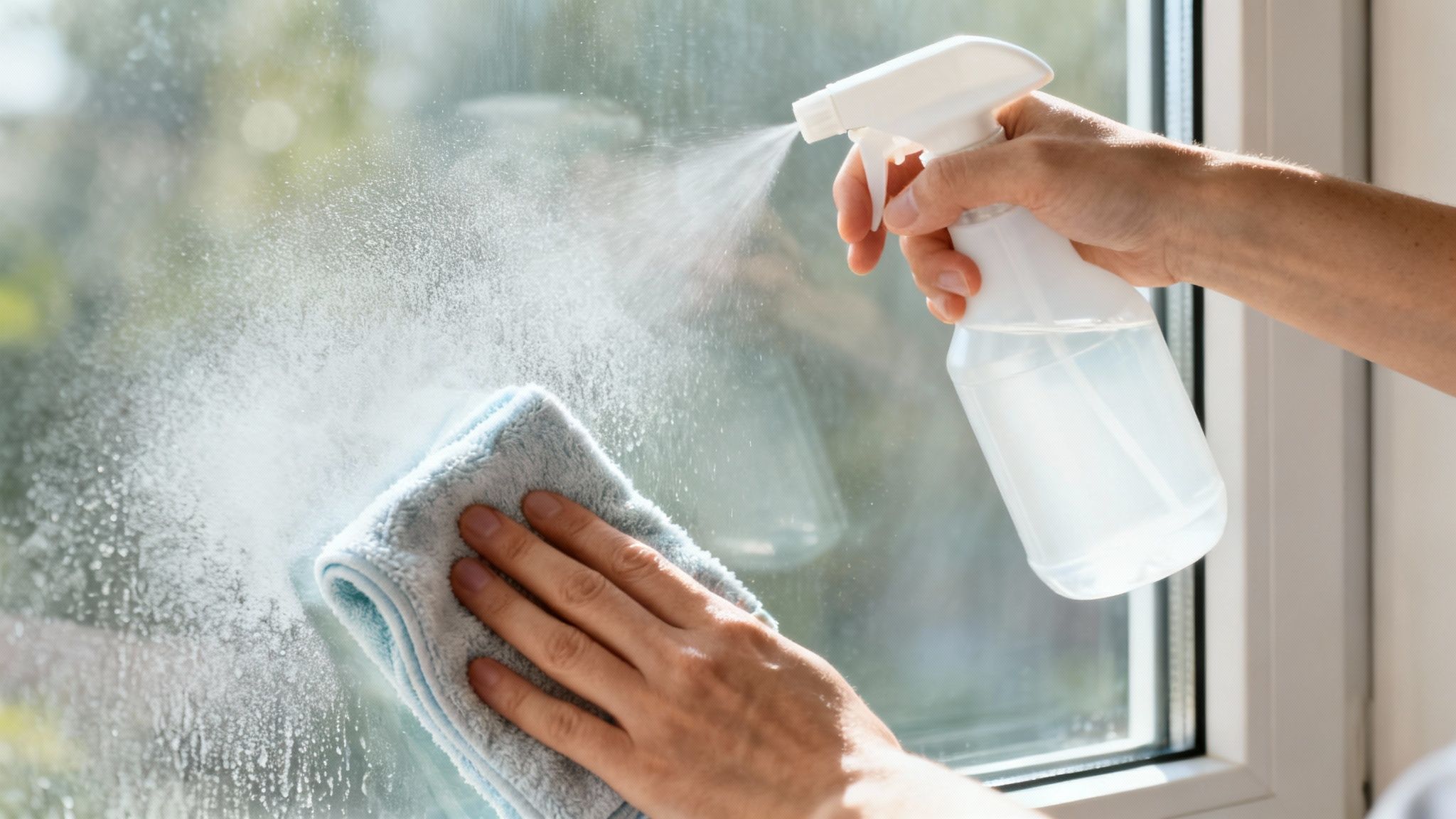
If you've just started noticing those chalky, hazy spots on your windows, the fix might already be in your kitchen pantry. Before you even think about heavy-duty chemicals, a few simple home remedies can work wonders on newer, less severe hard water stains.
The secret is using mild, natural acids to break down the alkaline minerals that have bonded to your glass. These solutions are a fantastic first line of defense—they're safe, inexpensive, and perfect for routine cleanups or catching spots before they become a real problem.
Why Mild Acids Work So Well
The chemistry behind this is pretty simple. Hard water stains are mostly calcium and magnesium, which are alkaline. When you introduce a mild acid, like the acetic acid in white vinegar or citric acid from lemon juice, you start a chemical reaction.
This reaction effectively neutralizes the minerals and dissolves their bond with the glass. It’s the reason soap and water alone won't touch these stains, but a simple vinegar spray can lift them right off.
Don’t underestimate these household staples. For a light haze or recently formed spots, a simple vinegar solution often provides all the cleaning power you need, without the risks associated with harsh commercial products.
If you're looking for more proven DIY recipes, you can find great information in this guide on removing hard water stains from windows.
Mixing Up Your Go-To Vinegar Solution
The most effective formula is a straightforward mix of equal parts distilled white vinegar and distilled water. Here's a pro tip: always use distilled water. It's free of minerals, so you won't accidentally add new deposits back onto the glass while you're cleaning.
- Start by mixing a 50/50 vinegar and water solution in a clean spray bottle.
- Spray the mixture generously onto the stained areas. You want to fully saturate the glass to give the solution a chance to work.
- Let it sit for at least 10-15 minutes. This dwell time is crucial. It lets the acid do its job and break down the minerals.
For tougher spots that don't want to budge, soak a few paper towels in your vinegar mix and press them directly against the glass. This little trick keeps the acid concentrated on the problem area for longer.
Once the solution has had time to work, grab a non-abrasive pad or microfiber cloth and scrub gently in a circular motion. To finish, rinse the window thoroughly with clean water and dry it completely with a squeegee or a fresh microfiber cloth. A perfect, streak-free finish depends on getting the glass totally dry.
Choosing the Right Commercial Stain Remover
So, your vinegar solution and a good bit of elbow grease just aren't cutting it against those stubborn, sun-baked mineral spots. It happens. When DIY methods hit a wall, it’s time to bring in the bigger guns: commercial-grade stain removers. These aren't your everyday cleaners; they're specifically formulated to break down the tough chemical bonds that minerals form with glass.
Walking down the cleaning aisle can feel a bit overwhelming with all the options, but it's simpler than it looks. Most of these products are categorized by their active ingredients and overall strength. You’ll find everything from mild acidic formulas to more intense compounds meant for years of buildup. The trick is to match the product's power to how bad your stains really are.
Decoding Product Labels and Ingredients
The secret to picking the right product is right there on the label. You'll want to look for active ingredients known for dissolving mineral deposits. For moderate stains that just laughed at your home remedies, cleaners with sulfamic acid or glycolic acid are a great place to start.
If you're dealing with stains that look almost etched into the glass, you'll likely need something more heavy-duty, perhaps a product with stronger acids or even fine abrasives. These are often marketed as "heavy-duty" or "professional-grade." Just remember, stronger isn't automatically better. Overkill can cause more harm than good, so always begin with the mildest option that could plausibly work and only move up in strength if you have to. If you want a deeper dive into what the pros use, check out our guide on the essential chemicals for window cleaners.
It's also worth thinking about the time you'll spend scrubbing. Studies show that mild acids can take 40-60% more scrubbing time than medium-strength options. While about 70-80% of household hard water stains respond well to mild or medium products, those truly severe cases often need a professional-grade solution. A word of caution, though: using strong acids incorrectly can permanently damage glass, leading to repair costs that can be 300-500% higher than simply hiring a pro in the first place. You can find more expert advice about these powerful cleaning agents on jracenstein.com.
Comparing DIY vs Commercial Cleaners
To help you decide what's best for your situation, here's a quick comparison of the common approaches to stain removal.
| Method | Best For | Effectiveness | Safety Level |
|---|---|---|---|
| Vinegar/Lemon Juice | Light, recent mineral spots | Low to Moderate | High (Non-toxic) |
| Baking Soda Paste | Mild stains, gentle abrasion | Low to Moderate | High (Non-toxic) |
| Mild Acidic Cleaners | Moderate, stubborn stains | Moderate to High | Medium (PPE needed) |
| Heavy-Duty Removers | Severe, etched-in stains | High | Low (Requires PPE and experience) |
Ultimately, the right choice depends on the severity of the stain and your comfort level with using chemicals. For light buildup, a home remedy is a safe and cheap first step. For anything more serious, a carefully chosen commercial product is usually the most effective path.
Prioritizing Safety with Chemical Cleaners
When you're working with powerful commercial products, safety can't be an afterthought. These cleaners can be hazardous if you don't handle them correctly, which means Personal Protective Equipment (PPE) is a must.
- Protective Gloves: Always, always wear chemical-resistant gloves. You don't want acidic compounds making direct contact with your skin.
- Eye Protection: A simple pair of safety glasses or goggles is non-negotiable. One accidental splash is all it takes to cause serious eye damage.
- Proper Ventilation: Make sure you're working in a well-ventilated area, especially if you're indoors. Open windows and doors to keep fumes from building up.
Before you even open the bottle, read the manufacturer's instructions from start to finish. Follow their guidelines on dilution, how to apply it, and how long to let it sit on the glass.
Here's a pro tip that has saved me more than a few headaches: Always test a new product on a small, hidden corner of the window first. This quick spot test is the only way to be sure the cleaner won't cause discoloration, etching, or other permanent damage.
By taking a smart, measured approach—starting mild, understanding what's in the bottle, and putting safety first—you can confidently tackle those hard water stains and get back to having crystal-clear windows.
Proactive Strategies to Prevent Future Stains
Dealing with hard water stains after they’ve formed is one thing, but the real secret to clear windows is stopping them from ever appearing. The best way to "remove" a stain is to prevent it from happening in the first place. A few simple adjustments can break that frustrating cycle of scrubbing for good.
You'd be surprised how often the main culprit is sitting right in your own yard: the sprinkler system. When sprinkler heads hit your windows day after day, they're basically painting them with a fresh coat of minerals. It’s worth taking a few minutes to run your system and just watch. You might find a sprinkler aimed squarely at your glass.
Control Your Water Sources
Adjusting the spray pattern or moving a sprinkler head is an easy fix that makes a world of difference. If you have plants right under a window, think about switching to a drip irrigation system. It gets water straight to the roots, so there's no overspray to worry about.
Roof runoff is another big one. When it rains, water washes over your roof and siding, collecting dirt and minerals along the way, and then splashes right onto your windows. Installing downspout diverters is a great way to channel that water away from your glass and prevent a major source of stains.
The whole idea is to keep as much water off your glass as possible. By managing your sprinklers and runoff, you’re tackling the problem at its source, which is always easier than fighting the stains later.
Apply a Protective Barrier
For the ultimate defense, applying a professional-grade hydrophobic glass sealant is a game-changer. This stuff creates an invisible, super-smooth layer on the glass. Water can’t stick to it; it just beads up and rolls right off, taking all those dissolved minerals with it. Think of it as a permanent raincoat for your windows.
This is especially important in places like Arizona, where the climate and water supply team up to create a perfect storm for staining. The water, coming from sources like the Colorado River, can cause stains 2-3 times faster than in other parts of the country. Add in Phoenix's intense heat, which boosts evaporation rates by 40-50% in the summer, and you can see why local windows are under constant attack. If you want to dive deeper, you can learn more about Arizona's unique hard water challenges on gandswindowcleaning.com.
When you combine these strategies—managing your water sources and adding a protective sealant—you drastically cut down on how often you need to do heavy-duty cleaning. It’s a smart investment that pays off with windows that stay sparkling clear.
Knowing When to Call a Window Cleaning Professional
While it's tempting to tackle every home project yourself, some jobs are best left to the experts. When it comes to stubborn hard water stains, knowing your limits can save you from a world of frustration—and even from accidentally damaging your windows for good.
There are a few tell-tale signs that a stain problem has moved beyond a simple DIY fix. If those mineral spots have been sitting there for years, they've likely started to etch into the glass itself. At that point, the minerals have practically fused with the surface, making them nearly impossible to scrub away with home remedies.
Safety is another huge factor. Let’s be honest, balancing on a ladder to reach second-story windows is a risky business. A professional team has the right equipment, from commercial-grade ladders to safety harnesses, to get the job done without any dangerous mishaps.
When DIY Is Not Enough
So, what does a professional bring to the table that you can't find at the hardware store? It comes down to specialized tools and a level of expertise you only get from experience.
- Pure Water Systems: One of the biggest game-changers is purified water. Pros often use a de-ionization system that strips all minerals from the water. This "hungry" water acts like a magnet, pulling dirt and deposits right off the glass for a perfectly clean, streak-free shine.
- Mechanical Polishing: For those deeply etched stains, a pro might break out a glass polishing kit. Using orbital polishers and special compounds, they can gently buff away the mineral buildup without leaving a single scratch.
- Specialized Acidic Cleaners: In the toughest cases, a carefully selected commercial-grade acidic cleaner might be necessary. Experts are trained to handle these powerful solutions safely, dissolving years of buildup without harming your windows or frames.
Once your windows are finally clear, the next step is prevention. This handy flowchart gives you a simple strategy to keep them that way.
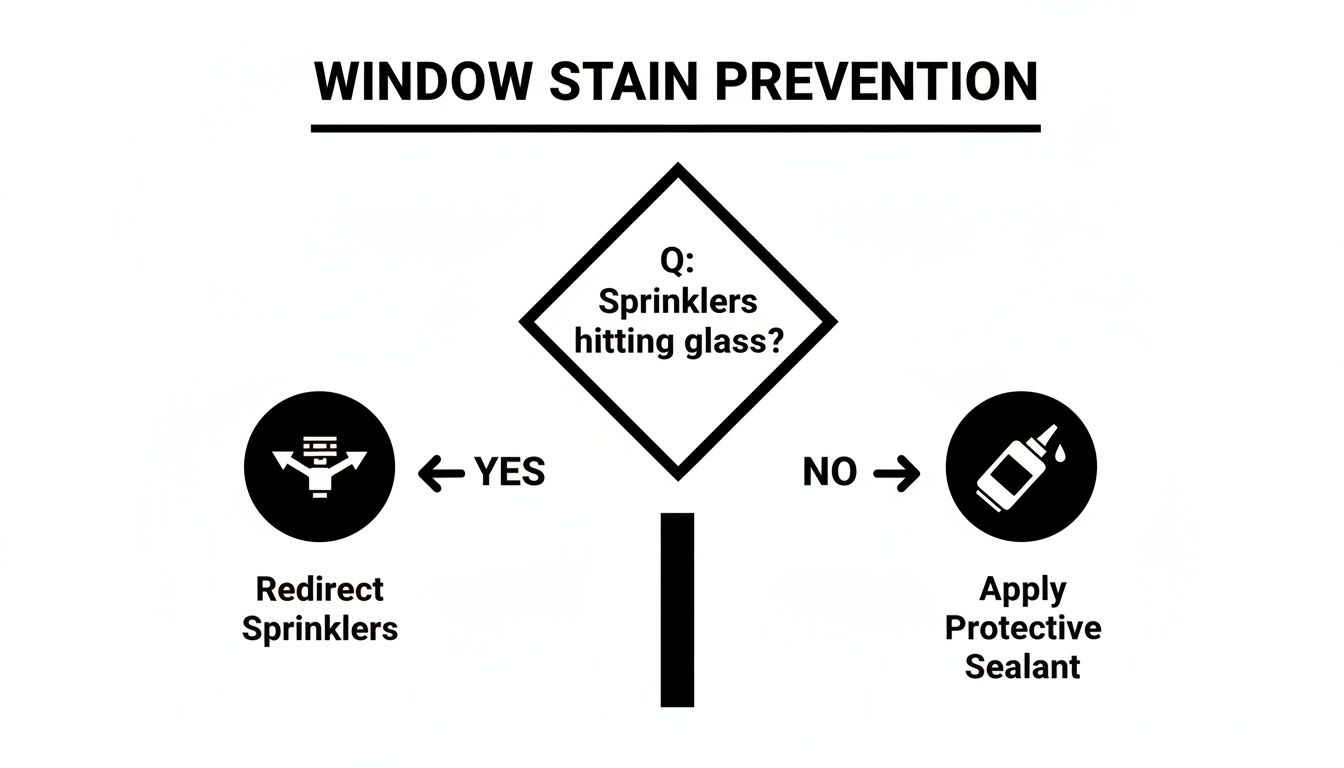
As you can see, the number one priority is dealing with the source of the water. Misaimed sprinklers are one of the most common culprits behind severe hard water staining.
Bringing in a pro for the initial deep removal of hard water stains on windows is often a smart investment. They can restore your glass to its original clarity and give you personalized advice to keep it looking great.
If you’ve already tried the DIY route with no luck, or if the job just feels too big or too high up, that’s your cue to call in a professional. For a deeper look into this decision, you can learn more about knowing when to call a professional window washing company and get the peace of mind that comes with a flawless, damage-free finish.
Got Questions About Hard Water Stain Removal? We’ve Got Answers.
Tackling hard water stains on your own often brings up a few questions. I hear them all the time from homeowners around Phoenix. You might be wondering if those milky spots are a permanent problem or if that cleaning tip you saw online is actually safe for your windows. Let's clear up some of the most common uncertainties.
"Are these hard water stains permanent?"
This is probably the #1 question I get, and the honest answer is: they can be. When mineral deposits sit on your glass for a long time, especially baking in our Arizona sun, they can start to etch the surface.
This is a chemical process called corrosion. The minerals literally eat into the glass, creating tiny pits that make the window look cloudy or foggy, no matter how much you scrub. The key is to act before that happens.
"Is it safe to use something abrasive, like baking soda?"
I've seen plenty of DIY articles suggesting a baking soda paste. While it can work on very light, fresh stains, you have to be extremely careful. If you're going to try it, make sure the paste is more watery than gritty and only use a soft microfiber cloth.
Anything more abrasive, or rubbing too hard, can leave you with a bigger problem: a window full of fine scratches.
My advice? Always test your cleaning solution—whether it's baking soda or a store-bought product—on a small, out-of-the-way corner of the window first. It’s a simple step that could save you from ruining an entire pane of glass.
"How often should I be cleaning my windows to prevent this?"
Prevention is always easier than removal. For windows that get hit by sprinklers, a quick wipe-down with a squeegee right after they run is the best thing you can do.
For general upkeep here in Arizona, I recommend giving your windows a good, thorough cleaning every one to two months. This stops that mineral buildup from ever getting a real foothold, keeping your view crystal clear year-round.
Frustrated with stubborn stains that just won't budge? Let the professionals at Sparkle Tech Window Washing restore your glass to its original clarity. Contact us today for a free estimate!