




Cleaning windows with newspaper is one of those old-school household tricks that people swear by. It’s surprisingly simple: just a basic vinegar solution and some crumpled-up newsprint can deliver a fantastic, streak-free shine. The secret lies in the paper itself—its dense fibers are great at absorbing liquid without leaving behind the annoying lint you get from paper towels.
Why Cleaning Windows with Newspaper Still Works
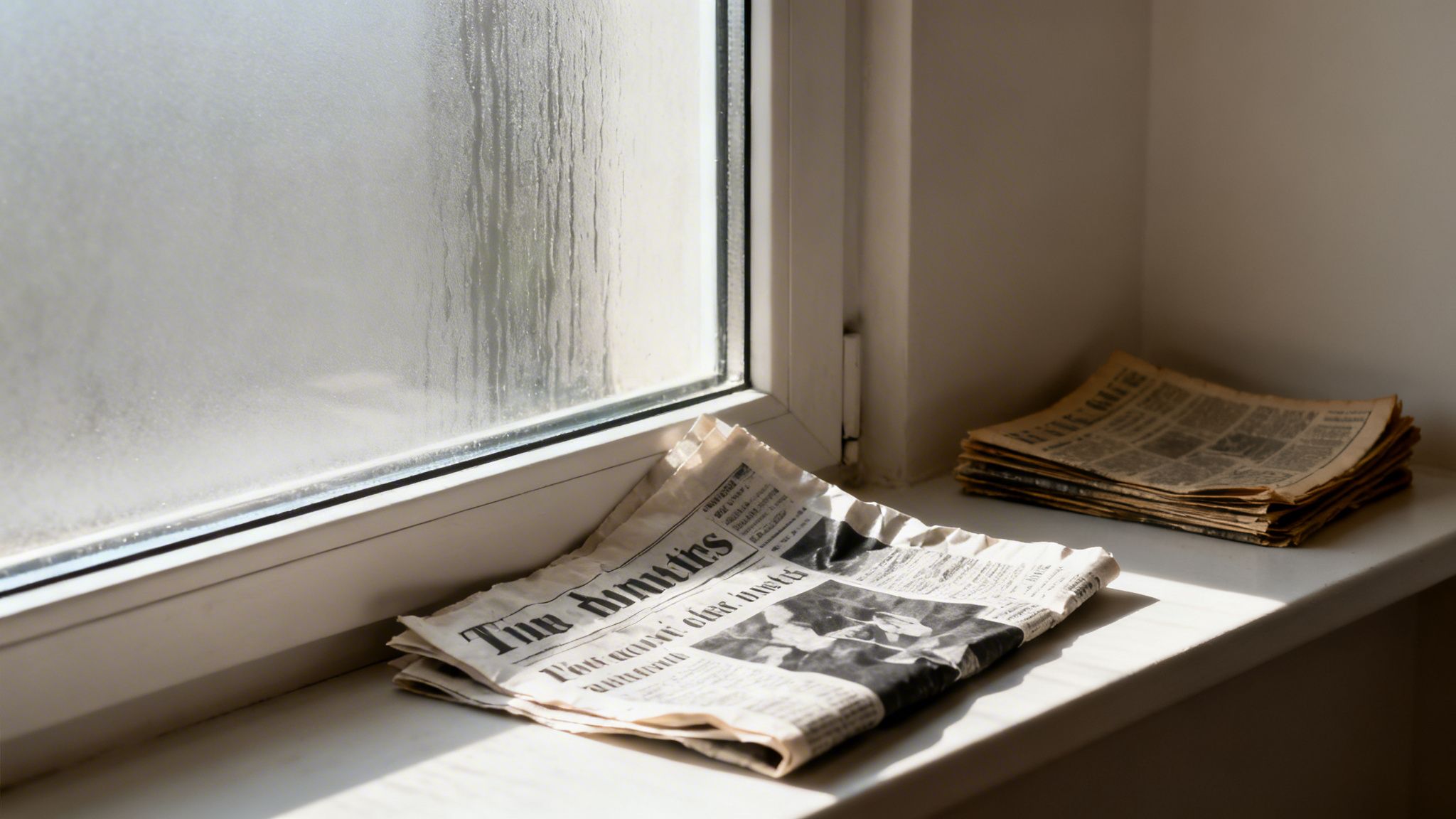
Before microfiber cloths and professional squeegees were in every cleaning caddy, using newspaper was the go-to method for a reason. This technique’s long-standing success comes down to the unique qualities of traditional newsprint. The paper’s dense fiber makeup is incredibly absorbent and, unlike paper towels or cotton rags, it’s far less likely to leave lint behind.
Plus, the slightly abrasive texture of the paper gives you just enough scrubbing power to tackle stubborn grime and hard water spots without actually scratching the glass. It’s this perfect storm of absorbency and gentle friction that gave generations of homeowners that crystal-clear finish they were after.
Before we get into the nitty-gritty, here's a quick overview of the key supplies and tips for getting a streak-free shine.
Newspaper Window Cleaning Quick Guide
Here is a quick overview of the key supplies and tips for getting a streak-free shine before we dive into the detailed process.
| Component | Recommendation | Why It Matters |
|---|---|---|
| Cleaning Solution | 1:1 ratio of white vinegar and water | Vinegar is a natural degreaser that cuts through grime effectively. |
| Newspaper | Black-and-white print, crumpled | The dense fibers absorb liquid without leaving lint; avoid glossy ads. |
| Technique | Work in S-shaped patterns | This ensures full coverage and prevents you from just pushing dirt around. |
| Final Polish | Use a clean, dry piece of newspaper | Buffing the glass after cleaning is the key to a streak-free, sparkling finish. |
This table covers the basics, but there are some important modern considerations to keep in mind for this old-fashioned method.
A Timeless Hack in a Modern World
This method isn’t just folklore; it was a scientifically sound practice for its time. Back in the mid-20th century, it was the standard. Surveys from the 1950s and '60s showed that over 70% of homemakers in major cities relied on newspaper for their weekly window cleaning.
In fact, one 1962 study found that newspaper wiped windows 40% faster than cotton towels while achieving an impressive 95% streak-free rating. This was a game-changer, especially in dusty climates like Phoenix, where desert dust storms could increase grime on windows by up to 30%. You can find more fascinating tidbits on cleaning history and efficiency over at SpeedCleaning.com.
But before you raid your recycling bin, it’s important to know that things have changed. Today's newspapers aren't quite the same as your grandmother's.
- Ink Composition: Many modern newspapers use soy-based inks, which are more eco-friendly but also more likely to transfer. The classic petroleum-based inks were less prone to smudging, so you might end up with some ink on your hands or white window frames.
- Window Technology: A lot of new windows come with special coatings, such as Low-E films, to improve energy efficiency. These coatings can be more delicate than standard glass, and the slight abrasiveness of newspaper could potentially cause damage over time.
Key Takeaway: While the newspaper method is still effective, the materials have evolved. It’s always smart to test it on a small, out-of-the-way corner of the window first. This helps you make sure the ink doesn’t leave smudges and that the paper is safe for your specific type of window.
Gathering Your Supplies for the Perfect Cleaning Solution
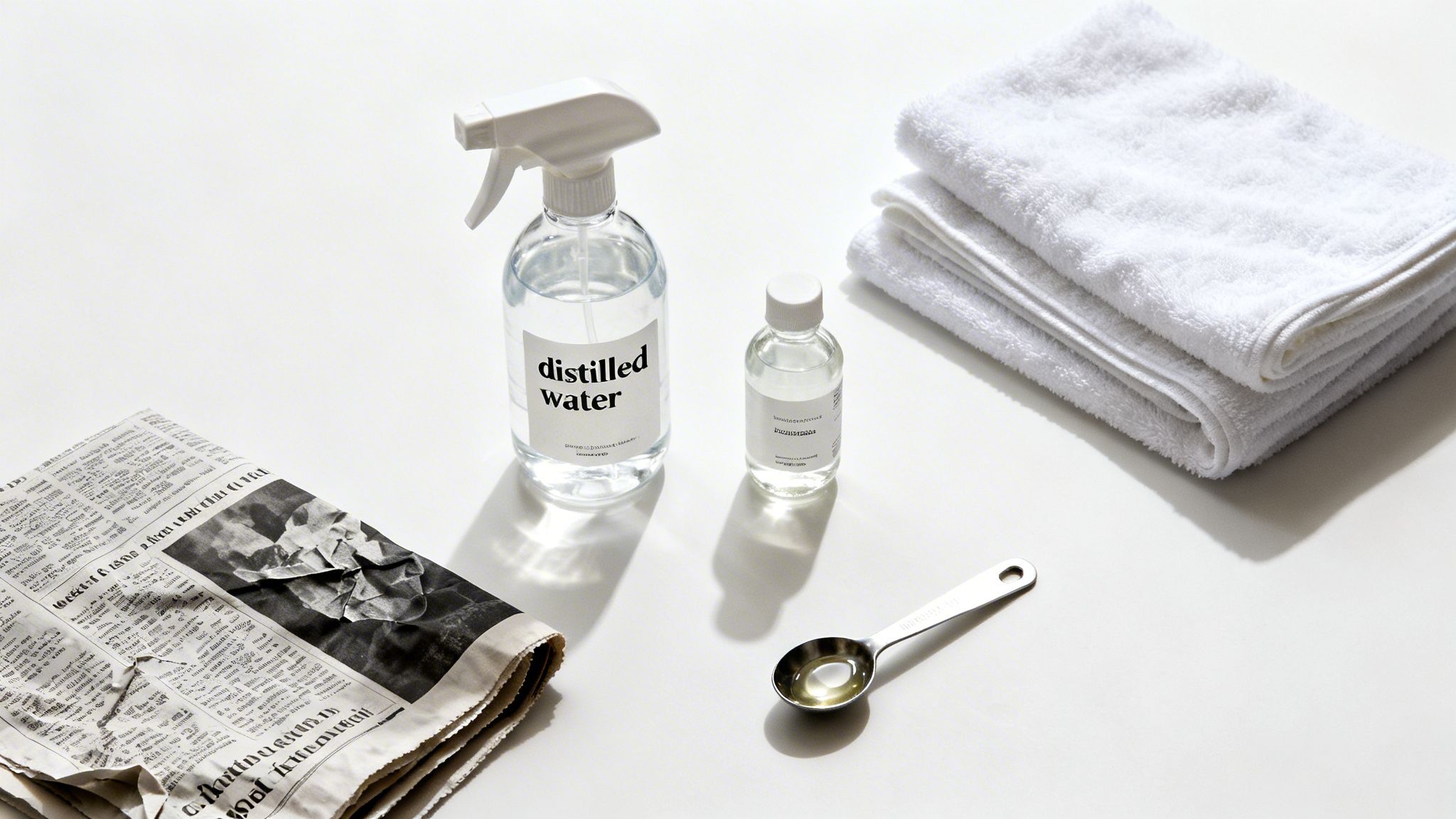
Alright, before we get those windows sparkling, let's talk supplies. Getting everything lined up first means you can work quickly and efficiently without stopping to hunt for something mid-clean.
The most important item, of course, is the newspaper. But not just any section will do. You need old-school, non-glossy newsprint—the standard black-and-white pages. Stay away from the shiny advertising flyers or the Sunday comics. Those glossy pages are made with clays and heavy dyes that are guaranteed to leave a frustrating, hazy film on your glass.
You'll also need a decent spray bottle to apply your cleaning solution. A good one produces a fine, even mist, which is exactly what you want for coating the glass without creating a drippy mess. If you're curious about what the pros use, our breakdown of essential window cleaning supplies is a great resource.
DIY Cleaning Solution Recipes
Forget expensive store-bought sprays. You can whip up a powerhouse cleaner with a couple of things you probably already have. I rely on these two simple recipes for almost every job.
Classic Vinegar Mix: For everyday dust and fingerprints, this is your go-to. Just combine one part distilled white vinegar and one part water in your spray bottle. It’s simple, effective, and gets the job done.
Extra-Strength Soap Solution: Dealing with tougher grime? Maybe the dusty film left after an Arizona monsoon? Start with the same 1:1 vinegar and water base, but add one single drop of plain dish soap. That tiny bit of soap provides serious grease-cutting power without creating a bubbly mess that’s hard to wipe away.
A quick tip from years of experience: Always use distilled water for your mix. The minerals in regular tap water are the number one culprit behind those annoying spots and streaks you see after the window dries. This one small change makes a huge difference in getting a truly flawless finish.
Your Technique for a Flawless Finish
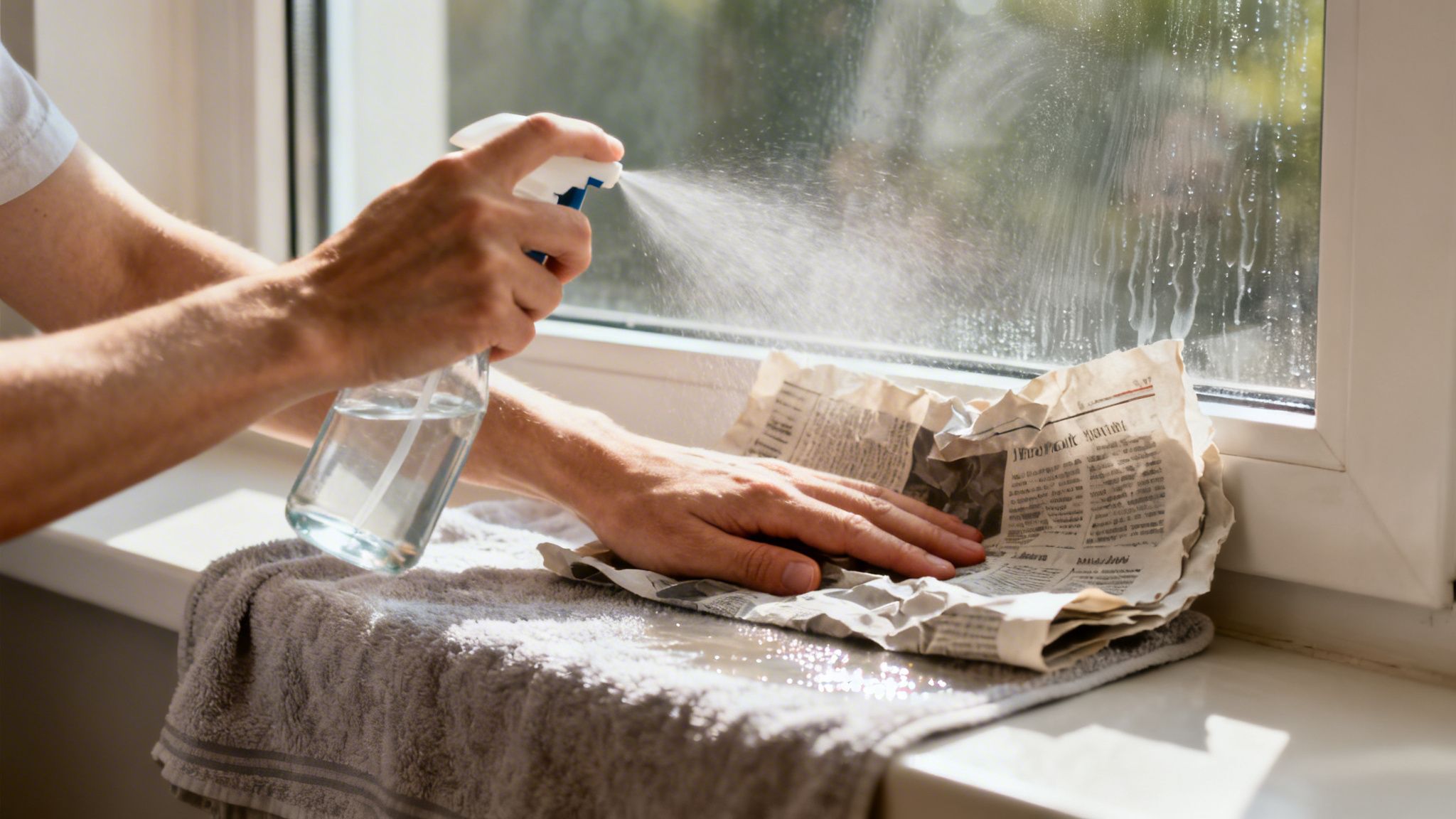
Alright, you’ve got your solution mixed and a stack of newspaper ready. This is where the real work—and the real magic—happens. A little bit of good technique is what separates a streaky mess from a perfectly clear pane of glass.
First things first, protect your home. Lay down a few old towels or a drop cloth on the windowsill and the floor directly beneath it. Trust me, this simple prep step will save your paint, wood, and carpets from any stray drips.
Now, let's talk about spraying. The biggest mistake people make is absolutely drenching the window. You’re not trying to pressure wash it! All you need is a fine, even mist across the entire surface. This light coating is more than enough to start breaking down the grime without creating a runny, hard-to-manage mess.
Wipe, Then Polish: The Two-Newspaper Trick
Here's the secret that really makes this method work: you need two separate pieces of newspaper for each window. One for cleaning, and one for polishing. Trying to do both with the same soggy piece of paper is a guaranteed recipe for streaks.
Your first piece of crumpled newspaper is your workhorse. Use it to wipe down the misted window from top to bottom. You'll see it lift away the obvious layers of dust, pollen, and fingerprints. This piece is going to get dirty and damp, which is exactly what you want.
Once the grime is gone, toss that first newspaper. Now, grab a completely fresh, dry sheet, crumple it up, and get ready for the final buff. This is the step that makes the glass sparkle. Vigorously polish the window until every last bit of moisture is gone, leaving nothing but a brilliant, streak-free shine.
Mastering the drying part is a skill all on its own. If you're still fighting streaks, our guide on 3 proven ways to dry windows without leaving streaks has some extra pro-level tips.
Pro Tip for Crumpling: Avoid crushing the newspaper into a tight, hard ball. You want a loosely crumpled ball with lots of soft surfaces and edges. This shape is far more absorbent and effective at both cleaning and polishing the glass without being too harsh.
A Pro Trick for Spotting Streaks Instantly
Here's a simple, genius trick we use in the field to find and fix streaks without any guesswork. It saves a ton of time and frustration, especially when you’re dealing with big picture windows.
- When you clean the inside of the window, use only vertical strokes (up and down).
- When you clean the outside, switch to horizontal strokes (side to side).
Now, when you step back to inspect your work, you'll know exactly where any remaining streaks are. A vertical streak? That’s on the inside. A horizontal one? It’s on the outside. No more re-cleaning both sides just to chase down one little smudge.
Oops! Common Mistakes with Newspaper (and How to Fix Them)
Even this time-tested method has a few common pitfalls. If you've ever finished a window only to find it covered in new streaks or your hands looking like you've been sorting through a coal bin, you've run into the two biggest issues. Let's break down why this happens and how you can avoid it.
Streaks are almost always caused by your cleaning solution drying too fast. The number one culprit? Cleaning in direct, hot sunlight. The sun's heat causes your vinegar solution to evaporate in seconds, leaving behind a film of residue before you even have a chance to wipe it all away.
The simple fix is to time your cleaning right. Work on a cool, overcast day or stick to the shaded side of your house. Also, go easy on the spray bottle. You only need a light mist to loosen the grime—drenching the glass makes it nearly impossible to buff dry and is a surefire recipe for streaks.
Tackling Annoying Ink Transfer
Now for the other headache: ink transfer. This is a much bigger problem now than it was for our grandparents, and it's all down to a change in the newspaper industry itself.
The issue is that modern newspapers don't use the same kind of ink they used to. Since 2000, about 90% of U.S. newspapers have switched to soy-based inks. While that's great for the environment, this type of ink is far more likely to smudge.
In fact, one study found that cleaning with newspapers left behind detectable ink residue in 35% of attempts. This gets even more noticeable on newer, energy-efficient windows. The same tests showed ink on 28% of Low-E coated panes, which can increase the foggy haze on your windows by 15% after just a handful of cleanings. You can dive deeper into these findings and see why newspaper cleaning isn't the perfect hack people think it is.
The Fix Is In: To sidestep the smudgy mess, always wear a pair of rubber or disposable gloves. Before you go to town on a whole window, do a quick spot-test on a small, out-of-the-way corner. This will immediately show you if that day's paper is prone to bleeding ink, so you can clean with confidence.
Modern Alternatives and When to Call in the Pros
The newspaper trick is a classic for a reason, but let’s be honest—it's not always the best tool for the job, especially with modern windows. While it can work in a pinch, high-quality microfiber cloths and professional-grade squeegees have really changed the game.
A good microfiber cloth is a game-changer. They’re woven to grab onto grime and dust particles without leaving behind a trail of lint. Then there's the squeegee. In the hands of someone who knows what they're doing, a squeegee delivers that flawless, completely streak-free finish that’s almost impossible to get with crumpled paper. It just glides, taking all the water and dirt with it in one clean pass.
If you’ve tried the newspaper method and are still battling streaks or weird smudges, it's usually down to a few common culprits. This diagnostic chart can help you pinpoint exactly what's going wrong.
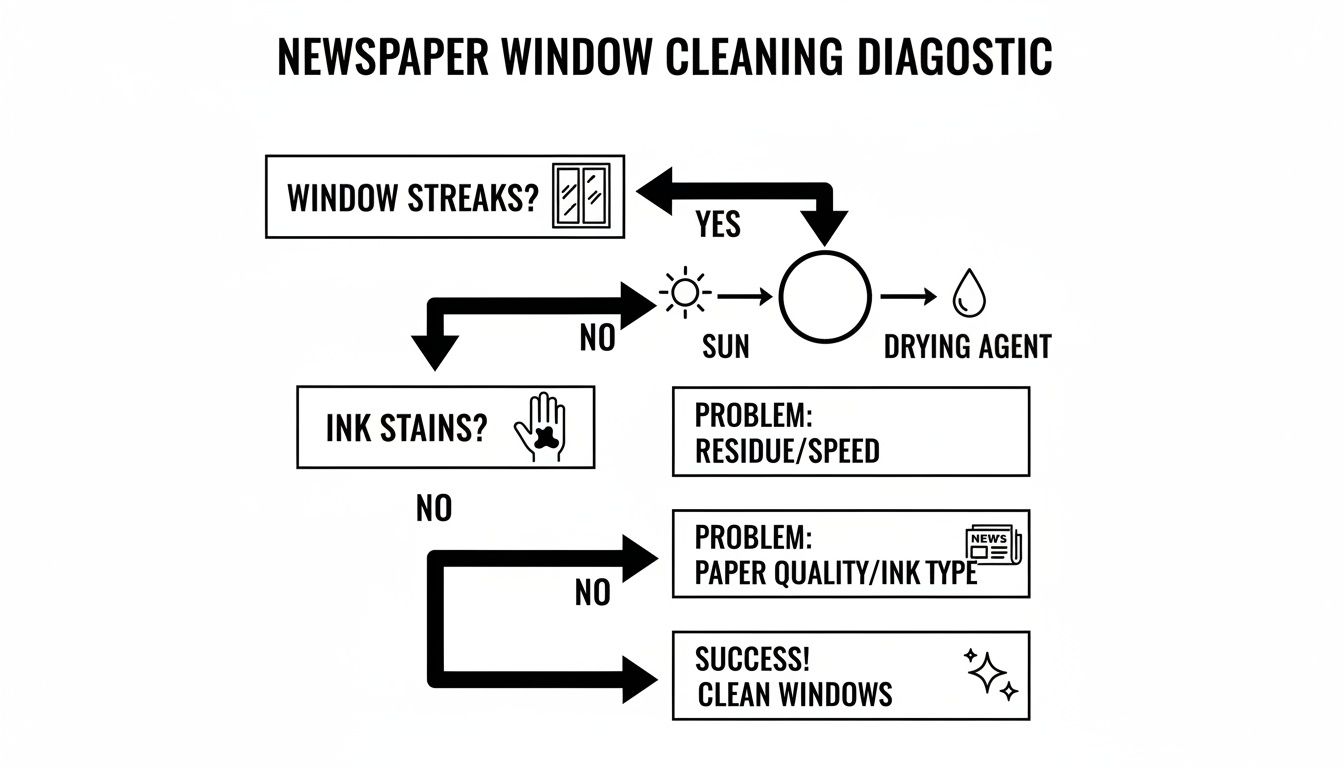
As you can see, things like direct sun can cause streaking before you even finish wiping, while those pesky ink stains are a direct side effect of the newspaper itself.
When to Hire a Professional
Sometimes, the smartest and safest decision is to step back from the DIY project and call in an expert. I always tell homeowners to consider it, especially in a few key situations:
- Height and Safety Issues: Got second-story windows or panes that are just a pain to reach? A professional has the right ladders, safety harnesses, and experience to do it safely. It’s just not worth the risk.
- Specialty or Delicate Glass: If your windows have Low-E coatings, protective tints, or decorative films, the slightly abrasive texture of newsprint could cause permanent damage. Pros know how to handle these delicate surfaces.
- You Just Want Perfect Results, Fast: Let's face it, your time is valuable. If you want a guaranteed, crystal-clear shine without dedicating your entire Saturday to it, nothing beats a professional service.
The difference in efficiency is staggering. A squeegee can clean a window 95% faster and more effectively than newspaper. That’s not an exaggeration. Here in the Phoenix area, where the residential window cleaning market topped $2.5 billion in 2024, our team at Sparkle Tech Window Washing can have a 20-window home sparkling in about 45 minutes. A DIYer using newspaper could easily spend 2 hours on the same job. This efficiency is why pros using squeegees see a 92% satisfaction rate.
An insured professional team gives you more than just a superior clean; they provide total peace of mind. Knowing the job is done right and safely is invaluable. For more on this, check out our guide on knowing when to call a professional window washing company.
And it's not just about windows. Other glass surfaces in your home have their own quirks. For great advice on keeping your bathroom glass looking brand new, these shower door maintenance tips are a fantastic resource.
Common Questions & Troubleshooting Tips
After walking people through this old-school method for years, I've noticed a few of the same questions always come up. If you're running into trouble or just want to get ahead of common mistakes, here are the answers I always give.
What About Glossy Flyers or the Comics Section?
Don't do it. It's tempting to grab whatever paper is lying around, but you'll regret it. The glossy finish on ad circulars and the heavy, colored inks from the comics section are loaded with clays and other additives. These will absolutely leave a smudgy, hazy film on your glass, completely undoing all your hard work. For that perfectly clear, streak-free shine, you have to stick with classic, black-and-white newsprint.
Is It Safe to Use Newspaper on Tinted or Low-E Windows?
This is a big one. My advice is to play it safe and steer clear. While newspaper is perfectly fine for your average, standard windowpane, modern Low-E coatings and after-market window tints are incredibly delicate.
The paper itself has a slightly abrasive texture, and there's a small but real risk that the ink could react with the coating. The last thing you want is to cause micro-scratches or permanent damage. For these specialty windows, a high-quality microfiber cloth is a much safer, more reliable choice.
The classic downside to this trick? Inky fingers. Most newspapers now use soy-based inks, which are great for the environment but notorious for transferring. The easy fix is to just pop on a pair of disposable or rubber gloves before you start.
Why Are My Windows Still Streaky?
This is the number one frustration I hear. If you're still seeing streaks after all that elbow grease, it’s almost always one of a few simple things.
The most common culprit is cleaning in direct sunlight. If the glass is warm, your cleaning solution evaporates before you can wipe it away, leaving mineral deposits and streaks behind. Wait for a cooler, overcast day or work on the shady side of the house.
Other things to check for:
- Too much spray: You really only need a light mist. Drenching the window just gives you more liquid to chase around.
- A damp final wipe: Your last pass should be with a completely fresh, dry piece of newspaper. If it's even slightly damp, you're just pushing moisture around instead of polishing the glass.
- Using plain tap water: If your area has hard water, those minerals will get left behind as spots. Always use distilled water in your cleaning mix to avoid this.
If you're tired of battling streaks or have high, awkward windows that are a pain to reach, it might be time to call in the experts. The team at Sparkle Tech Window Washing serves all of Arizona, bringing the right equipment and know-how for a flawless, professional shine every time. You can learn more about our services at https://sparkletechwindowwashing.com.