




Need that unwanted overspray gone fast? The secret is a one-two punch: lift the edges with a razor blade, then wipe away the softened paint with acetone or rubbing alcohol. It's a method we've trusted for years.
Quick Spray Paint Removal Guide
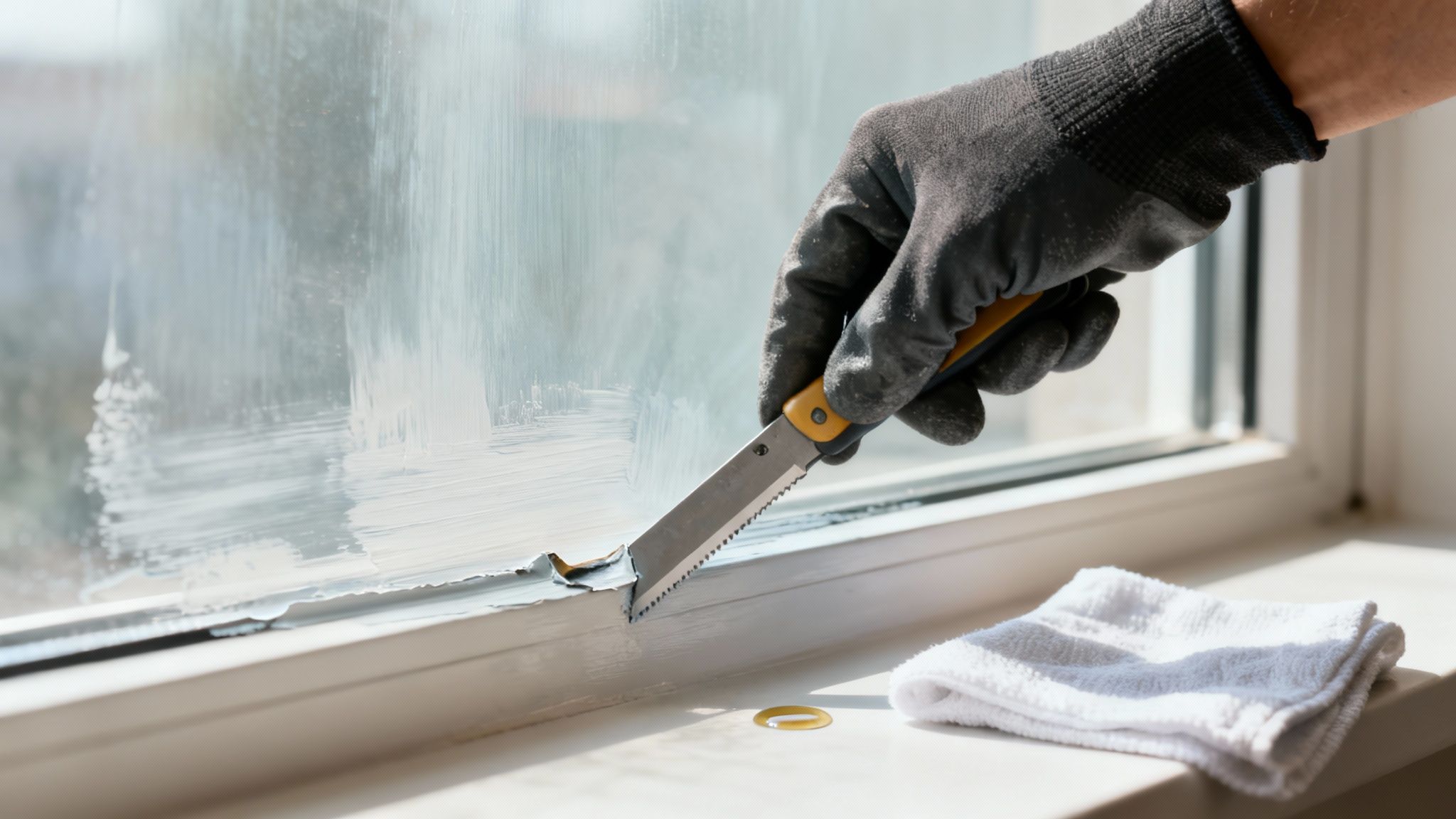
When you're dealing with spray paint on glass, you can usually clear it up in minutes if you follow the right process. Here's a quick rundown of the technique we use on the job.
- Grab a new, sharp razor blade and hold it at a low angle—think 30 degrees or less. This lets you get under the paint to lift it without gouging the glass.
- Next, grab a solvent. Acetone is usually my first choice, but isopropyl alcohol works too. Apply it to a cloth and work in small, circular motions to break down the paint.
- Wipe away the gunk with a clean microfiber cloth. You might need to repeat the process a few times for stubborn spots, but you'll get there.
For fresh graffiti or minor overspray, a few wipes with acetone is often all it takes. If you're up against paint that's been baked on for years, you might need to step up to a proper paint thinner or a commercial-grade remover.
Just remember, safety first. Always slip on a pair of nitrile gloves and make sure you have plenty of fresh air flowing when you're working with these chemicals. A little prep goes a long way, too—tape off any surrounding window frames and throw down a drop cloth to catch any drips.
Pro Tip: A little soapy water can act as a lubricant for your razor blade. It helps the blade glide smoothly and gives you an extra layer of protection against accidental scratches.
Based on industry data tracked between 2018-2023, acetone has proven to be about 91% effective at removing spray paint from standard, non-tinted glass. Better yet, the average time to clear a spot is just 5-15 minutes. It's fast and it works.
For a similar challenge, like getting road paint off your car's windshield or windows, you can check out these safe methods for removing road paint from vehicles.
Comparing Common Spray Paint Removal Methods
Not sure which approach is right for you? Here's a quick look at your options, breaking down how they stack up in terms of effectiveness, the time you'll spend, and what it'll cost you.
| Method | Effectiveness | Typical Time | Cost Range |
|---|---|---|---|
| Razor Blade + Solvent | High | 5-15 min | $5-15 |
| Commercial Remover | Medium | 10-20 min | $15-30 |
| Heat or Steam | Low | 15-25 min | $0-10 |
The razor and solvent combo almost always comes out on top for its blend of speed, cost, and power. It's the go-to for a reason.
Once all the paint is gone, a quick polish with a simple vinegar and water solution will get rid of any streaks and leave you with a crystal-clear finish.
And please, always test your chosen method on a small, hidden corner of the glass first. It’s a simple step that can save you from a major headache.
Choosing Your Tools and Solvents
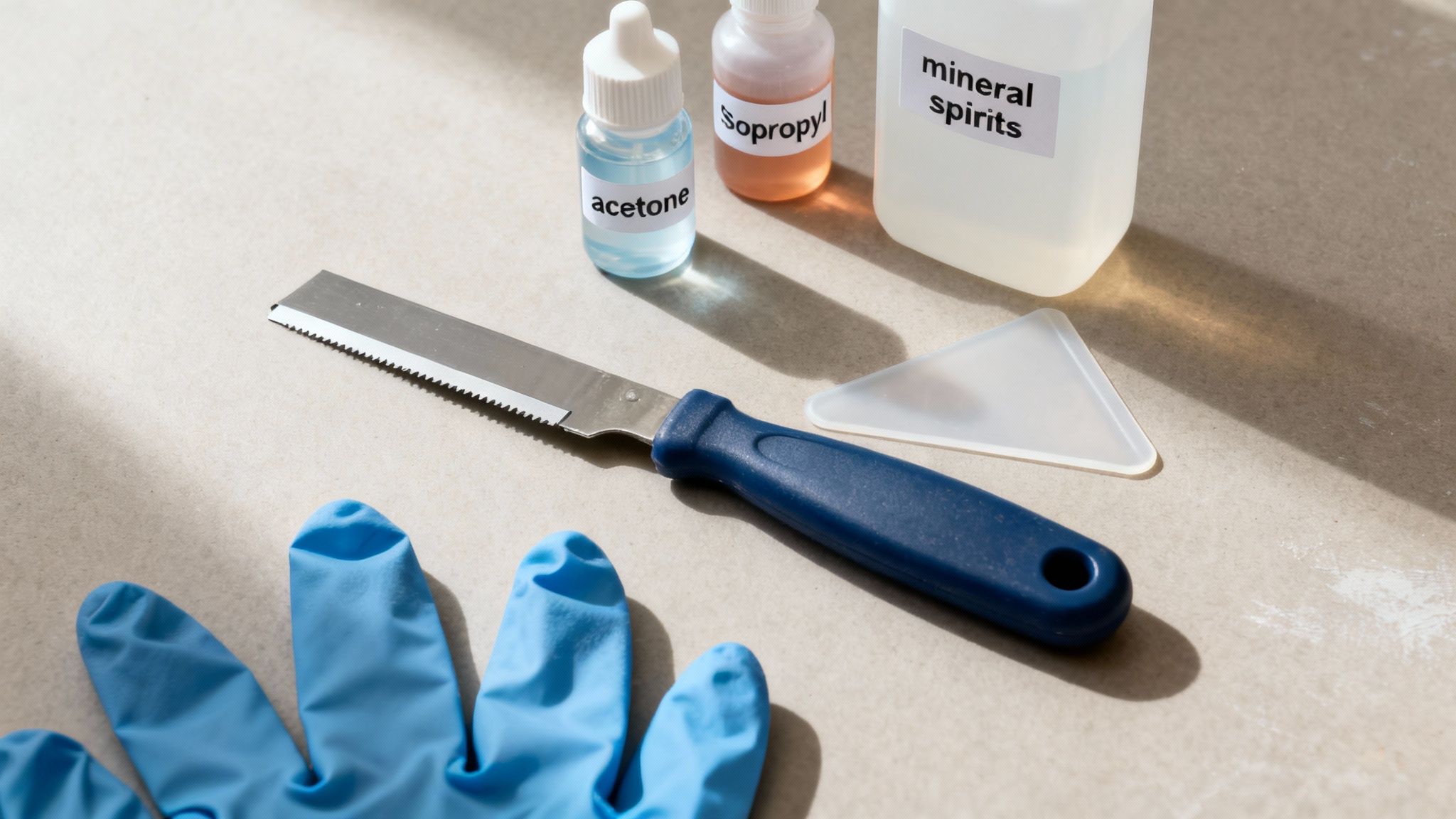
Before you can even think about scrubbing away that unwanted paint, you need to gather your gear. The tools and solvents you pick will make or break this project, turning a potential headache into a straightforward fix. It's all about matching the right tool to the specific mess you're facing.
Your number one mechanical tool is going to be a scraper. For most standard glass, nothing beats a new, sharp metal razor blade. It’s incredibly effective at getting under the edge of dried paint and lifting it right off. If you’re working with delicate or coated glass, or you're just worried about scratching, grab a plastic razor blade. It's a safer bet, though it'll take a bit more elbow grease.
Selecting the Right Solvent
With your scraper in hand, you now need a chemical partner to dissolve the paint. What you choose depends entirely on what kind of paint it is and how long it’s been there.
- Light Overspray or Fresh Paint: Always start with the gentlest option. Isopropyl (rubbing) alcohol is a great first choice. Sometimes, even a simple solution of vinegar and water is enough to cut through fresh paint without bringing out the heavy-duty stuff.
- Stubborn, Cured Paint: This is where you need a little more muscle. Acetone (the active ingredient in nail polish remover) is fantastic for breaking down most common spray paints, like enamels and lacquers. It's cheap and effective.
- Thick, Heavy-Duty Jobs: When the basics don't cut it, it’s time to step up to paint thinner, mineral spirits, or a commercial graffiti remover. These are powerful solvents, so make sure you have plenty of fresh air circulating.
A common mistake is reaching for the strongest chemical first. I always recommend starting mild and working your way up. This approach protects the glass and any surrounding frames or seals from unnecessary damage.
There's a reason the pros rely on chemical-based solutions. They make up roughly 45% of the commercial graffiti removal market for a reason—they work. The right solvent can remove 87-92% of spray paint on glass in a single go.
Don't Forget the Essentials
A few other items are non-negotiable for doing the job right—and safely.
You'll want a good supply of clean microfiber cloths for applying solvents and wiping away the dissolved paint. A spray bottle filled with soapy water is also a must-have; it acts as a lubricant when you're scraping, which drastically reduces the risk of scratching the glass.
Most importantly, protect yourself. Always wear nitrile gloves to keep chemicals off your skin and safety glasses to protect your eyes from splashes. If you're curious about what other products professionals keep in their toolkits, check out our guide on the essential chemicals for window cleaners.
Setting Up For A Safe And Clean Removal
Diving into scraping or squirting chemicals without prep often leads to more trouble than you started with. A few simple steps up front can mean the difference between a tidy result and an afternoon of frustration.
Good airflow is essential. If you’re working indoors, crack open windows, prop doors, and position a fan to draw fumes outside.
Protect the surrounding area from paint drips and solvent splatters:
- Cover The Floor: Lay down a painter’s drop cloth or several layers of newspaper directly beneath your workspace.
- Tape Off The Edges: Mask wood, vinyl, or metal frames with painter’s tape to keep chemicals off.
- Gear Up: Slip on chemical-resistant nitrile gloves and safety glasses before you touch any solvent.
The All-Important Spot Test
This step has saved me on every job, and skipping it is a fast track to trouble. Pick a small, inconspicuous corner of the glass—bottom edges usually work well. Dab a bit of solvent on a cotton swab, wait one minute, then wipe it away and look for haze, cloudiness, or color shifts.
This simple test takes less than five minutes but can save you from permanently ruining an expensive window. It’s the ultimate insurance policy for any DIY paint removal job.
Before diving in, run through a quick safety checklist—especially a chemical risk assessment to spot potential hazards. For a detailed guide, consider understanding chemical risk assessment to ensure you’re handling all materials safely.
Matching Your Technique to the Glass Type
Not all glass is created equal. A method that works perfectly on a standard picture window could permanently wreck a more specialized surface. The real trick to getting spray paint off glass isn't just about muscle; it's about knowing what you're working with and choosing the right approach.
A simple pane of glass in your home is usually pretty tough. You can typically go at it with a sharp razor blade and stronger solvents like acetone without much worry. But once you start dealing with specialty glass, you have to be a lot more careful.
Be Careful with Coated and Treated Glass
So many modern windows and glass panels have special coatings that are incredibly easy to damage. One wrong move with a scraper or a harsh chemical, and you've got an expensive, irreversible problem on your hands.
Here are a few common types of glass where you need to tread lightly:
- Low-E (Low-Emissivity) Glass: This stuff is great for energy efficiency, but it has a microscopic metallic coating. If you take a razor blade to it, you'll scratch that coating right off, leaving a permanent, visible flaw. It’s a costly mistake.
- Frosted or Etched Glass: The rough, textured surface makes scraping a non-starter. You’ll just skate over the high points and miss all the paint stuck in the valleys. Solvents are your only real option here, and you'll need to work them into the crevices with a soft brush.
- Tempered Glass: You might think tempered glass is invincible, but it has a high surface tension that makes it surprisingly prone to fine scratches. If you use a dull blade or the wrong angle, you'll leave a network of tiny scratches that are impossible to remove. Always use a fresh, sharp blade and plenty of lubrication.
For any of these delicate surfaces, your first move should always be the gentlest one: isopropyl alcohol and a clean microfiber cloth. Only move up to stronger chemicals if you absolutely have to, and never without doing a spot test somewhere out of sight first.
This infographic breaks down the initial prep work, which is a critical first step no matter what kind of glass you're cleaning.
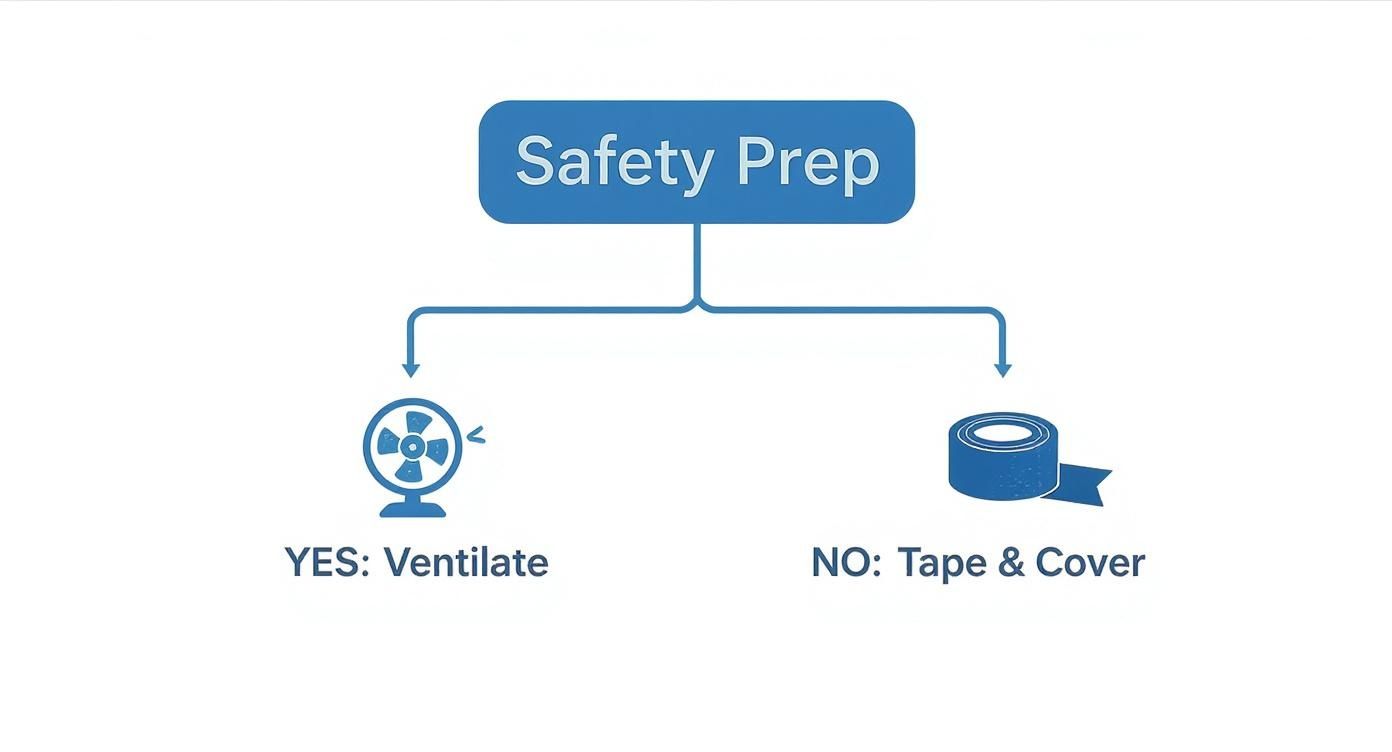
As you can see, protecting the surrounding frame and making sure you have good ventilation are non-negotiable. Don't skip the prep.
The Special Case of Tinted Car Windows
Car windows are a whole different beast, mainly because of the tint. That tint is just a thin, delicate film applied to the inside of the glass, and it's incredibly sensitive to chemicals.
Do not even think about using acetone, paint thinner, or mineral spirits on tinted windows. They will destroy the film, causing it to bubble up, peel away, or discolor almost instantly. Stick to a simple solution of soapy water or a very diluted mix of rubbing alcohol. If scraping is your only option, use a plastic razor blade and be extremely gentle, using lots of soapy water to help it glide.
I’ve seen people try to use a heat gun on automotive glass. While it can soften thick paint, it's a huge gamble. Heat the glass unevenly, and you risk creating thermal shock that will crack the entire window. This is a job best left to the pros.
Cleaning Solar Panels and Glass Railings
Spray paint on a solar panel isn't just an eyesore; it can seriously impact its performance. The same goes for the sleek look of a modern glass railing. Both require a careful hand.
Many solar panels, like the ones you see in this solar panel installation example from Wikipedia, have an anti-reflective coating that's essential for soaking up sunlight.

That coating is incredibly fragile. A metal blade or a harsh solvent will scratch it, which not only lowers the panel's efficiency but could also void your warranty. When cleaning solar panels, the only things you should use are isopropyl alcohol and a soft cloth. No scrubbing, no scraping.
Glass railings, particularly the ones outside, often have protective coatings to stand up to the weather. Treat them just like you would Low-E glass—start with the mildest solvent and avoid razors completely. Your goal is to remove the paint, not the finish.
To make things easier, here’s a quick guide to matching the right method with the right surface.
Best Removal Methods for Different Glass Surfaces
These tailored techniques will help you tackle spray paint on common glass applications without causing damage.
| Glass Surface | Preferred Method | Key Considerations |
|---|---|---|
| Standard Residential Windows | Razor Blade & Acetone | Generally very durable. Use a new, sharp blade at a low angle with plenty of lubrication. |
| Low-E or Coated Glass | Isopropyl Alcohol | Avoid razors at all costs. The microscopic coating is extremely easy to scratch. |
| Frosted or Etched Glass | Solvent & Soft Brush | Scraping is ineffective. Use a solvent and a brush to get paint out of the textured surface. |
| Tinted Automotive Windows | Soapy Water / Diluted Alcohol | Never use harsh chemicals like acetone. Work on the interior film with extreme care. |
| Solar Panels | Isopropyl Alcohol & Soft Cloth | The anti-reflective coating is very delicate. No abrasive tools or harsh chemicals. |
| Tempered Glass (Railings, Doors) | Plastic Razor Blade / Gentle Solvents | Prone to fine scratches. Always use a new blade and test solvents in a hidden spot. |
Remember, the guiding principle is to always start with the least aggressive method possible. You can always escalate your approach if needed, but you can't undo damage from a method that was too harsh from the start.
When the Easy Fixes Don't Cut It
Every so often, you’ll run into a spray paint problem that seems to mock your best efforts. I'm talking about the kind of thick, cured-on paint that’s been baking in the sun for years, or a massive graffiti tag that spans an entire storefront window. When your trusty razor blade and acetone just aren't making a dent, it’s time to escalate to the kind of advanced techniques the pros rely on.
These aren't your typical hardware store solutions. They're designed to deliver serious results without damaging the glass. For a property owner staring down a major vandalism issue, these methods can feel like a godsend—they're faster, often safer, and worlds more effective than hours of scrubbing.
Blasting It Off Without Chemicals
When you need heavy-duty removal power but want to avoid harsh solvents, a couple of specialized blasting methods are incredible for glass. The two I’ve seen work wonders are dry ice blasting and wet crushed glass blasting.
- Dry Ice Blasting: This is a fascinating process. It shoots tiny pellets of solid carbon dioxide (dry ice) at the surface. The intense cold (-109.3°F or -78.5°C) shocks the paint, making it incredibly brittle. When a pellet hits, it instantly turns from a solid to a gas—a process called sublimation—and this rapid expansion of gas literally pops the paint right off the glass.
- Wet Crushed Glass Blasting: The name sounds aggressive, but it's surprisingly gentle on glass. This technique uses a slurry of finely milled, recycled glass mixed with water. The mixture scours the paint away cleanly without etching or scratching the underlying surface, making it ideal for stubborn, thick layers of paint.
The biggest advantage of these methods is how clean they are. With dry ice blasting, there's no secondary waste. The CO2 just vanishes into the air, leaving only the flaked-off paint to sweep up. It’s incredibly efficient.
The results speak for themselves. According to industry data, dry ice blasting successfully removes light graffiti from glass 89% of the time in a single pass. Meanwhile, crushed recycled glass blasting boasts a 94% removal rate on heavy graffiti, and it gets the job done 40% faster than conventional methods. You can dig into the specifics in these graffiti removal findings from the EPA.
Knowing When to Call for Backup
So, when is it time to put down the scraper and pick up the phone? It’s a judgment call, but here are a few situations where bringing in a professional service like Sparkle Tech Window Washing is the smartest, safest, and most cost-effective decision.
- The Scale of the Problem is Massive: If you're dealing with graffiti that covers multiple large panes of glass, the sheer amount of time, effort, and materials needed for a DIY job can become overwhelming fast.
- The Glass is High-Value or Specialized: When you’re working with delicate surfaces like Low-E coated glass, expensive solar panels, or irreplaceable historic windows, the risk of causing permanent, costly damage is just too high to gamble.
- You Need a Fume-Free Solution: In environments like schools, hospitals, restaurants, or any business where chemical fumes are a non-starter, professional non-toxic methods are really the only viable option.
A razor blade is perfect for a little overspray from a weekend project. But for the really tough jobs, these advanced methods are how you truly get spray paint off glass. If you're stuck with a project where scraping isn't an option, our guide on removing paint on glass without razors has some great alternatives. Sometimes, a quick professional assessment is all it takes to save you hours of frustration and guarantee a perfect, crystal-clear finish.
The Final Cleanup and Future Prevention
Getting the spray paint off is a huge relief, but you're not quite done yet. The last step is to give the glass a final, thorough cleaning to wipe away any leftover solvent residue, smudges, or streaks. This is what restores that perfect, crystal-clear shine.
Start by washing the entire surface with a bucket of warm water and a few drops of standard dish soap. A fresh microfiber cloth is your best friend here—use it to gently scrub away any lingering paint flecks or that hazy film the solvents can leave behind. This initial wash is really important for neutralizing any chemicals still on the glass.
After the soap wash, rinse the glass completely with clean water. For that final, flawless finish, grab a spray bottle and mix a 50/50 solution of white vinegar and water. This classic trick is fantastic for cutting through any last bits of residue. If you want to master that completely spotless look, we have a whole guide with pro tips on how to clean windows streak-free.
Thinking Ahead to Stop Future Problems
Now that your glass is sparkling again, it’s a good time to think about preventing this from happening in the first place. A little proactive planning can save you a ton of time and frustration later, especially if you manage a commercial property or live in a high-traffic area.
A fantastic long-term solution is to have a professional anti-graffiti film applied to your windows. Think of it as a screen protector for your glass. This clear, tough layer acts as a sacrificial barrier. If vandals strike again, you just peel off the damaged film—taking the paint with it—and the glass underneath is untouched.
This is an incredibly smart investment for storefronts, public-facing glass railings, or any surface that seems to be a magnet for graffiti. On a simpler note, if you’re doing any painting projects nearby, always take a minute to cover your glass with drop cloths and painter's tape. When it comes to spray paint, an ounce of prevention is truly worth a pound of cure.
Got Questions? We’ve Got Answers.
Even with the best instructions, you're bound to run into a few head-scratchers when you're face-to-face with a paint-splattered window. Here are some of the most common questions we hear from people tackling spray paint on glass, along with some hard-won advice.
Fresh Paint vs. Old Paint: What's the Difference?
The age of the paint drastically changes your game plan. Fresh spray paint is your best-case scenario. It hasn't fully cured and bonded with the glass yet, so it’s still relatively soft. More often than not, a sharp razor blade is all you need to lift it right off, sometimes in large, satisfying sheets.
Old, sun-baked paint is a completely different beast. It has had weeks, months, or even years to chemically lock onto the glass, making it brittle and stubborn. For this kind of job, you'll almost always need to bring in a solvent or even a heat gun to break that bond before you can make any headway with a scraper.
Can I Use Solvents on My Tinted Car Windows?
Tread very, very carefully here. Most people don't realize that window tint is a thin, delicate film applied to the inside of the glass. Harsh chemical solvents like acetone or paint thinner can instantly destroy it, causing it to bubble, peel, or discolor.
If you absolutely have to use a chemical, start with the most gentle option available, like isopropyl (rubbing) alcohol, and use it sparingly.
Crucial Tip: Always—and I mean always—test your cleaning solution on a tiny, inconspicuous corner of the tint first. A quick spot test can save you from a very costly mistake.
What's the Secret to Avoiding Scratches?
Scratches are the number one fear when taking a blade to glass, but they are 100% preventable with the right technique and tools. Your most important tool is a brand-new, sharp razor blade. It sounds counterintuitive, but a dull blade is far more likely to skip, snag, and gouge the glass.
Keep these simple rules in mind for a perfect, scratch-free finish:
- Lube it Up: Never scrape a dry window. Keep the glass wet and slick with soapy water.
- Keep a Low Profile: Hold the blade at a shallow 30 to 45-degree angle against the glass. A steep angle is asking for trouble.
- No Abrasives, Ever: Stay away from steel wool, scouring pads, or abrasive cleaners. They will absolutely leave a haze of fine scratches.
When you're dealing with a really tough job, a delicate surface, or you just want the peace of mind that comes with a professional touch, don't hesitate to give us a call. The crew at Sparkle Tech Window Washing has seen it all and has the right tools and expertise to remove any kind of paint safely. Find out more about our professional paint removal services.