



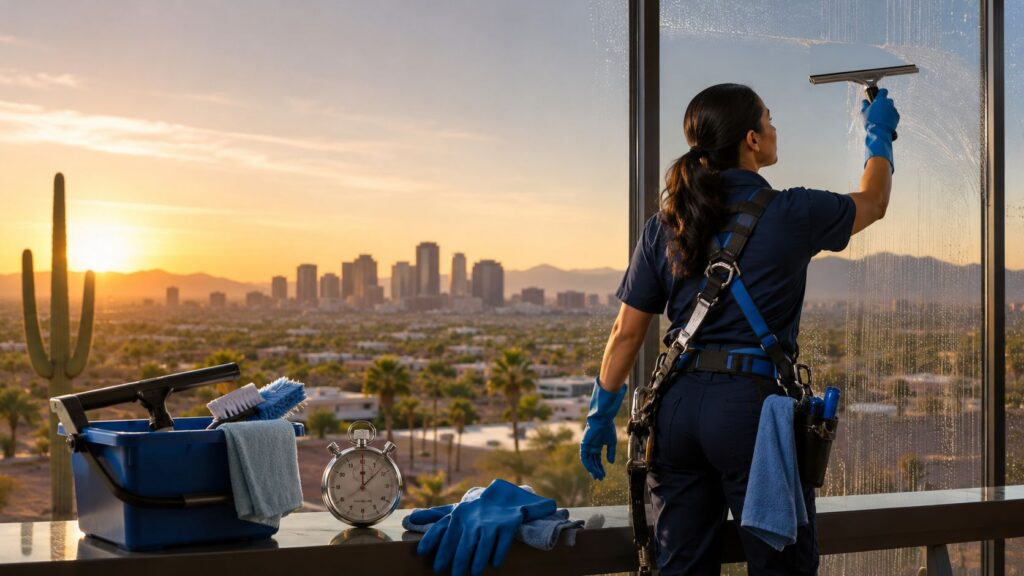
Professional cleaning usually lands between $25 and $75 per hour, with lower-end independent cleaners often charging $30 to $45 per hour and insured professional companies charging $45 to $75 per hour. That spread comes down to location, insurance, and job type, which is why one quote can look cheap and another can look expensive for what seems like the same work.
If you're shopping for a cleaner right now, you've probably seen numbers that don't line up. One person quotes a bargain hourly rate. Another comes in much higher. A third gives you a flat price with almost no detail. That confusion is normal, but it usually comes from comparing totally different services as if they're interchangeable.
A casual cleaner, a housekeeping pro, a commercial crew, and a technician handling exterior glass or solar panels are not selling the same thing. Time is only one part of the bill. Training, equipment, travel, safety risk, and insurance matter just as much.
Decoding the Wide World of Cleaner Pricing
You call three cleaners in Phoenix for the same job and get three very different numbers. One sounds cheap enough to book on the spot. One feels high. One avoids an hourly rate and gives you a flat quote. That spread usually means you are looking at three different levels of service, risk, and accountability.
Start with this rule: wage data and client pricing are not the same thing. A cleaner's hourly pay is only one cost inside a service quote. A legitimate company has to cover labor, scheduling, supplies, equipment, travel, taxes, and insurance. If that business is properly covered, policies like California cleaning business insurance add real cost, and that cost protects the client as much as the company.
That is why cheap quotes often look better than they are.
Why quotes vary so much
Hourly rates change because the job itself changes. A solo cleaner doing basic interior work from their own car does not price the same way as an insured company sending trained technicians with specialized tools and a set process. In Phoenix, that gap matters even more because heat, dust, hard water, and exterior exposure make some cleaning work tougher, slower, and riskier than clients expect.
Three factors drive most of the spread:
- Local market pressure: Busy metro areas with higher demand and travel time usually charge more.
- Scope of work: Routine cleaning, post-construction cleanup, exterior glass, and ladder work belong in different price ranges.
- Business setup: Independent cleaners, small crews, and fully insured companies have very different operating costs.
Ask better questions. Ask, "What is included in each rate?" Ask whether supplies, equipment, insurance, and redo policies are built into the price.
The number that matters more than the number
A low hourly rate only helps if the work is done well, on time, and without creating headaches later. If a cleaner takes longer, misses details, shows up inconsistently, or leaves you exposed when damage happens, the low rate stops being a bargain.
Professional, insured service costs more for a reason. You are paying for reliability, protection, better tools, and a cleaner result. In a market like Phoenix, where conditions are hard on homes and exterior surfaces, that extra cost is usually the smarter investment. Sparkle Tech should not try to be the cheapest option. It should be the option that makes the price make sense.
What Exactly Are You Paying For in an Hourly Rate
A professional hourly cleaning rate isn't just labor. It's closer to a restaurant bill than a grocery receipt. You aren't paying only for ingredients. You're paying for the cook, the kitchen, the cleaning, the service, and the system that makes the meal show up right the first time.
In Phoenix, Angi's local house cleaning pricing shows independent cleaners generally charge $30 to $45 per hour, while insured professional companies charge $45 to $75 per hour. That same source notes the higher rate reflects insurance, bonding, and the operating costs tied to running a legitimate service.

The five things inside the rate
When you hire a professional service, your hourly charge usually covers all of this:
- Cleaner wages: You're paying for hands-on labor, skill, pacing, and attention to detail.
- Insurance and bonding: If someone gets hurt or your property is damaged, you're not left sorting it out alone.
- Supplies and equipment: Squeegees, scrubbers, extension poles, ladders, microfiber systems, purified water setups, vacuums, and replacement materials all cost money.
- Business overhead: Scheduling, phone support, estimating, invoicing, fuel, training time, and route planning don't happen for free.
- Expertise: Technical cleaning takes judgment. Knowing what tool to use on glass, screens, frames, tracks, or solar panels matters.
Why insurance changes the price
Insurance isn't fluff. It's one of the clearest dividing lines between a side hustle and a professional operation.
If you're comparing quotes and want a better sense of what proper coverage looks like, this guide to California cleaning business insurance gives a useful breakdown of the protections serious operators carry. The state is different, but the business logic is the same. Coverage adds cost because risk adds cost.
Practical rule: If a quote seems unusually low, ask what's excluded. Insurance, damaged-item protection, and worker coverage are often where the savings come from.
Why complexity matters
The rate also changes when the task gets tougher. Deep cleaning, neglected surfaces, or hard-to-reach areas take more time, more equipment, and more care. Even in standard house cleaning, job complexity pushes the price up. That same Phoenix pricing source shows deep cleaning can run about 40 to 50 percent more than standard cleaning.
That's exactly why you shouldn't compare routine housekeeping rates to work like exterior window cleaning or solar panel cleaning. The labor may still be hourly, but the service isn't basic.
General Cleaning vs Specialized Services like Window Washing
A client hires a low-cost cleaner for exterior glass because the hourly rate looks good. A few hours later, the windows still show hard water spotting, the screens are bent, and no one is insured if a ladder slips. That is the moment price stops being a bargain.
General cleaning and specialty cleaning are priced differently because they are different jobs. Routine interior cleaning focuses on dusting, wiping, vacuuming, and sanitizing reachable surfaces. Window washing, glass railing cleaning, and solar panel cleaning require technical skill, specialized tools, and a higher level of risk control. In Phoenix, that gap matters even more because sun exposure, dust, and mineral-heavy water make exterior surfaces harder to clean properly.
What makes specialized cleaning different
A standard cleaner can do solid work inside a home or office. Specialty exterior work calls for a different setup and a different level of training.
A professional window or solar technician may need:
- Extension poles and ladder systems for upper-story or awkward access
- Screen-safe tools that protect frames, mesh, and tracks
- Glass-specific techniques that avoid scratches, swirl marks, and streaking
- Purified water or water-fed pole systems for cleaner exterior results
- Safety procedures for heights, fragile surfaces, and surrounding property
That separation is why many property owners split janitorial work from glass care and other specialty services. If you want a broader view of commercial hygiene best practices, it helps to see how each cleaning category uses different methods, equipment, and standards.
Why Sparkle Tech costs more, and why that is the better buy
You are not paying extra for a logo or a nicer invoice. You are paying for a crew that knows how to clean exterior glass without damaging it, arrives with the right equipment, carries insurance, and works efficiently enough to get a better result in less guesswork.
That is a smarter investment.
Cheap hourly labor often gets expensive fast. The wrong method can scratch glass, leave residue on solar panels, damage screens, or waste your time with a result that still needs to be redone. Professional, insured service costs more because the company is covering training, equipment, worker protection, and the risk that comes with technical exterior work. In Phoenix, where buildup and weather exposure are tougher on glass, that extra professionalism is usually the difference between a quick wash and a lasting result.
If you are unsure where routine cleaning ends and specialty service begins, read this guide on knowing when to call a professional window washing company.
The right comparison is not cleaner versus cleaner. It is basic labor versus skilled, insured service that protects your property and delivers a better finish.
Arizona and Phoenix Cleaner Rate Benchmarks
Phoenix pricing makes more sense when you separate worker pay from client-facing service rates.
Regional Arizona data from Plan B Facility Services on Phoenix commercial cleaning costs shows house cleaner salaries averaging $23.34 to $24.83 per hour. The same source explains that professional service rates have to run 30 to 50 percent above that baseline to cover overhead, insurance, and profit.
That single point clears up most pricing confusion in Arizona. If the wage floor is already in the mid-twenties, a polished, insured company can't price like an under-the-table side job and stay in business.

What Phoenix clients should expect
Phoenix isn't a market where you should shop purely by the smallest number. Heat, dust, hard water, sun exposure, and sprawl all affect the way exterior surfaces get cleaned and how crews schedule their day.
A realistic local quote usually reflects things like:
- Drive time across the metro
- Arizona wear on glass and screens
- Specialized tools for exterior work
- Insurance and registered business costs
- Job setup and breakdown time
Why local context matters more than national averages
National averages are useful for orientation. They are weak for budgeting in Phoenix. Arizona wages and metro operating costs shape the actual market more directly than a broad U.S. average ever will.
For homeowners comparing local bids, the better question is whether the company built its pricing on actual labor and operating costs, or whether it threw out a number to win the job. The second option usually leads to rushed work, reschedules, or corners cut on safety.
If you want a stronger feel for how local pricing is commonly framed, this article on how much window cleaners charge helps translate service pricing into something more practical.
In Phoenix, the right quote should feel explained. If it isn't explained, don't trust it.
Calculating Your Potential Cleaning Costs An Example
An hourly rate cleaner becomes easier to judge when you turn the rate into a real job scenario.
Let's keep this simple. One project is straightforward. The other is more technical and slower. The difference isn't just time. It's setup, access, surface condition, and the chance that the technician needs to work more carefully.
Two sample scenarios
For illustration, assume a standard rate on a routine job and a higher rate on more specialized work. If the project involves stubborn grime or neglected surfaces, expect the cost to climb. In Phoenix house cleaning benchmarks, deep cleaning runs about 40 to 50 percent higher than standard cleaning, as noted earlier from the local pricing data.
| Service | Estimated Time | Hourly Rate | Total Estimated Cost |
|---|---|---|---|
| Standard exterior window cleaning for an easier residential job | 2 hours | $45/hour | $90 |
| More complex window and solar panel cleaning with harder access | 4 hours | $75/hour | $300 |
How to read the table
The first example is the kind of job clients often expect. Reasonable access, limited buildup, and no major complications.
The second example reflects what drives invoices upward:
- Hard-to-reach areas slow the work down
- More delicate surfaces require a different process
- Heavier buildup increases labor
- Specialized tools add setup time
A better way to estimate your own project
Use this sequence before you ask for a quote:
- Count the service areas. Windows, panels, screens, or glass railings.
- Note access problems. High panes, tight side yards, fragile landscaping.
- Flag surface issues. Dust, hard water residue, grime, damaged screens.
- Ask whether the rate includes setup, supplies, and cleanup.
That last question matters. A quote that looks lower can jump quickly if the company treats every complication as an add-on.
Hiring Smart Looking Beyond the Hourly Rate
The cheapest hourly rate cleaner is rarely the safest hire.
If someone is working around your home, on ladders, near glass, or on surfaces that can be scratched, you need more than a decent price. You need a business that shows up, communicates clearly, and takes responsibility if something goes wrong.

What to check before you book
Use a short hiring checklist. If a company gets irritated by these questions, move on.
- Ask for written scope: Get the tasks, surfaces, and exclusions in writing.
- Confirm insurance and bonding: Don't settle for vague verbal reassurance.
- Clarify arrival and cancellation terms: Scheduling policy affects cost.
- Check how they handle problems: Breakage, missed details, and touch-ups should have a clear process.
One area many clients overlook is cancellation. The Domestic Employers guide on paying house cleaners notes that many professional services require 48-hour notice, and last-minute cancellations can trigger full payment for the missed appointment. That isn't a scam. It reflects blocked time the cleaner can no longer sell to someone else.
A low rate with vague policies is not a bargain. It's a risk transfer. You're absorbing the uncertainty the company refused to price properly.
What value actually looks like
A better service experience usually includes these basics:
- Reliable scheduling
- Clear communication before arrival
- Defined service scope
- Proper tools for the surfaces being cleaned
- A business structure that protects the customer
If your project involves residential exterior glass, compare providers against what a dedicated home window cleaning service should deliver. The quality gap usually shows up fast.
Here's a practical look at what professional standards should feel like in the field.
My recommendation
Pay for professionalism when the work has any real risk, technical surface care, or access challenge. Save bargain shopping for low-stakes tasks. For windows, screens, railings, and solar panels, the wrong hire can cost more than the difference in the estimate.
Frequently Asked Questions About Cleaner Rates
Is hourly pricing better than flat-rate pricing
It depends on the job. Hourly pricing works well when the condition of the property is unpredictable or the work may expand once the cleaner starts. Flat-rate pricing is better when the scope is consistent and you want cost certainty.
Should you tip a professional cleaner
Tipping isn't mandatory, but it's a nice gesture when someone handles a difficult job, works around extra mess, or solves a problem on the spot. If you prefer not to tip, leaving a great review and being easy to schedule with also matters.
What if the job takes longer than expected
Ask up front how overages are handled. A good company will explain what could increase time, such as access issues, buildup, or added tasks, before the invoice surprises you.
How do you compare two cleaning quotes fairly
Match the scope line by line. Check what's included, what equipment is used, whether the provider is insured, and what happens if you need to cancel or request follow-up work. If one quote is vague, it isn't really cheaper. It's incomplete.
If you want help from a fully insured Arizona company that handles exterior glass and screen work professionally, take a look at Sparkle Tech Window Washing & window screens. They're a family-owned Arizona business serving the Phoenix valley and beyond, with registered LLC status, bonding, Workers Compensation, and General Liability coverage for customer protection.