



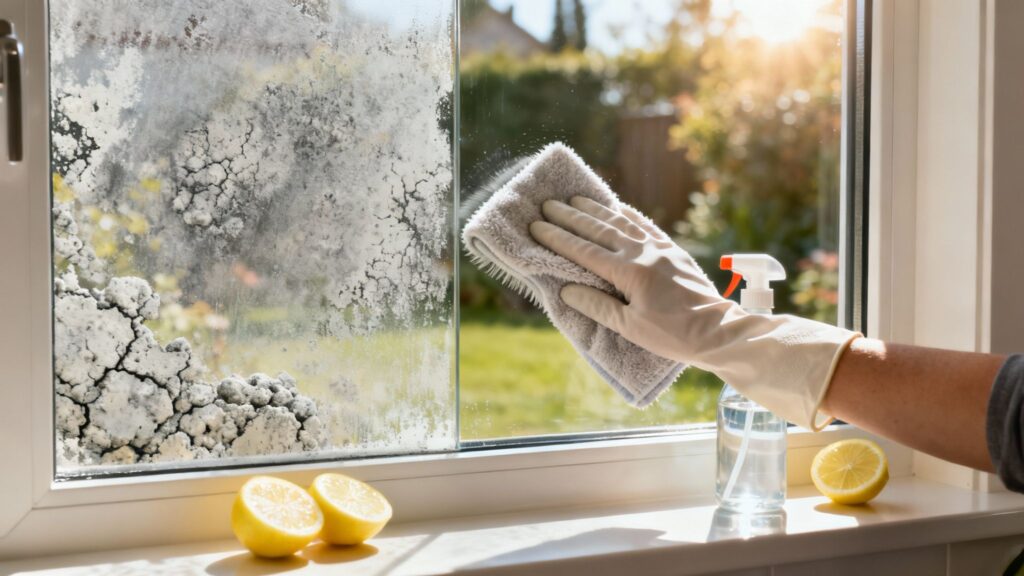
If you've ever tried to tackle those stubborn, chalky spots on your windows with a standard glass cleaner, you know the frustration. You spray, you wipe, and… nothing. The hazy residue remains, mocking your efforts. Here's the thing: you're not using the wrong technique; you're fighting the wrong kind of problem. Hard water stains aren't just dirt—they’re a chemical issue.
To get rid of them, you need something that can break down the mineral deposits. For lighter spots, a simple acidic solution like vinegar or lemon juice often does the trick. But for tougher, built-up stains, you'll need to step up your game with specialized commercial cleaners. The secret is matching the right removal method to how bad the stains actually are.
Why Hard Water Stains Won't Just Wipe Away
Those milky spots are the ghosts of evaporated water. When a water droplet dries on your window, it leaves behind whatever minerals it was carrying, most commonly calcium and magnesium. Here in Arizona, that's a lot.
The Science Behind Stubborn Spots
Over time, these mineral deposits don't just sit on the glass; they actually begin to chemically bond with it. This process creates a tough, layered scale that becomes part of the glass surface itself. Think of it like a barnacle on a ship's hull—it's not just stuck on, it's integrated. This is why a simple ammonia-based cleaner and a paper towel barely make a dent. You need a solution that can chemically dissolve those hardened minerals and break their grip.
Assessing Your Stain Severity
Before you start scrubbing, take a moment to really look at your windows. Figuring out how severe the staining is will save you a lot of time and effort. Using a method that’s too weak won’t work, while going too aggressive too soon could risk damaging the glass.
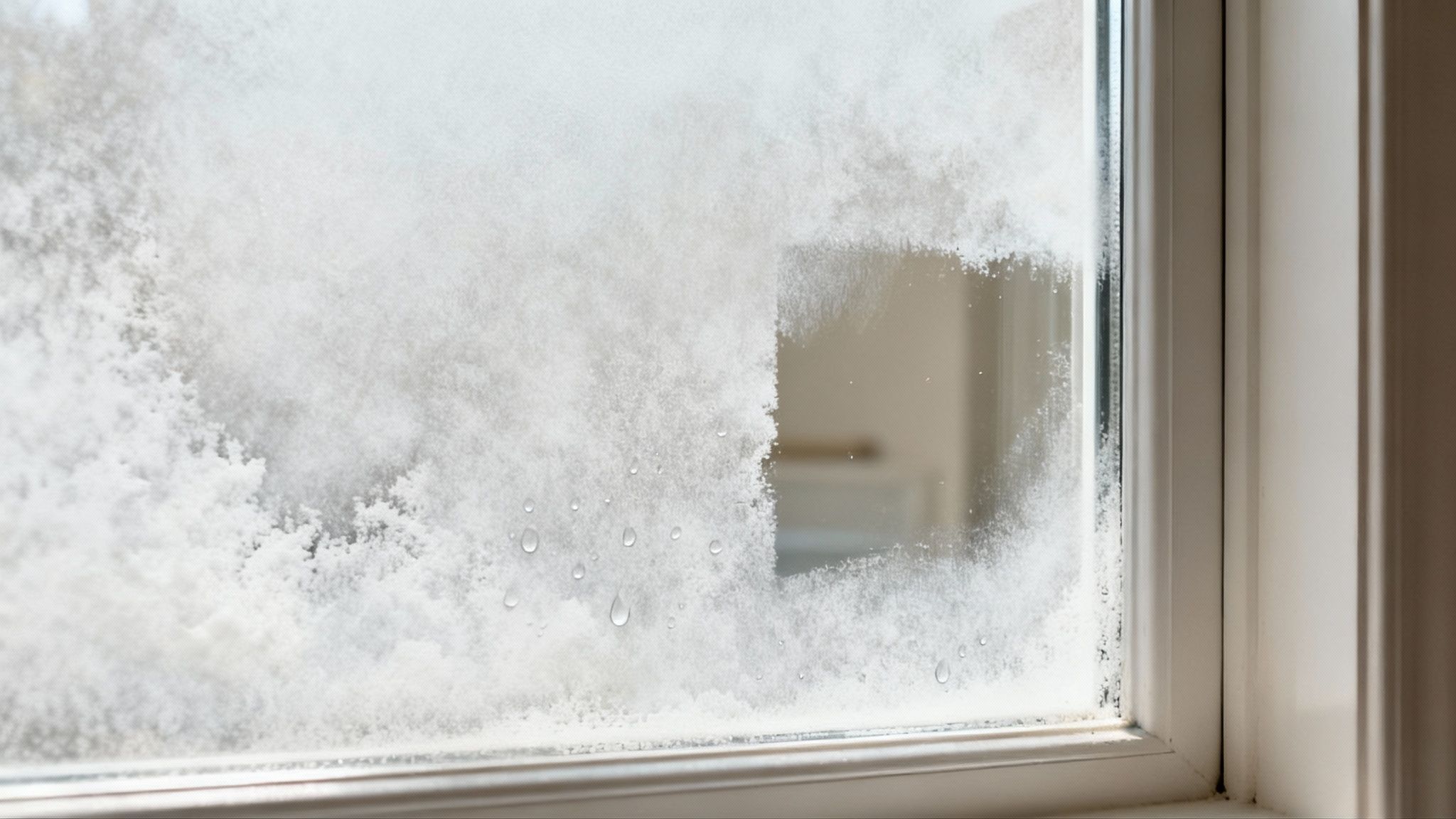
- Light Stains: These usually look like faint, cloudy watermarks. You might only notice them when the sun hits the window just right. They haven't been there very long and haven't had time to truly set in.
- Moderate Stains: Now we're talking about distinct, opaque white spots. If you run your finger over them, they'll feel a bit rough. This is a common sight in Arizona, especially on windows that get hit by sprinklers.
- Severe Stains: This is the worst-case scenario. The glass looks etched and might have a thick, crusty, almost layered appearance. At this point, the minerals have likely started to permanently etch the glass surface, making removal much more difficult.
To make it easier, here's a quick reference table to help you diagnose your window situation.
Hard Water Stain Severity and Recommended Actions
| Stain Severity | Appearance | Recommended Approach |
|---|---|---|
| Light | Faint, cloudy spots or watermarks, visible in certain light. | Start with simple DIY acidic solutions (vinegar). |
| Moderate | Opaque white spots, slightly rough to the touch. | Move on to specialized commercial hard water cleaners. |
| Severe | Thick, layered, crusty deposits; glass may look permanently etched. | May require professional-grade compounds or calling a pro. |
This table should give you a solid starting point for choosing the right tools for the job.
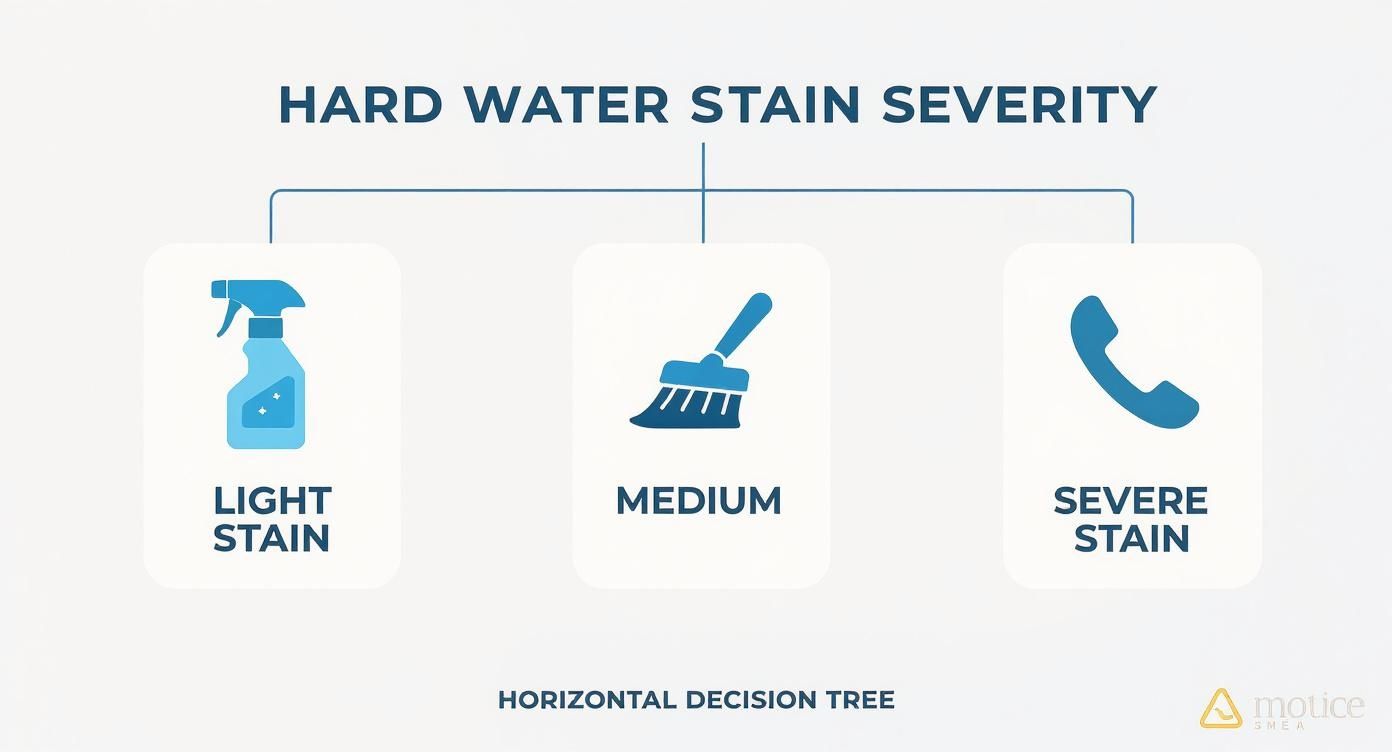
As you can see, the game plan escalates from simple home remedies to calling in the cavalry as the stains get worse. For a really deep dive into the chemistry, this guide is great for understanding the persistent nature of mineral deposits and how to effectively remove them.
Once you've identified where your windows fall on this spectrum, you'll be ready to choose the right removal strategy, which we'll cover next.
Your First Line of Defense: DIY Stain Removers
Before you reach for heavy-duty commercial cleaners, take a look in your kitchen pantry. You'd be surprised how often common household items are all you need to beat back light to moderate hard water stains. These DIY solutions are cheap, effective, and you know exactly what you're using around your home.
The secret isn't just in the mix, but in the why. Hard water spots are alkaline mineral deposits—mostly calcium and magnesium. To get rid of them, you need a mild acid to dissolve the bond between the minerals and the glass. It’s simple chemistry, and it's the foundation for the most reliable DIY tricks in the book.
The Classic Vinegar Solution
There's a reason distilled white vinegar is everyone's go-to. Its acetic acid is the perfect opponent for the alkaline minerals left on your glass. But a weak, watery mix won’t cut it; you need a potent solution to see real results.
For an effective spray, aim for a mix that's acidic enough to do the job without damaging window frames or sills.
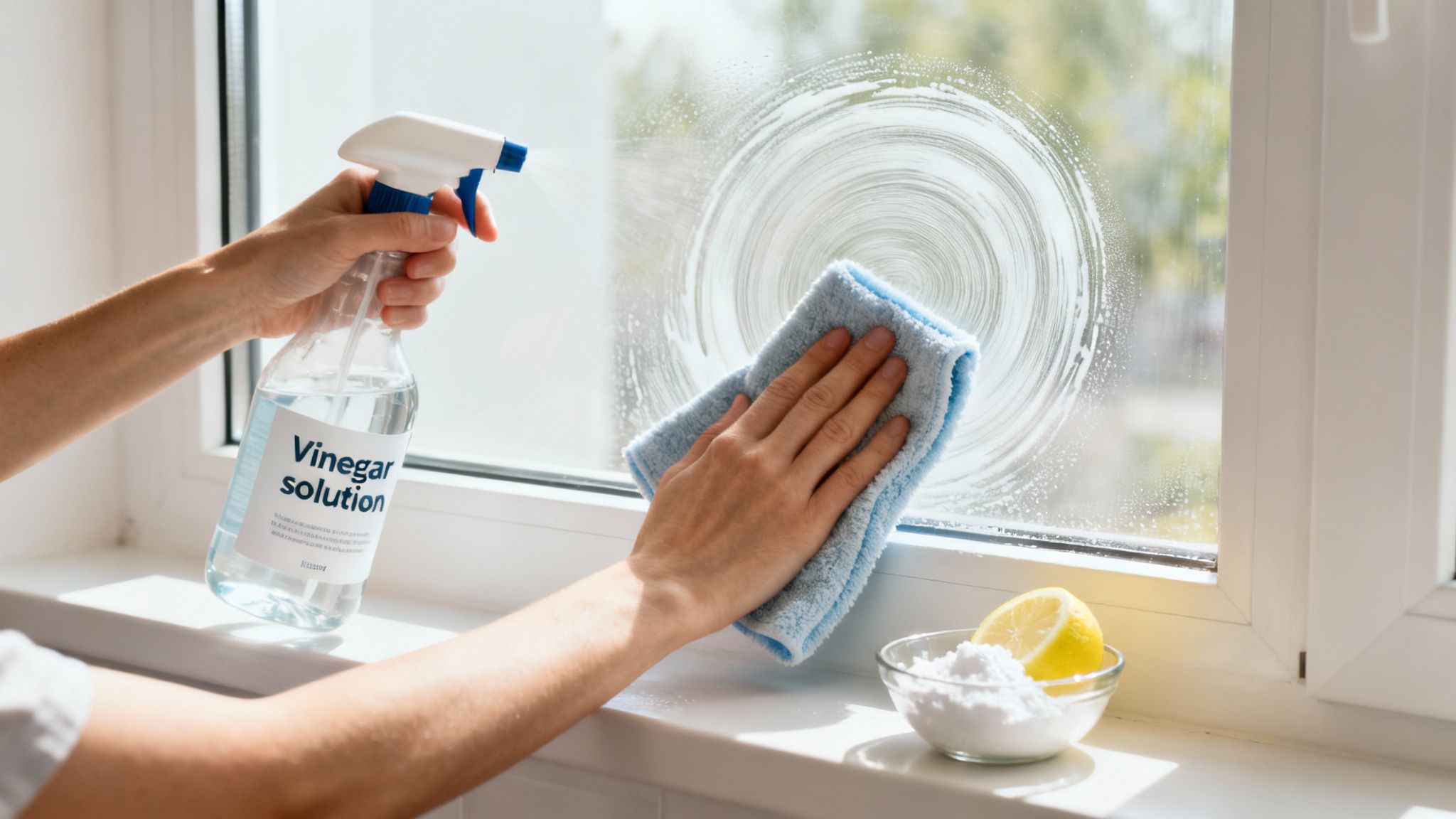
- The Recipe: Mix equal parts distilled white vinegar and distilled water in a spray bottle. Always use distilled water. Tap water is full of minerals, and the last thing you want is to add more deposits while you're trying to remove them.
- Application is Key: Spray the solution generously over the stained glass. Don't hold back—the glass should be completely saturated.
- Let It Dwell: This is the most important part. Let the vinegar solution sit on the glass for at least 10-15 minutes. This dwell time allows the acid to break down the mineral buildup. If you're working on a vertical window where the solution keeps running off, just soak a few paper towels in the mix and press them right against the glass.
Once the solution has had time to work its magic, give the area a gentle scrub with a microfiber cloth or non-abrasive sponge. Rinse the window thoroughly with clean, distilled water, and immediately dry it with a high-quality squeegee or a fresh microfiber towel. This last step is crucial to prevent new spots from forming.
Lemon Juice for Extra Power
If the vinegar isn't quite strong enough for your stains, lemon juice can provide a bit more of a punch. The citric acid in lemon juice is another fantastic mineral-dissolver, and it leaves behind a much fresher scent than vinegar.
The process is pretty much the same. You can apply fresh lemon juice directly to the spots, let it sit for about 10 minutes, and then scrub and rinse. Its natural acidity is great for those stains that are just starting to get stubborn.
Pro Tip: Always test any acidic solution on a small, hidden corner of the window first. You want to be sure it doesn't react poorly with any special tints or coatings on your glass before you spray down the whole pane.
A Gentle Baking Soda Paste
Sometimes, you need a little more elbow grease without scratching the glass. That's where a simple baking soda paste comes in handy. Baking soda is a very mild abrasive, perfect for lifting deposits that the acidic solutions have already loosened.
Making the Paste:
- Mix baking soda with a very small amount of water in a bowl.
- Keep stirring until it forms a thick paste, about the consistency of toothpaste.
- Apply the paste directly to the damp, stained areas of the window.
Let the paste sit for a few minutes, then gently scrub in a circular motion with a soft cloth. The fine particles will help dislodge the mineral scale without causing any damage. Rinse every bit of residue off with distilled water and dry the glass completely.
While this guide is all about windows, the science of removing mineral buildup is the same for many other household fixtures. You can often find similar techniques for tackling stubborn mineral and rust stains elsewhere in your home.
Ultimately, these DIY methods are an excellent first line of attack. They are simple, safe, and surprisingly effective for early-stage hard water buildup, giving you the power to bring back that crystal-clear view.
Stepping Up to Commercial Cleaners and Tools
So, you’ve tried the vinegar solution and the baking soda paste, but those ghostly white stains are still clinging to your glass. Don't feel defeated. It just means the mineral deposits have had a little more time to set in, and you need to bring in some bigger guns.
This is the point where we move on to commercial-grade products and specialized tools. These are designed specifically for the tough jobs, giving you professional-level power to cut through moderate to severe hard water buildup. Let's look at the most effective options that bridge the gap between simple home remedies and calling in a pro.
The Pro's Secret: Superfine Steel Wool
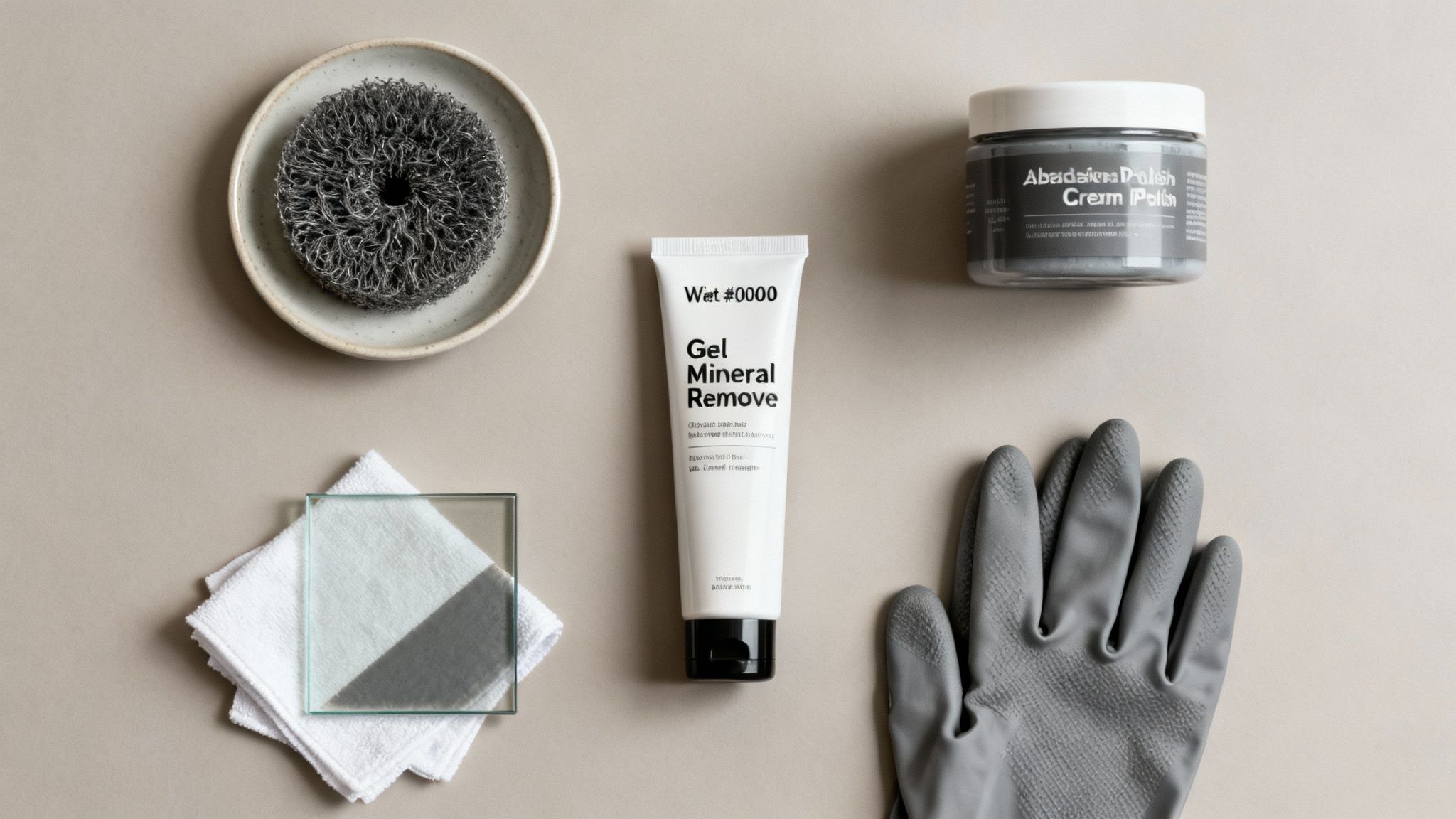
I know what you're thinking—steel wool on glass sounds like a recipe for disaster. And you're right, if you grab the wrong kind. But #0000 superfine steel wool (that’s "quadruple-ought") is a game-changer when used correctly. Its fibers are so incredibly fine that they can physically lift mineral deposits off the glass without leaving a scratch.
There's one rule here that is absolutely non-negotiable.
Crucial Safety Tip: Always, always use #0000 steel wool wet. A dry pad will scratch your windows, period. You have to keep the glass and the steel wool lubricated with a cleaning solution or even just water. This ensures it glides smoothly and safely across the surface.
Think of it like wet-sanding a piece of furniture. The liquid carries away the debris—in this case, dissolved minerals—and stops the abrasive material from digging into the surface. It’s a fantastic technique for physically breaking loose that crusty buildup that chemical cleaners can struggle with.
Choosing Your Chemical Weapon: Acid vs. Abrasive
When you head to the store, you'll mainly see two types of commercial hard water removers. They work in completely different ways, so picking the right one for your situation is key.
-
Gel-Based Acidic Cleaners: These products typically use mild acids (like phosphoric acid) in a thick gel or liquid form. The gel is brilliant because it clings to vertical surfaces, giving the chemicals time to work their magic. They dissolve the calcium and magnesium deposits on a chemical level, breaking them down so you can just wipe them away. This is perfect for, say, a large picture window that gets blasted by sprinklers, where the gel can cover a big area and eat through layers of mineral film.
-
Abrasive Cream Polishes: These are less of a "cleaner" and more of a "polish." They contain micro-abrasives that physically buff the mineral deposits off the glass. Instead of dissolving the stain, you’re essentially scrubbing it away with microscopic particles. This approach is ideal for those really concentrated, stubborn spots, like the thick, crusty rings you see at the bottom of a glass shower door where water constantly pools.
The Right Technique for Real Results
Having the right product is only half the battle; your technique is what delivers that crystal-clear finish.
First, Safety:
- Wear Gloves: These are stronger than your homemade solutions. Protect your skin from irritation by wearing a good pair of waterproof gloves.
- Get Some Air: Work in a well-ventilated space. Open nearby windows or doors, especially if you’re using an acidic cleaner with more potent fumes.
The Application Process:
- Always start with a clean, dry window. You want the product attacking the stains, not sitting on top of a layer of dirt.
- Apply the cleaner to a non-abrasive applicator pad or microfiber cloth—not directly to the glass. This gives you way more control and prevents the product from dripping onto sensitive window frames or siding.
- Tackle the window in small, manageable sections, maybe two-by-two feet at a time. Use gentle to moderate pressure and work in overlapping circular motions.
- Let the product do the work. Pay attention to the manufacturer's instructions for how long to leave it on, but never let it dry on the glass.
Once you’ve worked the product in, rinse the window thoroughly with clean water to neutralize any leftover chemicals. A final pass with a squeegee will give you that perfect, streak-free shine. Knowing what’s in your products is crucial; for more detail on this, learn about the dos and don'ts of window cleaning chemicals to avoid to make sure you aren't accidentally causing long-term damage.
Protecting Modern Windows and Special Surfaces
It feels great to finally conquer stubborn hard water stains, but that victory can turn into a costly mistake if you use the wrong method on the wrong surface. Before you grab that steel wool or a powerful commercial cleaner, you need to know exactly what you’re dealing with. Not all glass is the same.
Many modern homes, particularly here in sunny Arizona, feature windows with specialized, factory-applied coatings. These aren’t just for looks—they're crucial for your home's energy efficiency and overall comfort.
Identifying Special Window Coatings
Low-E (low-emissivity) coatings are incredibly common. They're designed to reflect infrared light, helping to keep your home cool. The catch? These coatings are microscopically thin layers of metal oxide and are surprisingly easy to damage. The same goes for any aftermarket tinting films applied for privacy or UV protection.
Using an abrasive like steel wool or a razor blade on these surfaces is a recipe for disaster. You’ll literally scrape off the coating, leaving behind permanent scratches and gutting the window's performance. Harsh, highly acidic cleaners are just as bad, as they can chemically etch or discolor these sensitive layers for good.
The Golden Rule for Special Surfaces: When in doubt, start gentle. A simple mix of mild soap and distilled water with a soft microfiber cloth should always be your first line of attack on any coated or tinted window.
Cautions for Solar Panels and Other Surfaces
Hard water stains don't just mess with your view; they can cripple other important surfaces, especially solar panels. Mineral buildup on a solar panel acts like a screen, blocking sunlight from reaching the photovoltaic cells and tanking its energy output. In fact, studies have shown that dirty panels can lose up to 30% of their efficiency.
Cleaning solar panels requires the same gentle approach as coated windows. Steer clear of abrasive tools and harsh chemicals that could scratch the anti-reflective coating or damage the panel seals. Your first step should always be to check the manufacturer’s cleaning guidelines, but a soft brush and de-ionized water are almost always the right tools for the job.
If you're curious about why some glass seems to resist water spots better than others, it's worth reading up on the difference between hydrophilic and hydrophobic glass. Understanding these properties will make it much clearer why choosing the right cleaning method is so critical.
Safe vs. Unsafe Cleaners for Specialized Windows
To avoid a costly error, you absolutely must know what's safe to use and what to keep far away from your high-tech windows and solar panels. This quick guide should help.
Safe vs. Unsafe Cleaners for Specialized Windows
| Window/Surface Type | Safe Cleaning Methods | Methods to Avoid at All Costs |
|---|---|---|
| Low-E Coated Windows | Mild soap, distilled water, soft microfiber cloths, high-quality squeegees. | Steel wool, razor blades, abrasive powders, ammonia-based cleaners, strong acids. |
| Tinted Film Windows | Gentle soap solution (like baby shampoo), distilled water, soft cloths. | Ammonia, vinegar, abrasive scrubbers, any sharp tools that could lift or tear the film. |
| Solar Panels | Soft-bristle brush, de-ionized water, approved solar panel cleaning solutions. | Harsh detergents, pressure washers, abrasive tools, tap water (it will leave more mineral spots). |
So, before you jump into any project involving hard water stains on windows removal how to, take a minute to confirm your window type. Look for small labels etched in the corners of the glass or check your home's documentation. Protecting these advanced surfaces is just as important as getting them clean.
Knowing When to Call in the Professionals
So, you’ve tried the vinegar trick. You’ve scrubbed with store-bought cleaners and even carefully tested a patch with superfine steel wool, but the ghostly white residue just won’t budge. This is often the point where good old-fashioned elbow grease isn't enough.
Sometimes, hard water stains have been sitting on the glass for so long they're no longer just on the surface. They start a chemical reaction with the glass itself, causing permanent damage that goes beyond a simple stain and becomes physical etching.
This is the point of no return for most DIY solutions. When those minerals bond with the silica in your glass, they create microscopic pits and corrosion that no amount of scrubbing can fix. In fact, trying to get more aggressive with harsh chemicals or abrasive tools usually does more harm than good, leaving you with scratches or a permanent haze.
Signs You're Dealing With Permanent Damage
How can you tell if the stain has become an etch? Get up close and look at the window in direct sunlight. If the spots seem to have a texture, or if the glass looks cloudy and almost opaque even after you've just cleaned it, you're probably dealing with etching.
Here’s another tell-tale sign: if the outline of the stain is still perfectly visible when the window is wet, that's a red flag. A surface-level stain will usually disappear when wet, but an etched spot will remain. That’s because the damage is now part of the glass, not just sitting on top of it.
The Real Value of a Professional Restoration
This is precisely where a professional window cleaning service proves its worth. They have access to specialized tools and compounds that are either unavailable to the public or just not practical for a homeowner to use. For severe cases, professionals aren't just cleaning the glass—they're actually restoring its surface.
-
Specialized Acid Washing: Pros can use powerful, professional-grade acidic solutions that are far more effective than anything on a retail shelf. More importantly, they have the training and safety gear to use these materials correctly, protecting your window frames, siding, and landscaping from damage.
-
Mechanical Glass Polishing: For truly etched glass, the fix is mechanical. Experts use specialized polishing machines fitted with felt pads and a fine abrasive compound. This process carefully removes a microscopic layer of the glass, essentially grinding past the etched damage to reveal a fresh, perfectly clear surface underneath. It’s a delicate operation that brings back the clarity without distorting the view.
In places with notoriously hard water, like we have here in Arizona, professional window restoration isn't a luxury—it's essential home maintenance. Think of it as a long-term investment that helps you avoid the massive expense of replacing entire windows down the line.
The growing awareness of this problem is evident in the market for cleaning products. The global market for hard water stain removers was valued at around $1.5 billion in 2025 and is projected to keep growing. While plenty of DIY products are out there, this growth also underscores the increasing need for professional help when stains become severe. You can find more details in this hard water stain remover market report on datainsightsmarket.com.
How to Vet a Local Window Cleaning Service
Bringing in a pro for hard water stains on windows removal how to is a smart call, but you have to hire the right team. Before you commit, do a little homework.
Start by asking specifically if they have experience with hard water stain removal and glass restoration, not just standard window cleaning. Ask to see before-and-after photos of their work on jobs similar to yours.
Make sure the company is fully insured and bonded. Accidents are rare, but you need to know you’re covered. Lastly, ask for a clear, itemized quote that explains the exact process they plan to use. A reputable service will be transparent about their methods and pricing, so there are no surprises. For more great advice, check out our article on knowing when to call a professional window washing company.
Frequently Asked Questions About Window Stains
Even after you've got the basics down, a few questions always seem to come up. From my experience, knowing the answers to these common hang-ups is what separates a good result from a great one. Let’s clear up some of the most practical, real-world questions I hear from homeowners.
Getting these details right will help you not only clean your windows effectively but also protect them for years to come.
Can Hard Water Stains Permanently Damage My Windows?
Yes, they absolutely can. This is something a lot of people don't realize until it's too late. When hard water stains sit on glass for an extended period, the minerals start a chemical reaction with the surface. It's a process sometimes called silicification, where minerals like calcium literally bond with the silica in the glass.
Once that happens, you're not dealing with a simple surface stain anymore—it's a physical etching. At that point, all the vinegar and elbow grease in the world won't fix it. The glass itself is damaged and will probably need professional polishing or, in severe cases, a full replacement. This is exactly why staying on top of window cleaning is so critical, especially here in Arizona.
Will a Water Softener Stop Stains on Exterior Windows?
This is a great question, and the answer often surprises people. A whole-house water softener is a fantastic investment for your indoor plumbing and appliances, but it will have zero effect on exterior window stains.
Think of it this way: a softener only treats the water that comes into your house and runs through your pipes. The water from your outdoor spigots and sprinkler system almost always bypasses the softener.
To stop those outdoor stains, you have to manage the water where it hits the glass.
- Check Your Sprinklers: Make sure the heads aren't spraying directly onto your windows and glass doors. This is the #1 culprit I see.
- Filter Your Hose: For a few bucks, you can get a simple in-line filter for your garden hose. It makes a big difference when you’re rinsing windows or washing the car.
- Dry It Fast: If your windows do get hit with outdoor water, grab a squeegee or a microfiber cloth and dry them right away. It's the best defense.
How Often Should I Clean Windows to Prevent Stains?
There’s no magic number here; it really depends on your specific home. The two biggest things to consider are how hard your water is and how often your windows get wet.
For instance, if your sprinklers douse a ground-floor window every day in a city like Phoenix, you’ll probably need to give that window a good cleaning every month to keep serious buildup at bay. For most other homes where the windows aren't getting constantly soaked, a deep clean every three to six months is a solid plan to stay ahead of the game.
The bottom line is that routine maintenance is always easier and cheaper than a massive restoration job. A little cleaning now prevents a lot of heavy-duty scrubbing later.
Is Using a Razor Blade to Scrape Spots a Good Idea?
I'm going to be direct: using a razor blade is a high-risk move that I strongly advise against for any DIYer. While you might see a pro use a specialized scraper, it's a technique that requires a specific touch and understanding of glass. It is incredibly easy for an inexperienced hand to cause deep, permanent scratches.
It's particularly risky on certain types of glass. You should never take a razor blade to:
- Tempered Glass: Used for safety in doors and low windows, it scratches surprisingly easily.
- Tinted Film: A blade will slice right through aftermarket tint, ruining it instantly.
- Low-E Coated Glass: You'll scrape off the invisible energy-efficient coating and permanently compromise the window's insulating properties.
Stick with the safer methods in this guide. The potential for irreversible damage just isn't worth the risk.
When your best efforts aren't enough and the stains won't budge, it’s time to call in the experts. Sparkle Tech Window Washing has the professional-grade equipment and proven techniques to restore even the most stubborn hard water stains, protecting your investment and bringing back your perfect view. Schedule your professional window cleaning service today!