




Cleaning water spots from windows might seem straightforward, but here in Arizona, it's less about cleaning and more about chemistry. That chalky residue you see isn't just grime. It's a stubborn buildup of hard minerals like calcium and magnesium that have literally bonded to your glass, which is why they're so incredibly difficult to scrub away.
Knowing what you're up against is the first step to getting that perfectly clear finish.
Why Arizona Windows Get Such Stubborn Water Spots
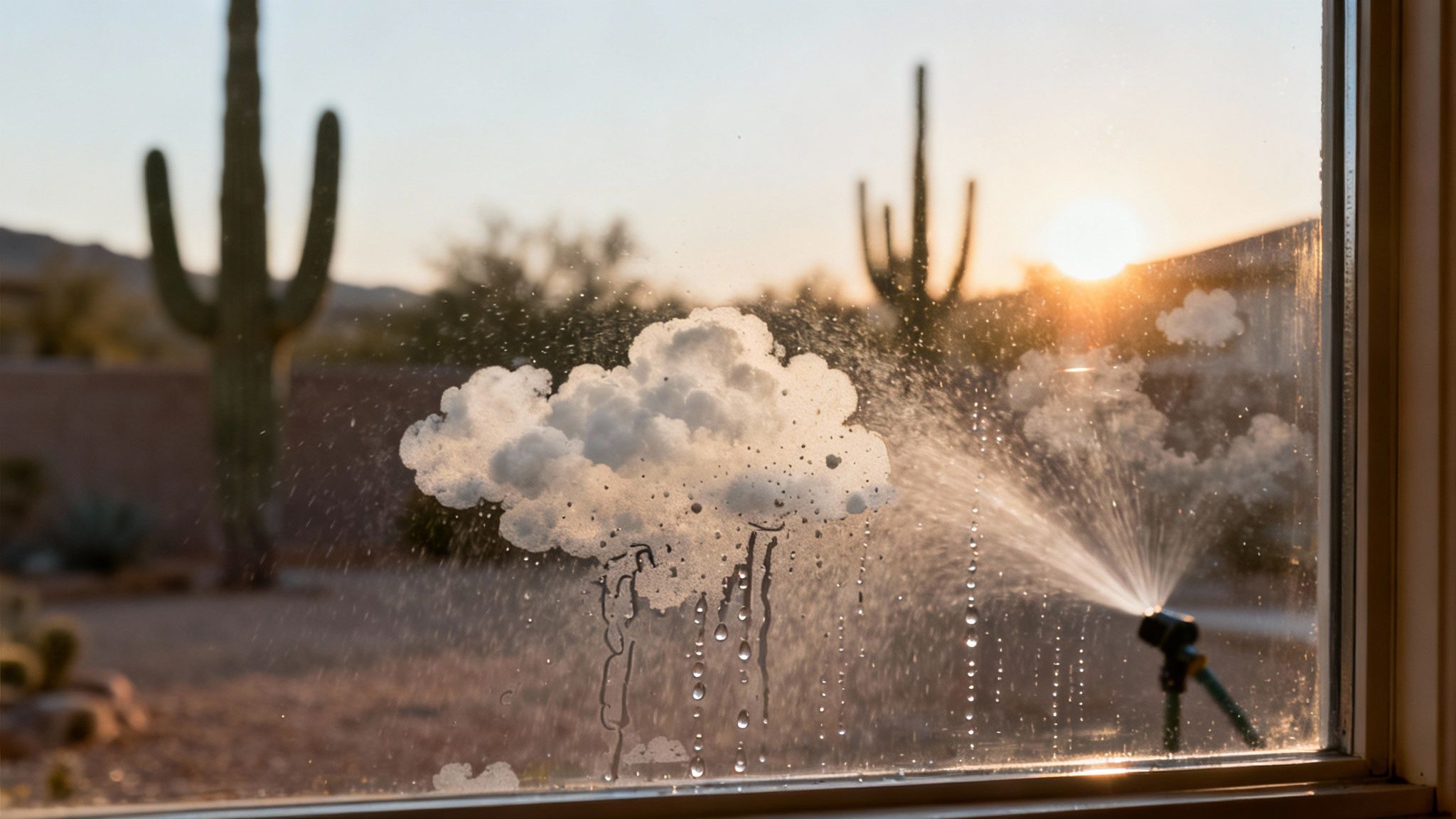
If you've ever battled those milky, almost opaque spots on your windows, you know it feels less like cleaning and more like trying to remove cement. That's because you're not just fighting dirt—you're fighting geology.
The water in Arizona, especially around Phoenix, is famously hard. This means it's packed with dissolved minerals. When water from a sprinkler or a quick rinse with the hose lands on your glass, the intense desert sun kicks into gear almost instantly.
The pure water evaporates, but all those minerals get left behind. It's more than just a dusty film, though. A chemical reaction begins, and the minerals start fusing with the silica in the glass itself.
The Science Behind the Stains
You can think of the sun as a kiln, baking those mineral deposits right into the tiny pores of your window glass. Every time your window gets wet and dries, another layer gets baked on, making the spots thicker and even harder to remove. This is exactly why your standard Windex often won't even make a dent. You're not just cleaning a surface; you're trying to dissolve something as hard as rock.
And this isn't just about looks. Over time, these mineral deposits can cause permanent damage.
- Etching: The minerals can physically eat into the glass, creating microscopic pits that permanently cloud its appearance. Once glass is etched, no amount of cleaning will bring back its original clarity.
- Weakened Glass: Severe, long-term buildup can actually compromise the structural integrity of the glass. This makes it more prone to cracking under the stress of our famous temperature swings. The constant effects of weather on windows in Phoenix, AZ, from scorching heat to monsoon storms, only make things worse.
- Reduced Home Value: Let's be honest—cloudy, stained windows just look bad. They can seriously hurt your home's curb appeal and signal to potential buyers that the property hasn't been well-maintained.
This isn't some minor annoyance; it's a major maintenance headache. Around 85% of U.S. homes have to deal with hard water. But in Arizona, where groundwater hardness can top 250 mg/L, the problem is on another level. Left untreated, mineral deposits can degrade glass in as little as 3–5 years, sometimes leading to a full replacement.
Prevention Is Your Best Defense
At the end of the day, cleaning water spots in Arizona is about protecting your investment, not just making things look pretty. And while you’re thinking about hard water, it’s a good moment to brush up on understanding homeowners insurance for water damage.
Now that you know the root cause—our hard water combined with our intense sun—you'll be much better equipped to pick the right cleaning method and, most importantly, stop those spots from coming back.
Gathering Your Water Spot Removal Arsenal
If you want to get rid of water spots like a pro, you have to think like one. That means ditching the paper towels and all-purpose spray. The difference between a frustrating Saturday spent scrubbing and getting that perfectly clear, satisfying finish comes down to having the right tools on hand from the start.
Think of it as building a small but mighty toolkit. This isn't about spending a fortune; it's about having the specific items that make the job easier and more effective, whether you're dealing with a light film or those stubborn, sun-baked mineral rings.
The Non-Negotiable Basics
Let's start with the essentials. First up, you need at least two high-quality microfiber cloths. Seriously, don't skip this. One cloth is for applying your cleaning solution and doing the initial wipe-down, while the second one stays completely dry for that final, streak-free buff. This simple two-towel system is a game-changer.
You'll also want a decent spray bottle for mixing up any DIY solutions and a clean bucket for your rinse water. It's simple, but it keeps your process organized.
Tools for the Tough Stuff
When you get down to the actual scrubbing, a couple of key items will do the heavy lifting for you. A professional-grade squeegee is probably the best investment you can make for window cleaning. Find one with a sharp, high-quality rubber blade—you can often buy replacements. A good squeegee whisks away water and dissolved minerals in one clean pass, which is the key to preventing new spots from forming as the glass dries.
For those more stubborn, caked-on deposits, you'll need a little more muscle.
- Non-Abrasive Scrub Pads: Those white scrub pads are perfect. They give you just enough friction to break down mineral deposits without any risk of scratching the glass.
- #0000 Steel Wool: Here’s a trick straight from the pros' playbook. For the absolute worst hard water stains, quadruple-zero (#0000) steel wool is your secret weapon. It’s incredibly fine, and when you use it wet with a lubricant (your cleaning solution works perfectly), it gently shaves off the mineral buildup.
Heads Up: Always, always test the steel wool on a small, hidden corner of the glass first. And never, ever use a coarser grade—only #0000 is fine enough for glass, and it must be used wet to avoid micro-scratches.
Safety First, Always
Finally, a quick word on safety and practicality. A sturdy step-stool or ladder is a must for safely reaching high windows—no one needs an accident. And if you decide to use a commercial-grade, acidic cleaner, don't even think about starting without waterproof gloves and safety glasses. A chemical splash in the eye is a trip to the ER you definitely want to avoid.
By putting together this simple toolkit, you're setting yourself up for success. You’ll have everything the pros use, making the job faster, safer, and delivering that flawless, crystal-clear finish you’re after.
Proven Techniques for Removing Hard Water Stains
With your tools in hand, it’s time to get to work on those frustrating water spots. The secret isn't just elbow grease; it's about matching your method to the severity of the stain. A light, hazy film from a recent sprinkler splash needs a much gentler touch than mineral deposits that have been baking in the Arizona sun for months.
For fresh or light water spots, a simple homemade solution is usually all it takes. The natural acidity in white vinegar is fantastic for dissolving the calcium and magnesium before they get a real grip on the glass. Think of this as your first line of defense—and it's surprisingly effective.
Gentle Methods for New Stains
First, mix up a solution of 50% distilled white vinegar and 50% distilled water in a spray bottle. Here’s a pro tip: always use distilled water. It's free of the minerals found in tap water, so it won’t leave behind any new spots as it dries.
Spray your mixture generously onto the window, making sure the entire stained area is completely saturated. Now, let it sit for at least 5-10 minutes. This dwell time is the most important part of the process, as it gives the acetic acid in the vinegar a chance to actually break down the mineral bonds.
Once it has soaked for a bit, take a non-abrasive scrub pad or a clean microfiber cloth and gently work the area in a circular motion. You should start to feel the gritty mineral residue breaking loose. To finish, rinse the glass with clean water and dry it thoroughly with a squeegee or a fresh microfiber cloth. This last step is key to preventing new spots from forming right away.
This flowchart can help you decide which tool to grab based on how tough the stain is.
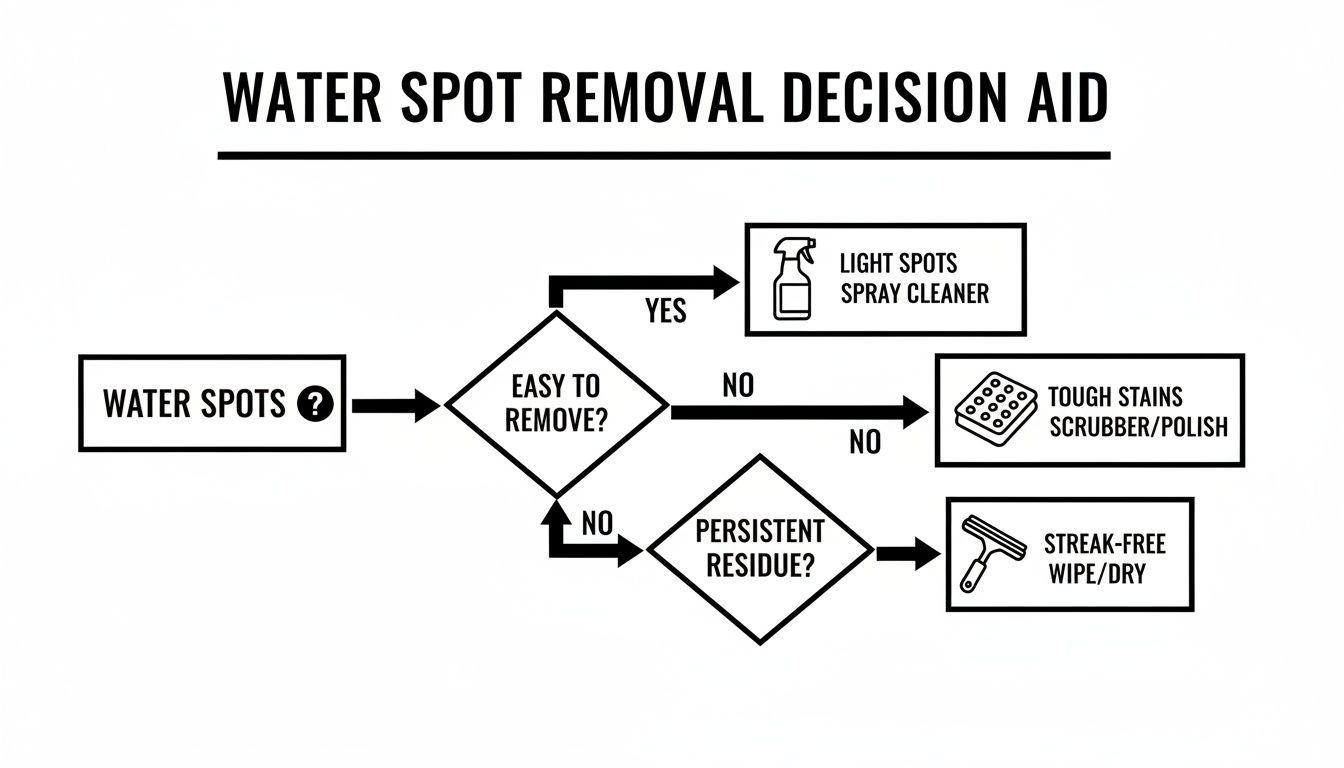
It lays out a clear path from simple household solutions for light spots to more powerful options for the really stubborn jobs.
Advanced Tactics for Baked-On Deposits
What happens when vinegar just doesn't cut it? It’s time to bring out the stronger stuff. This is a common scenario here in Phoenix, where the intense heat literally bakes the minerals into the glass, making them incredibly difficult to remove. For these situations, a commercial-grade hard water spot remover is your best bet.
These products are specifically formulated with mild acids or other compounds designed to dissolve heavy, layered mineral buildup. It's crucial to pick the right one, though, since some harsh chemicals can damage window seals or tinted films. To help you choose safely, check out our guide on the dos and don'ts of window cleaning chemicals to avoid.
Pro Tip: Never apply a chemical remover to a hot window. Always work in the shade on cool glass. If the glass is hot, the product can evaporate almost instantly, leaving behind a chemical residue that’s even tougher to get off than the original spot.
Apply a small amount of the commercial cleaner directly onto your non-abrasive pad (not the glass itself). Work it into the stain using firm, overlapping circles. Be patient—it might take a few rounds of this to break down all the layers of deposits.
For the most extreme, etched-in stains that nothing else will touch, you can carefully use #0000 (quadruple-zero) steel wool. The key is to keep both the glass and the steel wool constantly wet with your cleaning solution, which acts as a lubricant. This technique gently shaves off the mineral buildup without scratching the glass. It’s a powerful method, but you should always test it on a small, hidden corner first just to be safe.
Cleaning Water Spots on Solar Panels and Glass Fences
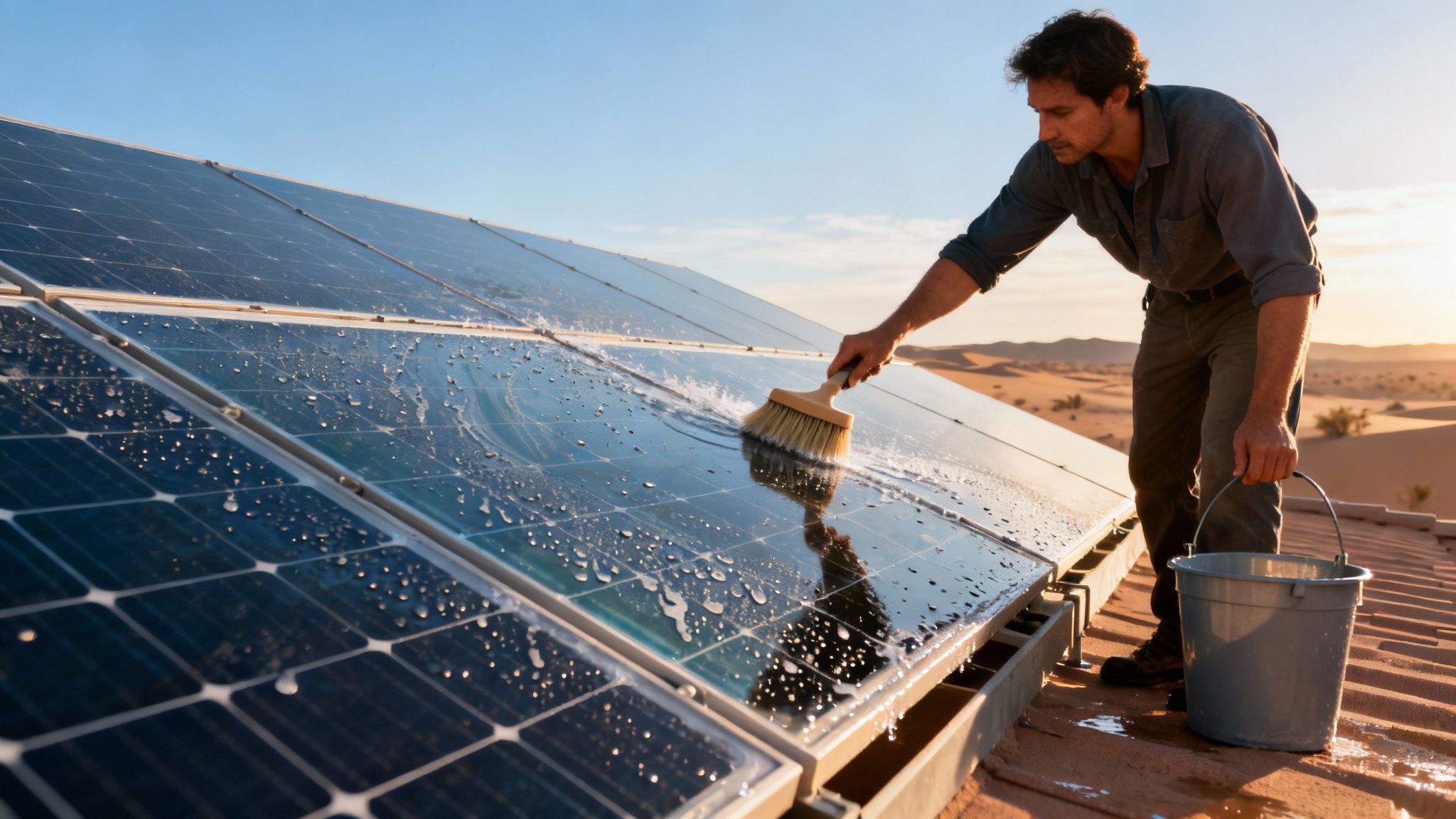
The same hard water that plagues your home's windows can cause real problems for other glass surfaces around your property. Mineral deposits on solar panels and glass pool fences aren't just an eyesore; they can hinder performance and even lead to permanent damage if left untreated. These specialized surfaces need a slightly different approach.
When it comes to solar panels, that layer of chalky residue does more than just look bad—it actively blocks sunlight. Even a thin film of mineral buildup can slash a panel's energy output, which directly hits your energy savings and the efficiency of your whole system. Regular cleaning is simply essential maintenance for your investment.
Safely Cleaning Your Solar Panels
The number one rule for cleaning solar panels is to avoid anything that could scratch the delicate anti-reflective coating. Harsh chemicals and abrasive tools are a definite no-go. Damaging this coating can void your warranty and permanently gut the panel's effectiveness.
Your best bet is a soft-bristle brush made for solar panels, used with deionized or distilled water. Using purified water is key because it won’t leave new mineral spots behind as it dries. Gently scrub the panels to loosen the grime, then give them a good rinse. For a more detailed walkthrough, our complete guide on how to clean solar panels covers manufacturer-approved methods.
Important Safety Note: Cleaning solar panels means working at heights and around electrical equipment. Safety first! Use a sturdy ladder, and if you can, work from the ground with a water-fed pole system. Never, ever spray cold water onto hot panels—the thermal shock can cause tiny cracks in the glass.
Restoring Clarity to Glass Fences and Railings
Glass pool fences and balcony railings are constantly getting splashed by pool water and sprinklers, making them magnets for hard water stains. The goal is to bring back that crystal-clear, modern look without scratching the glass or damaging any of the hardware.
For these surfaces, that trusty vinegar-and-water solution is a fantastic place to start.
- Mix a 50/50 solution of distilled water and white vinegar in a spray bottle.
- Spray the glass generously, letting the solution sit for 10-15 minutes to break down the minerals.
- Use a non-abrasive pad to gently scrub the softened deposits in a circular motion.
- Rinse completely with clean water and dry immediately with a quality squeegee to stop new spots from forming.
If you’re dealing with tough, layered-on stains, you might need to step it up to a commercial hard water remover. Just apply it carefully and keep it away from any metal clamps, posts, or railings, as some acidic cleaners can tarnish these finishes. With the right technique, you'll have that flawless transparency back in no time.
How to Keep Water Spots from Coming Back
After you’ve put in the work to get your windows crystal clear, the last thing you want is a repeat performance from those stubborn spots. Honestly, the best way to deal with water spots is to stop them from ever forming. This means shifting your mindset from cleaning to prevention, and it's easier than you might think.
The biggest offender, especially here in Arizona, is sprinkler overspray. It's a constant battle. The simple fix? Go turn on your sprinklers for a few minutes and just watch. See where the water is actually going. A quick adjustment to a few sprinkler heads—so they hit the lawn, not the glass—is often the single most effective thing you can do.
Use a Protective Coating for Long-Term Defense
If you’re looking for a more lasting solution, a hydrophobic glass sealant is the way to go. Think of it like a coat of armor for your windows. These products create an invisible, super-slick surface that forces water to bead up and roll away, taking all those pesky minerals with it.
It’s the same technology that makes rain fly off a car windshield, and it works wonders for your home’s windows, railings, and shower doors. By preventing water from sitting and evaporating on the glass, you stop mineral deposits before they even have a chance to form.
Applying it is pretty simple, but the prep work is key—you have to start with a perfectly clean slate.
- First, make sure the glass is completely clean and dry. Any lingering spots or film will get trapped under the sealant.
- Next, apply the product with a clean microfiber applicator pad. Use smooth, overlapping motions to get even coverage.
- Let the sealant dry to a haze, following the manufacturer’s instructions on timing.
- Finally, grab a fresh, dry microfiber cloth and buff off the haze until the glass is sparkling.
Depending on the product and how much sun the glass gets, these coatings can last anywhere from a few months to over a year. It's a small investment of time upfront that pays off big by saving you hours of scrubbing later.
The Future of Window Care
Window maintenance isn't just about elbow grease anymore; technology is changing the game. The market for robotic window cleaners was valued at USD 1.36 billion in 2023 and is expected to jump to a staggering USD 4.72 billion by 2028.
This boom is all about automation—finding easier ways to keep glass clean, especially in hard-to-reach places. As a professional service like Sparkle Tech Window Washing, we're seeing more and more clients ask about preventative maintenance plans that incorporate these new tools. You can dive deeper into these trends in this comprehensive market report on BGateway.com.
A few simple adjustments and a good protective coating can make a world of difference. A little bit of prevention today really does mean less scrubbing tomorrow, keeping your view clear all year long.
When It’s Time to Call in a Professional Window Cleaner
Sometimes, you hit a wall with DIY cleaning. You’ve mixed the vinegar solution, you’ve scrubbed with the right pads, but those stubborn, cloudy spots just won't budge. This is where calling in a professional isn’t admitting defeat—it's making a smart move to protect your glass.
Knowing when to pick up the phone can save you a ton of frustration and, more importantly, prevent permanent damage to your windows.
Signs You Need Expert Help
One of the biggest red flags is when the glass still feels rough after you've cleaned it. That texture usually means the hard water minerals have begun to etch into the surface, creating microscopic pits. No amount of elbow grease can fix that. It takes specialized polishing compounds and professional equipment to restore the smoothness.
Safety is another major consideration. If you're looking at second-story windows, skylights, or massive panes of glass that require a tall ladder, the risk of a serious fall is just too high. Professional cleaners have the right safety gear and insurance to handle those high-up or tricky-to-reach spots without any drama.
Think about those stains that have been baking in the Arizona sun for years. When a spot has been there that long, especially on a sun-drenched window, your homemade solutions might not cut it. Pros come equipped with advanced gear, like water-fed pole systems that use deionized water. This pure water leaves absolutely zero mineral residue, giving you a truly spotless finish that lasts longer.
The Real Value of a Professional Service
Hiring a pro is about more than just getting clear glass; it's about paying for expertise and better technology. It’s a huge industry for a reason. The global window cleaning market was valued at around USD 93.1 billion in 2024 and is expected to grow to USD 128.7 billion by 2030. People are willing to pay for quality results that DIY methods can't always deliver, as this market analysis from Grand View Research shows.
Here’s what you’re really getting with a professional service:
- Speed and Efficiency: A good crew can clean every window in your home in a fraction of the time it would take you to do it yourself.
- Guaranteed Results: Reputable companies guarantee their work. You get a streak-free, crystal-clear finish, every time.
- Damage Prevention: They know exactly how to handle different types of glass—from tinted to specially coated—without causing scratches or other damage.
If your efforts aren't giving you the flawless windows you want, or if the job feels unsafe, bringing in an expert is the best way to go.
For a safe, professional, and guaranteed spotless finish every time, trust the experts at Sparkle Tech Window Washing. Get your free estimate today!