

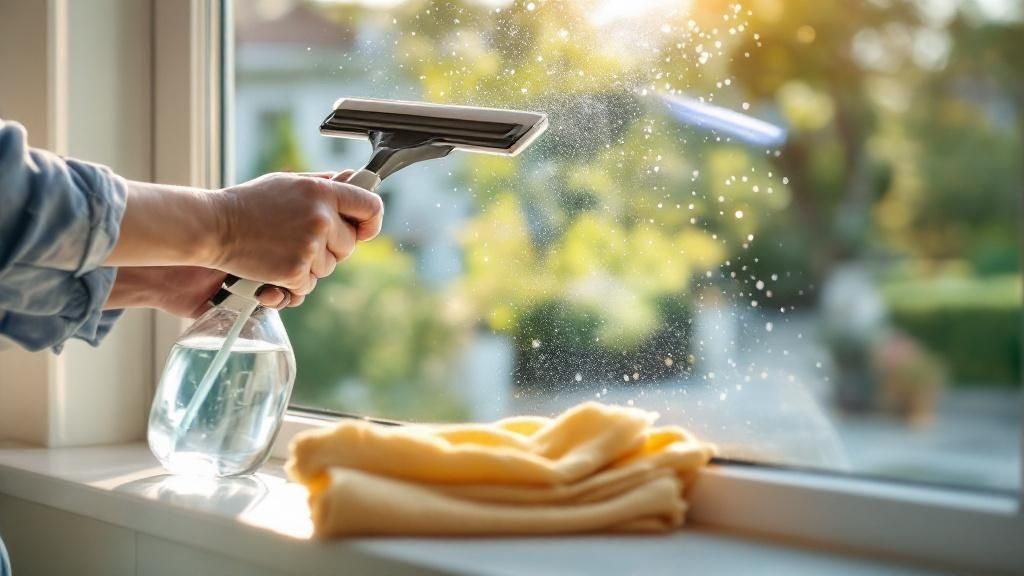
When it comes to cleaning double pane windows, it’s not just about getting a streak-free shine. It’s about protecting the window's core technology—that all-important seal and the insulation it provides. Getting this wrong can turn a simple weekend chore into a permanent, costly problem.
Why Your Double Pane Windows Need a Gentle Touch
Before you start spraying, it’s crucial to know what you’re working with. Double pane windows, often called insulated glass units (or IGUs), are more complex than they look. They consist of two sheets of glass separated by a spacer, creating a sealed pocket filled with air or an inert gas like argon. This pocket is the secret to their fantastic energy efficiency and noise reduction.
But here's the catch: that seal is surprisingly vulnerable.
Using aggressive chemicals like ammonia, blasting them with a power washer, or scrubbing with anything abrasive can easily damage the seal. Once that seal is broken, moisture gets sucked into the space between the panes. The result is a frustrating, permanent fog you can't just wipe away. Not only does this ruin your view, but it completely negates the window's insulating benefits, and you'll likely see your energy bills creep up.
The real goal isn't just a clean window. It's about preserving the window's structural integrity so it can keep doing its job. A broken seal essentially downgrades your expensive, energy-efficient window back to a basic, single pane of glass.
To get a better sense of why this specific care matters so much, it’s helpful to understand the differences between single, double, and triple pane windows. Each design has a unique construction that calls for different maintenance approaches.
Protecting a Major Home Investment
These windows are a significant investment, and they’re becoming more and more common. The market for double hung windows, where you’ll find a lot of IGUs, is projected to grow from USD 5.3 billion to USD 7.2 billion. This isn't just a random statistic; it shows a massive trend of homeowners investing in better home efficiency.
When you clean your double pane windows the right way, you’re not just tidying up. You're performing essential home maintenance that protects that investment, keeps your home comfortable, and ensures your windows last for years to come.
Getting Your Window Cleaning Gear Together
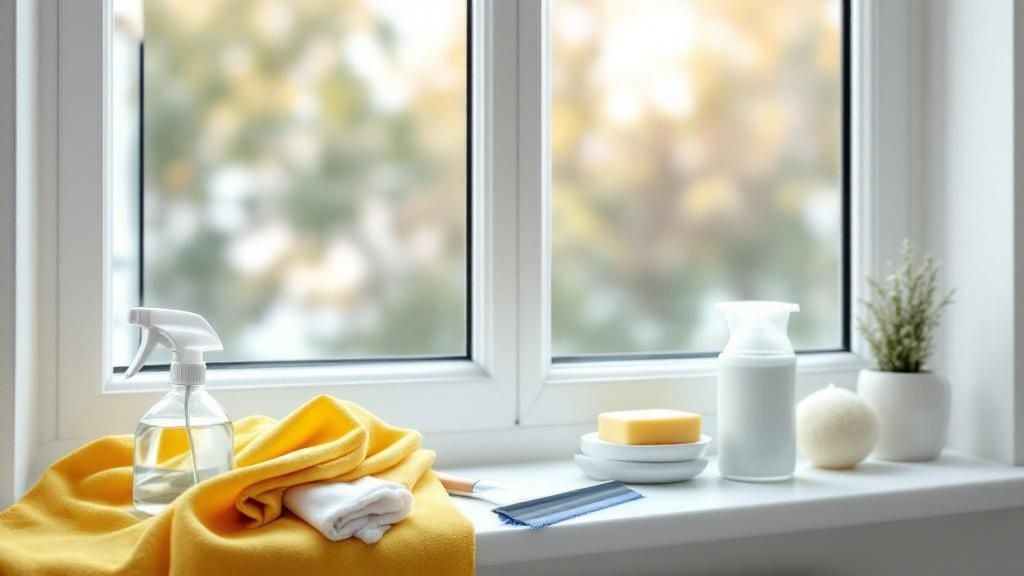
If you want to get that perfectly clear, streak-free shine on your double pane windows, it's not about having a garage full of fancy gadgets. It’s about having a handful of the right tools for the job—the kind that work without putting your window seals at risk.
So, let's toss out the paper towels and the mystery blue spray. Using professional-grade equipment makes the entire process quicker, simpler, and yields far better results.
The Heart of Your Toolkit
The one tool you absolutely can't skimp on is a high-quality squeegee. This is the secret weapon. A professional squeegee with a fresh, sharp rubber blade is what separates a frustrating, streaky mess from a flawless, crystal-clear finish. When you're picking one out, find a size that's just a bit narrower than your smallest window pane. This makes it much easier to handle in tight corners.
To go along with your squeegee, you'll need a microfiber applicator (sometimes called a mop or scrubber). It's designed to hold the cleaning solution and apply it evenly without making a drippy mess. Forget old sponges; microfiber is the way to go.
A simple two-bucket system is another game-changer. One bucket holds your cleaning solution, and the other holds clean water for rinsing your applicator. This tiny step prevents you from smearing dirt you just lifted right back onto the glass, which is a classic rookie mistake that leaves windows looking hazy.
Expert Insight: You don't need a harsh, chemical-heavy cleaner. Honestly, a few drops of mild dish soap in a bucket of distilled water is my go-to. If you've got stubborn spots or hard water stains, a splash of white vinegar will cut right through the grime.
Your Pro Window Cleaning Toolkit Checklist
To get that professional finish without damaging your windows, you need the right gear. This checklist covers the essentials I rely on for every job.
| Tool | Why It's Essential | Pro Tip |
|---|---|---|
| Professional Squeegee | The key to a streak-free finish. Its sharp rubber blade removes water flawlessly. | Replace the rubber blade as soon as it gets nicked or worn. A fresh blade is cheap and makes all the difference. |
| Microfiber Applicator | Applies cleaning solution evenly without dripping and scrubs away grime effectively. | Look for one with a removable, machine-washable cover for easy cleanup and longevity. |
| Two 5-Gallon Buckets | Prevents cross-contamination by keeping your cleaning solution and rinse water separate. | Label your buckets "SOAP" and "RINSE" with a permanent marker to avoid mix-ups. |
| Microfiber Cloths | Perfect for wiping the squeegee blade and detailing edges and sills for a perfect finish. | Have at least 3-4 clean, dry cloths on hand. Use one for frames, one for blades, and one for final touch-ups. |
| Soft-Bristled Brush | Gets into window tracks and frames to dislodge dirt and cobwebs before you even touch the glass. | An old toothbrush works great for tight corners and tracks that a larger brush can't reach. |
With these tools in hand, you’re set up just like a professional, ready to tackle the job safely and effectively.
What About Store-Bought Cleaners?
The global market for window cleaners is huge, valued at an estimated USD 4.615 billion, and for good reason. Many modern formulas are specifically designed to be gentle on the special coatings and seals found in energy-efficient double pane windows. You can discover more about the window cleaner market trends if you're curious.
While my DIY soap-and-water mix works for most situations, a high-quality commercial cleaner is a perfectly good choice if you prefer the convenience. Just be sure to pick one that's ammonia-free to protect your window seals.
Getting That Flawless, Invisible-Glass Look
Alright, you've got your tools. Now it's time to put them to work. This is the part where technique really shines, turning a chore into a craft. Getting that perfect, invisible-glass finish isn't about scrubbing harder—it's about working smarter with a repeatable process.
First things first, protect your home. Before you even mix your solution, lay an old towel or a drop cloth on the windowsill and the floor below. This seems like a small step, but it’s a lifesaver for catching drips and preventing water spots on your trim, carpet, or hardwood floors.
Applying the Solution and Mastering the Squeegee
Grab your microfiber applicator, dip it into your bucket of cleaning solution, and give it a good wring. You're aiming for damp, not dripping. One of the most common rookie mistakes is using way too much water, which just creates a soupy mess and guarantees streaks. Gently scrub the entire glass surface, making sure to loosen up all that built-up dirt and grime.
This graphic breaks down the ideal motion for a streak-free finish on your interior glass.
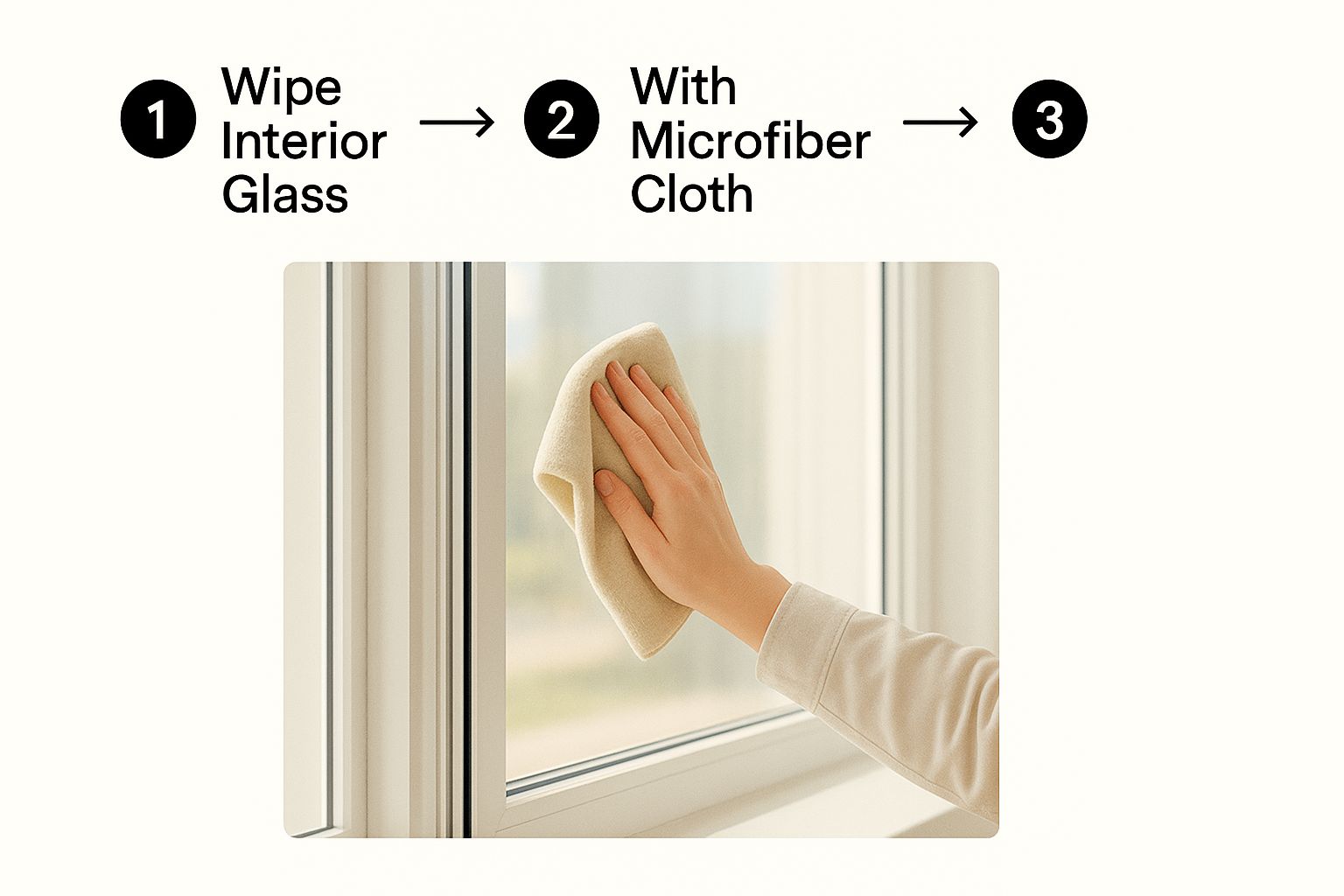
The overlapping strokes shown here are exactly what you want to do. It’s the secret to getting full coverage without leaving any residue behind.
Now, for the squeegee. If you want a pro-level finish, you need to learn the "S-method", sometimes called the reverse-S or the snake.
- Start at a top corner, tilting your squeegee at a slight angle.
- Press it firmly to the glass and pull it straight across the top.
- When you reach the other side, pivot the squeegee down and pull it back in the opposite direction, making sure to overlap your first stroke by about an inch.
- Just keep that "S" motion going all the way down the pane.
This fluid, continuous movement is what prevents those ugly start-and-stop lines you see so often. If the S-method feels awkward at first, try practicing on a bathroom mirror. It’s a great way to build the muscle memory you need for a smooth pass.
Pro Tip: After every single pass, wipe the squeegee blade clean with a dry microfiber cloth. This is non-negotiable. If you skip this, you’re just dragging dirty water right back across the clean glass, which is the fastest way to create streaks.
The Final Polish
You're almost there. With the main glass done, take a fresh, dry microfiber cloth and run it along the very edges of the pane. This little detailing step soaks up any water that's hiding against the frame or seals. It only takes a few seconds, but it’s the difference between a good job and a perfect one.
If you've followed these steps and are still fighting streaks, don't worry. Sometimes it takes a little more troubleshooting. For a deeper dive, check out our guide on how to achieve streak-free windows with tips from Sparkle Tech Window Washing.
Tackling Common Window Cleaning Headaches
Even with the best tools and a solid plan, you're bound to hit a snag eventually. A stubborn spot, a persistent haze—it happens. This is where a little know-how can make the difference between a frustrating afternoon and a job that looks like it was done by a pro. The good news is, most of these common problems are pretty easy to solve.
Let's talk about those tough, baked-on messes. Things like tree sap, hard water spots, or bird droppings can feel impossible to remove. Your first instinct might be to grab something sharp and scrape, but please don't. A razor blade on glass is a quick way to create a permanent, ugly scratch.
The real secret is to soften, not scrape. Just take a corner of your microfiber cloth, get it good and soaked with your warm, soapy water, and press it directly onto the spot. Hold it there for a few minutes. This gives the gunk time to rehydrate and loosen its grip. Once it's softened, a gentle wipe is usually all it takes.
Is It Dirt, or Is the Window Done For?
This is probably the most important thing you can learn when cleaning double-pane windows. You've cleaned a window inside and out, but it still looks foggy or has a weird, milky haze. Before you go back for a third round of scrubbing, you need to play detective. Is the problem on the glass, or is it in the glass?
Here's how to tell the difference:
- Surface Grime: This is your standard-issue dirt, film, or residue. If you run your finger over the spot, you'll feel it or see it smear. This is the stuff that your cleaning solution and squeegee are meant for.
- Internal Fogging: This is when you see condensation or a hazy film trapped between the two panes of glass. No amount of elbow grease on the outside will ever touch it. It's a dead giveaway that the airtight seal has failed, letting the insulating gas escape and moisture get in.
A failed seal is a window failure, not a cleaning failure. The window might still keep the rain out, but its energy-saving and sound-proofing benefits are gone. The only real fix is to have the insulated glass unit (IGU) professionally repaired or replaced.
Trying to "fix" a failed seal yourself by drilling holes or using a defogging kit often creates more problems and will definitely void your warranty. Knowing how to spot a failed seal saves you a ton of wasted effort and tells you exactly when it’s time to call in a window expert. In fact, improper cleaning is a common reason for warranty claims, so doing it right protects your investment. You can learn more about professional window cleaning standards and why they matter for your windows' lifespan.
And one last tip: don't neglect the tracks and frames. Before you even touch the glass, grab a soft brush or a vacuum with a brush attachment and clear out all the loose dirt and dead bugs from the tracks. A quick wipe-down with a damp cloth afterward makes the whole window look sharp and professionally finished. It's a small step that makes a huge difference.
Keeping Your Double Pane Windows in Top Shape Long-Term
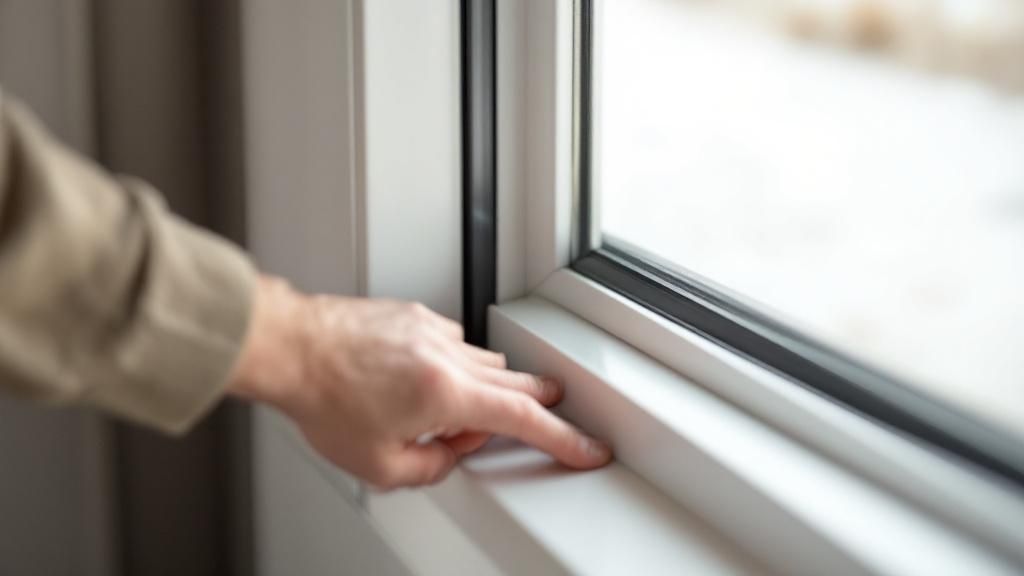
Getting your windows sparkling is one thing, but keeping them that way is a whole different ball game. It’s not about one heroic cleaning session; it’s about consistent care that protects your investment. Think of it as preventative maintenance—a simple routine can head off the kind of corrosive grime that damages window seals over time.
A good rule of thumb is to give your windows a thorough cleaning at least twice a year. For most homes, a spring and fall cleaning is the sweet spot. This schedule is manageable and does a great job of stopping dirt from turning into a permanent, damaging fixture.
In between those deeper cleans, get in the habit of doing quick visual checks, especially after a big storm rolls through. Take a close look at the window seals and frames. Are you seeing any peeling, cracking, or gaps? Catching those little signs of trouble early can save you from much bigger headaches and costly repairs later.
Of course, life gets busy, and sometimes the job is just too big to handle on your own. It's worth understanding the 5 important benefits of professional window cleaning to know when it makes sense to call in the pros.
Quick Guide to Window Maintenance
To keep things straightforward, here are some core dos and don'ts I've learned over the years. Following these will go a long way in preserving the life of your windows.
DO:
- Give your seals a once-over periodically, looking for any cracks or peeling.
- Always use soft, clean microfiber cloths—they're your best friend for glass.
- Don't forget the tracks and frames! Cleaning out that gunk prevents operational issues.
DON'T:
- Ever use a high-pressure washer on your windows. It's a surefire way to destroy the seals.
- Use ammonia-based cleaners, which can break down the sealants over time.
- Scrape at the glass with razor blades or other sharp tools. You'll likely cause permanent scratches.
Remember, the goal is a crystal-clear view, and that includes what's on the inside, too. Keeping your blinds and shades clean is just as important. For some great pointers on that, check out these easy tips for sparkling windows.
Common Questions We Hear About Window Cleaning
Over the years, we've found that homeowners run into the same handful of questions when tackling their double pane windows. Let's clear up some of the most common concerns so you can get a perfect, safe clean every time.
How Often Should I Really Be Cleaning My Windows?
For the average home, a good, thorough cleaning twice a year does the trick. I usually recommend a spring cleaning to wash away winter grime and a fall cleaning to get ready for the holidays. This schedule is about more than just looks; it stops corrosive dirt from building up and damaging the seals.
Of course, if you live somewhere with a lot of dust, pollen, or near a busy road, you might want to do it quarterly. You know your environment best.
For a deeper dive, we've compiled a list of other common questions about window cleaning we get from clients.
Is It Okay To Use a Pressure Washer?
I get this question all the time, and my answer is always a hard no. Please, avoid using a pressure washer on your double pane windows. That high-pressure jet of water is powerful enough to break the airtight seal between the glass panes.
Once that seal is broken, moisture gets trapped inside, and you're left with permanent fogging. The window's insulating ability is shot. A gentle spray from a standard garden hose is all you need.
Expert Tip: The whole point of cleaning is to protect your windows, not damage them. Aggressive methods like pressure washing are a shortcut to expensive repairs. It's just not worth the risk.
My Windows Are Still Foggy After I Cleaned Them. What's Wrong?
This is a frustrating one. If you've meticulously cleaned both the inside and outside of a window and it still looks foggy or has a milky film, the problem isn't your cleaning technique. It's almost certainly a failed seal.
When the seal is compromised, moist air gets trapped between the two panes of glass. This condensation can't be wiped away because it's on the inside. It's a clear sign that the window's insulation is gone, and you'll likely need to have the insulated glass unit (IGU) replaced by a professional.
Dealing with other tricky glass features? This is a great resource on how to clean skylights, which have their own unique challenges.
When you want a flawless, professional finish without the hassle, you can always count on the experienced team at Sparkle Tech Window Washing. Schedule your service today and let us give your home a streak-free shine that protects your investment.