




If you've ever battled with stubborn streaks after cleaning your windows, you know how frustrating it can be. The secret to that perfect, invisible-glass look isn't some miracle spray or a complicated hack—it’s actually a surprisingly simple system. All it takes is a good squeegee, a basic cleaning solution (just water and a drop of dish soap), and one crucial habit: wiping the blade after every single pull.
This simple combination is what stops soapy residue and hard water minerals from drying on the glass and causing those familiar, annoying streaks. It’s how the pros get a flawless finish, and you can too.
The Real Secret to a Streak-Free Shine
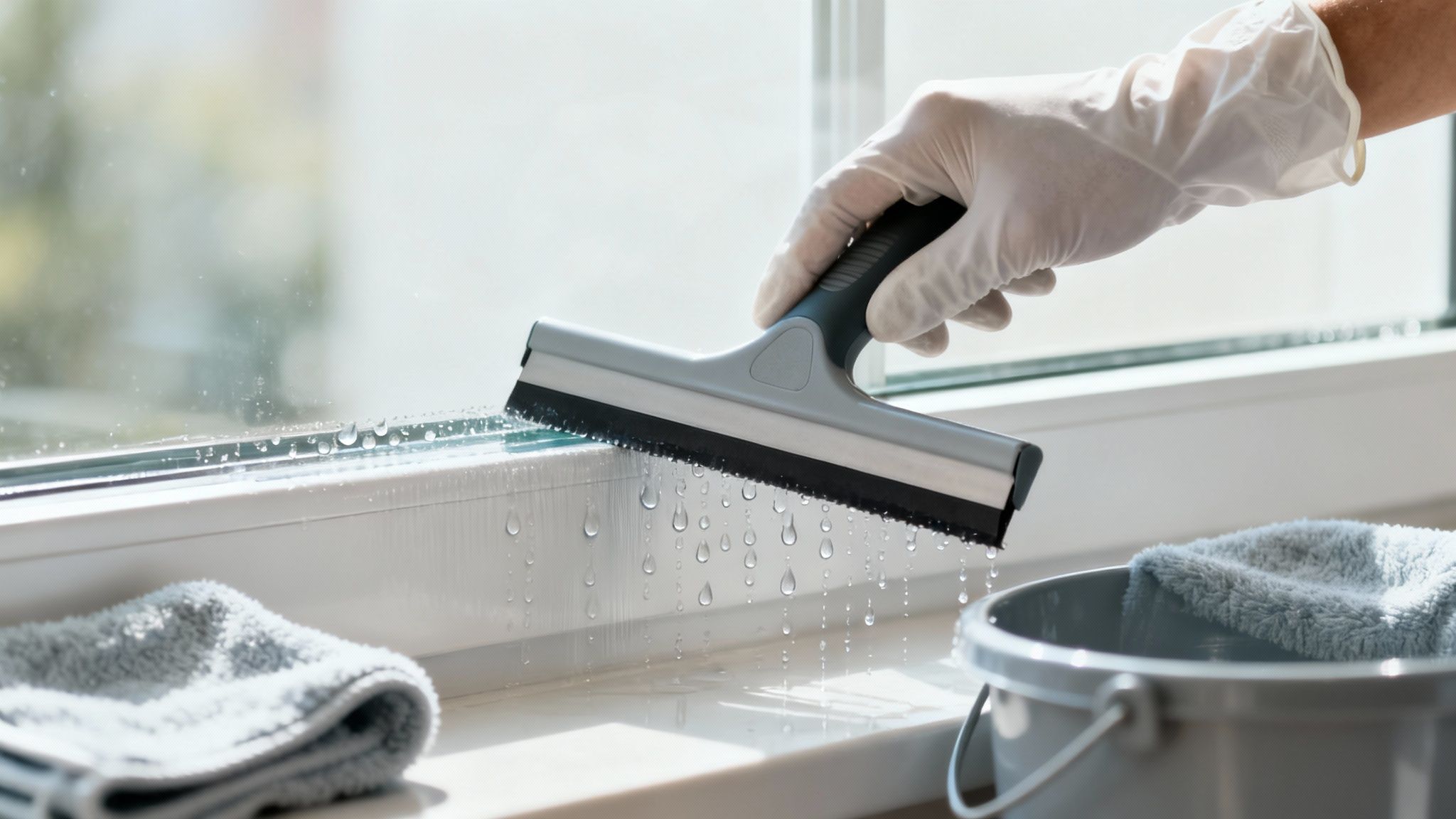
Let's be clear: getting a flawless shine isn't about finding a magic product or reviving old tricks with newspaper. It's about understanding why streaks form in the first place and using a methodical approach to prevent them. The whole system really comes down to three things: the right tools, the correct technique, and perfect timing.
It's time to ditch that endless cycle of spraying and wiping, which often just smears the grime around. The professional approach is fundamentally different. It’s designed to lift the dirt completely off the glass and whisk it away with a squeegee, leaving absolutely nothing behind to dry into a cloudy film. This guide will cut through the noise and give you that solid foundation for success.
Why Professional Methods Work
The desire for sparkling clean windows has built a massive industry. The global window cleaning market was valued at an incredible USD 2.68 billion in 2023 and is expected to nearly double by 2031. That number alone shows just how much people value a streak-free finish on their homes and businesses.
You can absolutely get that same professional-grade result at home by sticking to a few key principles:
- Tool Quality is Non-Negotiable: A cheap, flimsy squeegee with a hard, unforgiving rubber blade is a recipe for streaks. Seriously, investing in a quality tool is the single most important thing you can do.
- Less is More with Solutions: Many store-bought cleaners are full of soaps, scents, and additives that leave a sticky residue. A simple mix of distilled water and a tiny drop of dish soap is all you really need. You can learn more about this by checking out our guide on what professional window cleaners use.
- Technique Over Elbow Grease: Frantically scrubbing a window is way less effective than a methodical, precise squeegee pull. Consistency is what separates a perfect finish from a streaky mess.
The biggest mistake I see people make is thinking they need a powerful chemical to get windows clean. In reality, the most common cause of streaks is the residue left behind by those very cleaners. The real secret is removing everything—dirt and solution—from the glass efficiently.
For a deeper dive, this expert window cleaning guide for a streak-free shine can take your skills to the next level. By embracing these core ideas, you’re not just cleaning your windows; you’re adopting a system that guarantees clarity every single time.
Streak Free Window Cleaning At a Glance
To quickly recap, here’s a simple table breaking down the most important elements for getting that perfect, streak-free shine.
| Component | Why It Matters | Top Recommendation |
|---|---|---|
| The Squeegee | A quality rubber blade is the key to pulling water and dirt off the glass cleanly. | Invest in a professional-grade squeegee with a replaceable, high-quality rubber blade. |
| Cleaning Solution | Overly soapy solutions are the #1 cause of residue, which dries into streaks. | A few drops of dish soap in a bucket of distilled water is all you need. |
| Technique | Consistent pressure and overlapping strokes prevent missed spots and water lines. | Master the "S-Method" and always wipe the blade clean after each and every pass. |
| The Right Cloths | Lint and leftover fibers from the wrong towels can ruin a perfect finish. | Use lint-free microfiber cloths for wiping the blade and detailing the edges. |
Getting these four things right will solve 99% of your window cleaning frustrations. It's a system that's all about efficiency and effectiveness, not harsh chemicals or wasted effort.
Assembling Your Professional Toolkit
Look, you can't bake a gourmet cake with a plastic spoon, right? The same idea applies here. If you want that professional, truly streak-free finish on your windows, you have to ditch the amateur tools. Putting together a small but high-quality toolkit is the single most important move you can make to finally get the flawless results you're after.
It’s time to forget the paper towels and that generic blue spray bottle. Your arsenal should be simple, effective, and built to perform. And the absolute centerpiece of this whole operation is the squeegee.
Invest in a High-Quality Squeegee
A professional-grade squeegee isn't just another tool; it’s a genuine investment in clarity. Unlike those flimsy plastic models you grab at the hardware store, a quality squeegee has a solid channel and—this is the crucial part—a soft, supple rubber blade that glides like a dream across the glass. That flexibility is what allows it to maintain perfect contact, pulling away every last drop of dirty water.
It might surprise you, but the market for these things is pretty serious. The global window washing squeegee market is projected to be worth around USD 250 million by 2025. That growth is fueled by a simple truth: pros and homeowners who are serious about results know a great squeegee is the only way to get a perfect finish.
The difference between a $5 squeegee and a $25 one is staggering. Cheap blades are often too hard, causing them to skip across the glass and leave behind frustrating "chatter" marks and water lines. A fresh, professional blade is the real secret.
The Right Cloths and Buckets
Your squeegee can't do it alone; it needs a solid support team. When it comes to a streak-free shine, lint is public enemy number one. That’s why microfiber cloths are completely non-negotiable. You’ll want at least two on hand: one slightly damp cloth for wiping your squeegee blade clean after every single pull, and a second, perfectly dry one for detailing the edges and corners of the pane.
Whatever you do, avoid old bath towels, T-shirts, or paper towels. They all shed fibers that will immediately cling to the wet glass and undo all your hard work. For a complete rundown, check out our guide on the best window cleaning tools that professionals swear by.
Many pros also rely on a simple two-bucket system. It’s a game-changer.
- Bucket One: This holds your cleaning solution.
- Bucket Two: This is filled with clean rinse water just for your scrubber.
Using this method stops you from dipping a dirty scrubber back into your clean solution, which keeps your mix pristine from the first window to the last.
Your Simple DIY Cleaning Solution
Finally, you need a cleaning solution that does its job without leaving anything behind. The problem with most commercial cleaners is they're loaded with soaps, scents, and dyes that create a sticky film—a major cause of streaks. Honestly, the best solution is one you can mix yourself in seconds.
For a standard bucket, all you need is:
- Distilled Water: It's free of the minerals in tap water that cause hard water spots.
- White Vinegar: Just a splash (about one cup per gallon) is amazing for cutting through grease and grime.
- A Single Drop of Dish Soap: Seriously, just one drop. It's only there to break the water's surface tension and help the squeegee glide smoothly.
This minimalist recipe cleans incredibly well and evaporates completely, leaving nothing but sparkling glass. It's the go-to formula for a reason—it just works.
Mastering the Pro Squeegee Method
Alright, you've got the gear. Now it's time to learn how to use it like a pro. This is where the magic really happens—the squeegee method is what turns a tedious chore into a satisfying skill. It’s all about smooth, controlled motions that lift away every last bit of solution and grime, leaving absolutely nothing behind to dry into a streak.
Forget about aggressive scrubbing or frantic wiping. The goal here is pure finesse. We're going to break down the exact techniques the pros use to get that "invisible glass" look, transforming what used to be sloppy passes into a repeatable, spotless system.
This little flow chart shows how all the key pieces work together for a perfect finish.
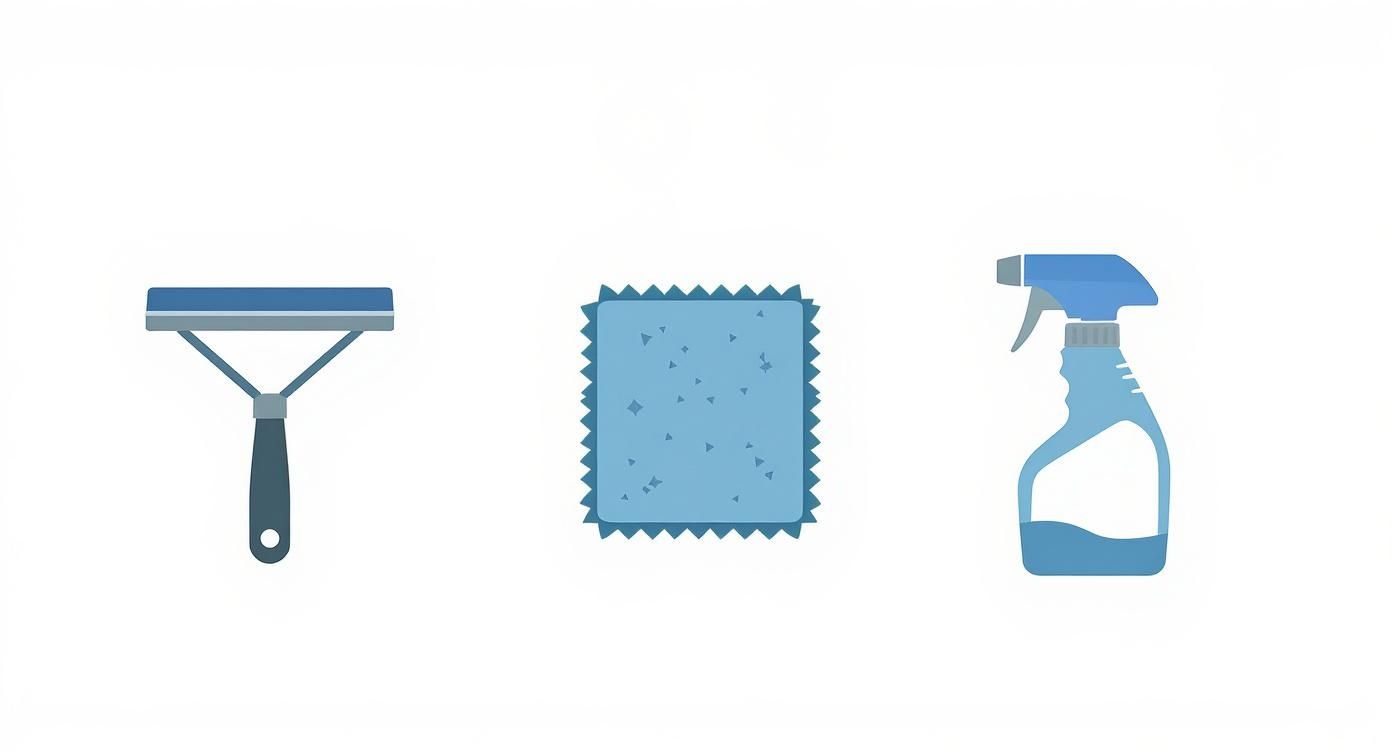
As you can see, the squeegee, your cloths, and the cleaning solution are an interconnected system. Each part supports the others to guarantee you won't see streaks when the sun hits.
The Anchor and The Pull-Down
Your first move is the most important one because it sets the stage for success. Here’s a common mistake: starting a squeegee pull on a fully wet edge. Do that, and the blade will skip, leaving an ugly line. The trick is to "cut in" a dry starting point first.
Grab a clean, damp microfiber and wipe a thin, one-inch strip down one side of the window, from top to bottom. This dry zone is your anchor; it gives the squeegee a clean place to start its first pass without smearing.
Now, place your squeegee blade at the top of the glass, overlapping slightly onto that dry strip you just made. Keep a gentle but firm angle—about 30 degrees is the sweet spot. Then, pull the squeegee straight down in one smooth, continuous motion.
Pro Tip: Don't press too hard! Let the weight of the squeegee do the work. You want to glide over the glass, not scrape it. Consistent, light pressure is the key to avoiding those little "chatter marks" and getting truly clean windows streak free.
After that first pull, you’ve created a new dry edge. For your next pass, just overlap this clean area by about an inch. This simple overlap prevents you from leaving any thin lines of water between your strokes. Keep repeating this overlapping pull-down method across the entire pane.
The Critical Blade Wipe
I'm going to share a non-negotiable rule that separates amateurs from pros: you must wipe your squeegee blade with a microfiber cloth after every single pass.
This simple step takes less than a second, but it's absolutely vital. Each pull collects dirty water and grit. If you don't wipe that blade clean, you're just going to drag that grime right back onto the glass with your next stroke, creating a frustratingly faint streak.
Make it a habit. Pull down, wipe the blade, start the next pull. It’s a rhythm that, once you get it down, guarantees a flawless finish. To get an even better handle on the final touches, you might want to look into the 3 proven ways to dry windows without leaving streaks.
The Advanced S-Stroke Method
Once you're comfortable with the straight pull-down, you can graduate to the S-stroke. You might also hear this called the "fan" or "swivel" method. This is what you see professionals doing on big panes of glass because it's incredibly efficient and gets rid of all those stop-and-start lines.
Instead of a series of separate downward pulls, the S-stroke is one continuous motion. Here’s how it works:
- Cut In the Top Edge: First, create your dry strip along the top of the window, not the side.
- Start at an Angle: Place your squeegee in a top corner at roughly a 45-degree angle.
- Create the "S": Pull the squeegee across and down in a fluid, snake-like pattern. The key is to always keep a "wet edge" of the solution in front of your blade as you move.
This technique definitely takes a bit of practice to get the wrist movement right, but the payoff is huge. It lets you clean entire windows in a single, graceful motion, leaving a perfectly uniform and streak-free surface every single time.
Troubleshooting Common Streaking Problems
So you’ve got the best tools and you’ve practiced your squeegee technique, but you're still seeing a stubborn streak or a hazy patch. Don't get discouraged! This happens to everyone, and it’s usually caused by a hidden issue you just haven’t spotted yet.
Think of yourself as a detective. Every streak tells a story about what’s going on, and once you figure it out, you’re on the home stretch to a perfect finish. Let's dig into the most common culprits and how to solve them.
The Problem With Sunlight And Heat
It seems logical to clean windows on a bright, sunny day, right? You can see all the dirt. But this is one of the biggest mistakes you can make. Hot sun bakes the cleaning solution onto the glass almost instantly, long before your squeegee can get to it.
What's left behind is a streaky, filmy residue of soap, dissolved dirt, and minerals. It’s a race you just can’t win.
The fix is simple: always work on the shady side of the house. If that’s not possible, clean early in the morning, late in the afternoon, or wait for an overcast day. This gives you the working time you need to get the job done right without fighting the clock.
Identifying Hidden Residues
If you’re still seeing streaks after timing it right, the problem is likely an invisible film that was already on the glass. This sneaky residue can come from a few different places, and each one needs a slightly different approach.
-
Too Much Soap: This is hands-down the number one cause of film. Using more than a tiny drop of dish soap creates a sticky buildup that just smears around with every squeegee pass. The solution? Re-wash the window using only distilled water with a small splash of white vinegar to cut through that leftover soap.
-
Hard Water Stains: Are your windows in the line of fire of a sprinkler system? You’ve probably got hard water spots. These are mineral deposits etched onto the glass, and a standard wash won't touch them. You’ll need to pre-treat these spots with #0000 grade steel wool or a specialized hard water stain remover before you start cleaning.
-
Frame Leaching: Older vinyl window frames, especially those blasted by the sun, can break down and "leach" an oily residue that runs down the glass. If your streaks seem to start from the top or sides, the frames are the likely culprit. Give the vinyl a thorough wipe-down with a degreaser before you even touch the glass.
A Pro Tip: Your cleaning solution is only as good as the water in it. If your home has hard water, the high mineral content is a guaranteed streak-starter. Do yourself a favor and always use distilled water. It completely eliminates minerals as a variable.
Sometimes, a quick visual check can help you pinpoint the issue faster. Here’s a quick reference guide to help you diagnose what’s going wrong.
Common Window Streaking Issues and Solutions
| Problem | Likely Cause | How to Fix It |
|---|---|---|
| Hazy film across the entire window | Using too much soap; hard water in your cleaning solution. | Re-wash with a solution of distilled water and a splash of white vinegar. |
| Streaks that appear instantly | Cleaning in direct sunlight or on a hot window. | Wait for a cooler, overcast day or work on the shady side of the building. |
| White spots or cloudy patches | Mineral deposits from hard water (sprinklers, rain). | Pre-treat spots with #0000 steel wool or a hard water stain remover. |
| Streaks running down from the edges | Oily residue leaching from aging vinyl or dirty frames. | Clean the window frames thoroughly with a degreaser before washing the glass. |
| Tiny, linty streaks | Using the wrong type of cloth (like a terry cloth towel). | Switch to high-quality, lint-free microfiber cloths for detailing. |
By learning to spot these common issues, you can stop fighting the glass and start getting that crystal-clear, streak-free result you’re after.
Adapting Your Technique for Inside and Out
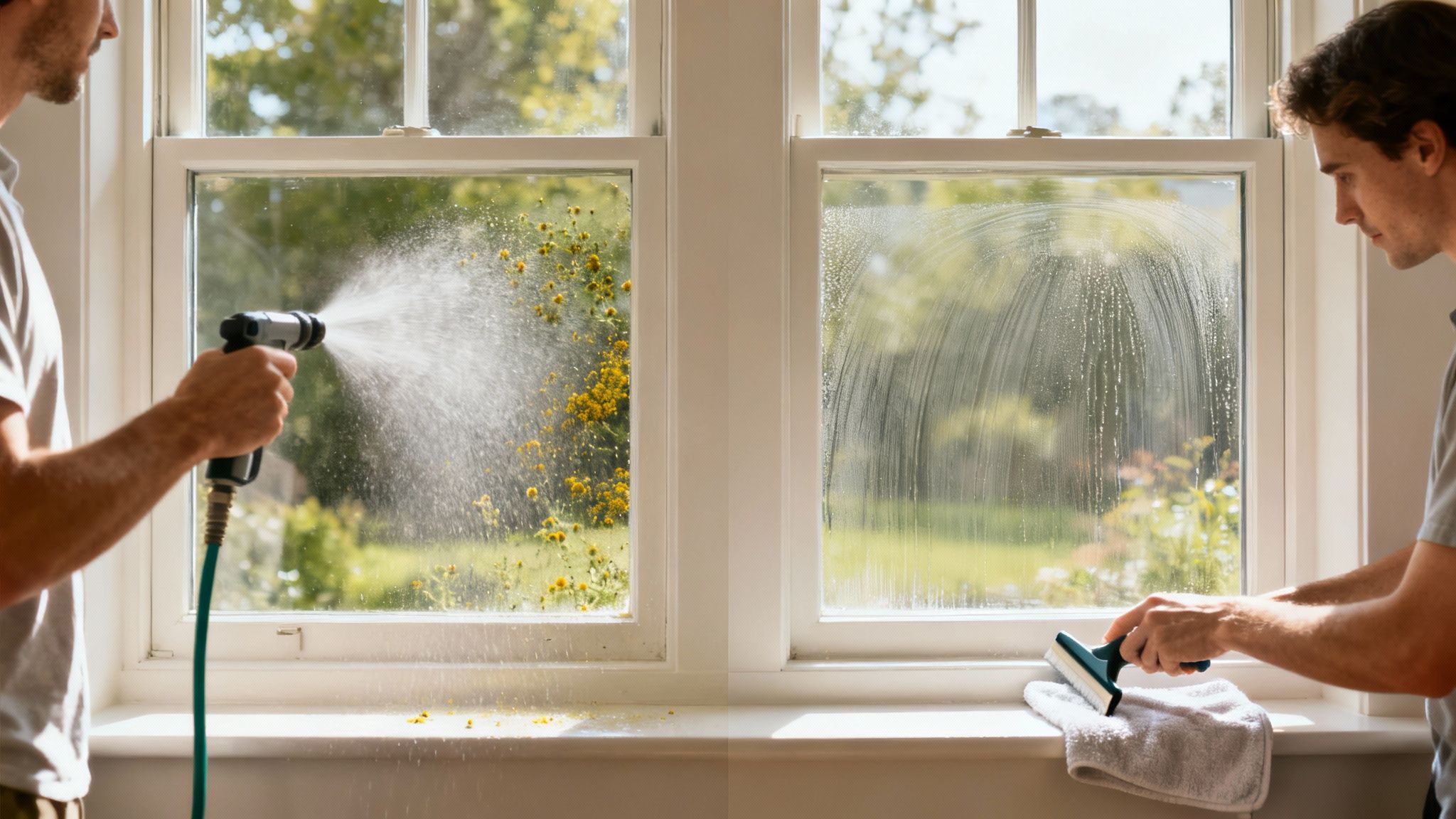
Getting perfectly clear, streak-free windows isn't a one-size-fits-all job. The kind of gunk building up on your exterior glass is worlds apart from the smudges you'll find inside. To get that flawless finish, you have to switch gears from heavy-duty outdoor work to a more delicate indoor approach.
Exterior windows are constantly under attack. They get coated in pollen, splattered with bird droppings, hit by hard water from sprinklers, and caked with dirt baked on by the sun. This calls for a more aggressive, yet still methodical, cleaning strategy.
Tackling Tough Exterior Grime
Before you even think about touching the glass, deal with the screens. There's nothing worse than cleaning a window perfectly, only to put a dusty screen back in and immediately undo all your hard work. Pop them out and give them a good scrub first.
Next up, give the windows a quick pre-rinse. A light spray with a garden hose knocks off the loose dirt and grit. This is a crucial step—it keeps you from scratching the glass by grinding that debris in with your scrubber.
Now you’re ready for your cleaning solution and squeegee, but just know, it's going to be a dirtier job.
- Go Heavier on the Solution: You can be a lot more generous with your cleaning solution outside since you don't have to worry about drips hitting your floors or furniture.
- Wipe Your Blade Constantly: The runoff will be much dirtier, so wiping your squeegee blade clean after every single pull is non-negotiable.
This kind of outdoor work is what keeps professional window cleaners so busy. After a brief dip in 2020, the industry has bounced back and is looking at a projected 13% growth by 2028. Just the small to medium-sized building market is expected to hit USD 2.3 billion in revenue by then, all driven by the demand for sparkling exterior glass. You can find more details on the industry's comeback and growth in professional window cleaning.
Shifting to Indoor Finesse
Once you head inside, the game changes completely. It’s less about power and more about precision. The main culprits indoors are fingerprints, dust, smudges from pet noses, and that hazy film from cooking. The real challenge isn't the grime itself; it's keeping your cleaning solution under control to protect your home's interior.
The golden rule for indoor window cleaning is drip management. One errant splash can stain wood floors, window sills, or upholstery. Control is everything.
Always start by laying a thick, absorbent towel along the window sill and on the floor directly below. Think of it as your safety net.
You’ll want to use way less cleaning solution inside. Instead of soaking the entire window, apply the solution directly to your scrubber and wring out the excess. This gives you just enough moisture to do the job without creating a drippy mess. The squeegee technique is the same, but your focus sharpens to meticulous water control and carefully detailing the corners with a dry microfiber cloth to catch any last drops.
Your Top Window Cleaning Questions Answered
Even after you've got the technique down, a few questions always seem to pop up. I get asked these all the time, so let's clear up some of the most common sticking points that can stand between you and a perfect, streak-free shine.
Can I Use Tap Water Instead of Distilled Water?
You can, but you’re honestly just making the job harder for yourself. The big reason we pros swear by distilled water is that it has zero mineral content. That hard water coming from your tap is full of things like calcium and magnesium.
When that tap water evaporates on the glass, it leaves those minerals behind. That’s what causes those chalky spots and stubborn streaks you can’t seem to get rid of.
Grabbing a jug of distilled water is a super cheap and easy way to guarantee that mineral residue won't be the reason you're re-washing a window. Think of it as a little insurance policy for a flawless finish.
How Often Should I Replace My Squeegee Blade?
The rubber blade is the heart and soul of your squeegee. If it's nicked, hardened, or worn down, it just can't make that clean seal against the glass. The result? You get those frustrating little lines and streaks trailing behind.
Here’s a practical guide for how often to swap it out:
- For Homeowners: If you’re just doing your own windows a couple of times a year, a quality blade should easily last you 1-2 years. Just make sure to store it flat and out of the sun so the rubber doesn't get brittle.
- For the Pros: A professional who's on the glass every single day might flip or replace their rubber every 1-2 days to ensure every single pass is perfect.
Before you start any job, run your finger along the edge of the blade. If you feel even the tiniest nick or see that the edge isn't perfectly sharp and straight, it's time to replace it. A fresh blade is the cheapest, fastest way to level up your results and get clean windows streak free.
Is It Okay to Use Paper Towels for Detailing?
I see this all the time, and it’s a classic rookie mistake. Paper towels might seem like the obvious choice, but they're a lint-factory. Those tiny fibers come right off and stick to the damp edges and corners of the glass, undoing all your hard work.
Do yourself a favor and stick with high-quality, lint-free microfiber cloths. Keep one dedicated to wiping your squeegee blade and a separate, perfectly dry one for touching up the edges. There’s a reason it’s the professional standard—it just works.
Ready to let the pros handle it? For a guaranteed streak-free shine without lifting a finger, trust the experts at Sparkle Tech Window Washing. Schedule your professional window cleaning service today!