

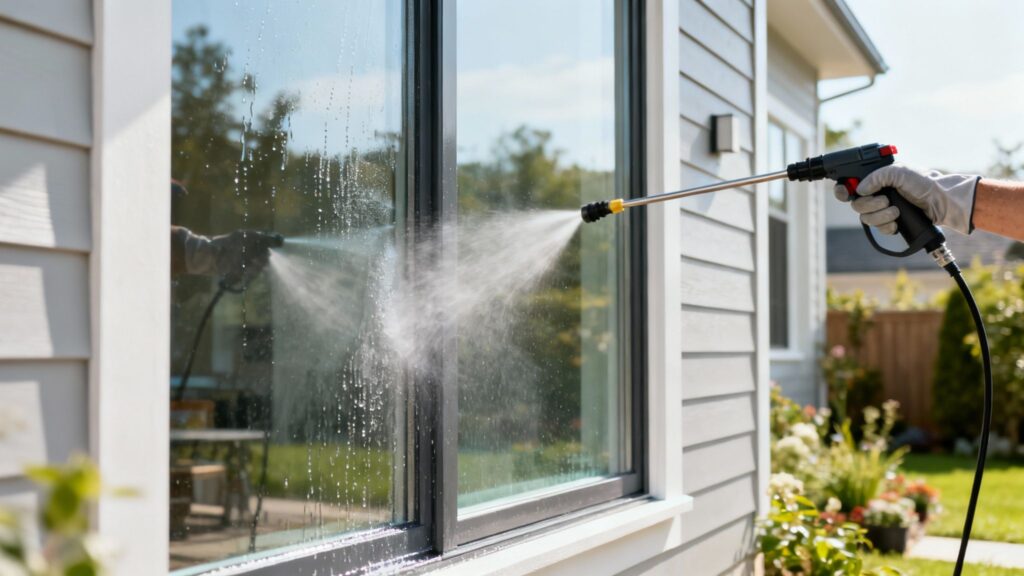
So, can you actually pressure wash windows? The short answer is yes, but it's a bit like using a sledgehammer to crack a nut. It can be done, but you need an incredible amount of control, the right technique, and a healthy respect for what happens if you get it wrong. One small mistake can turn a quick cleaning job into a very expensive replacement.
Why This Is Such a High-Stakes Task
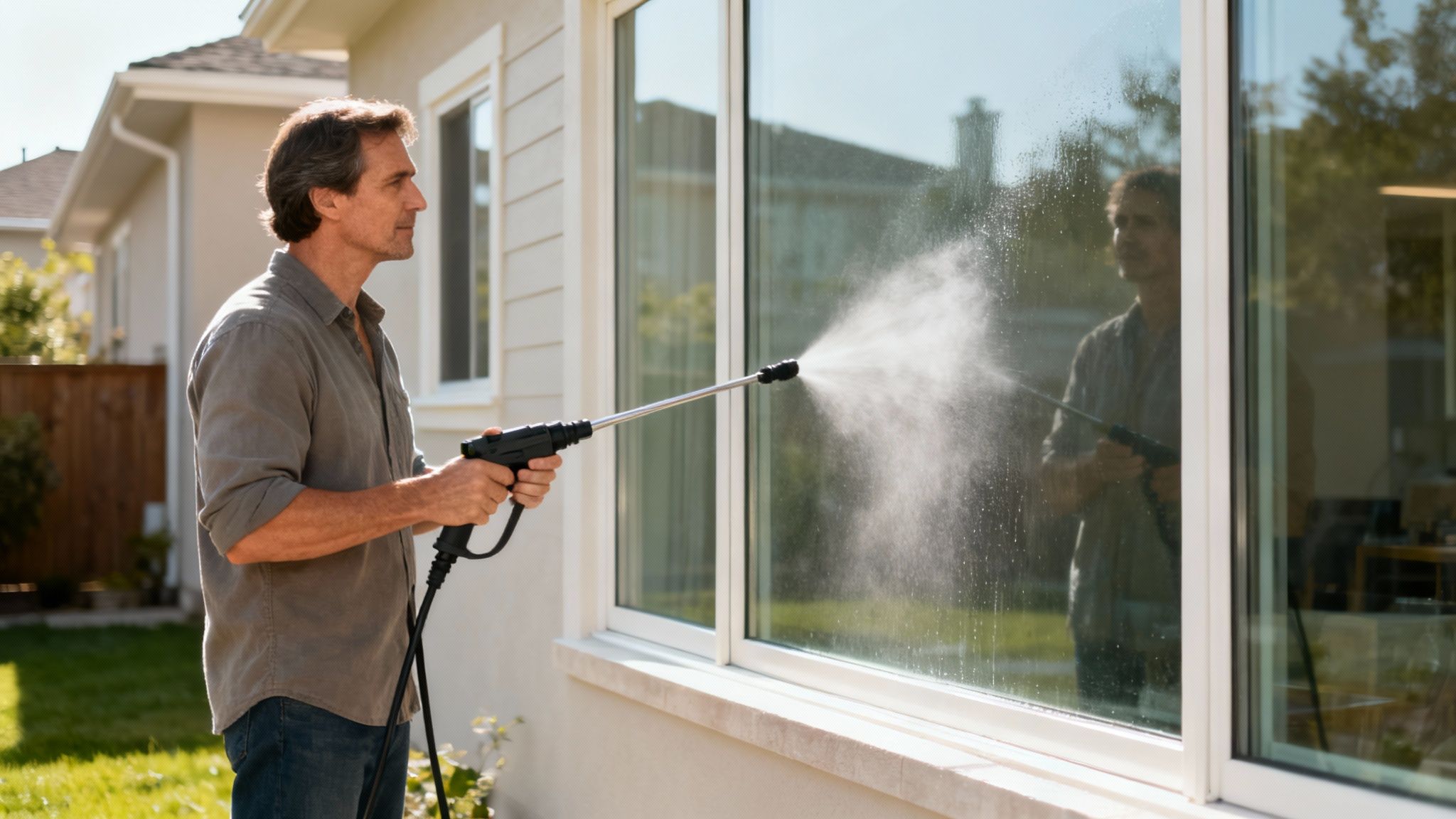
It’s easy to see a pressure washer as just a powerful hose, but that’s a dangerous oversimplification. That highly concentrated jet of water is powerful enough to shatter glass outright, blast through the seals on double-paned windows (leading to that dreaded permanent fogging between the panes), or peel paint right off the frames.
Think of it less like a rinse and more like a liquid chisel. When that force hits something as fragile as a pane of glass or an older window seal, the outcome can be disastrous. The real goal isn't just to get the dirt off; it's to do it without destroying the window itself. That’s why getting the pressure, nozzle, and distance absolutely perfect isn't just a suggestion—it's everything.
Core Safety Parameters: The Non-Negotiables
Before you even think about starting the engine or pulling the trigger, you need to have these numbers committed to memory. Almost every horror story about pressure washing windows comes from ignoring one of these three rules.
- Pressure (PSI): Keep it low. You should never exceed 1,200 PSI. While many electric pressure washers for home use naturally fall into this range, powerful gas models need to be dialed way down.
- Nozzle Type: Go wide or go home. Stick with a wide-angle tip—either the 40-degree (white) nozzle or the even gentler 65-degree (black) one. These spread the water into a fan-like spray, which cleans effectively without focusing all that power on one tiny, destructive point.
- Distance: Back it up. Always maintain a minimum distance of three to five feet from the window. Getting any closer dramatically multiplies the force hitting the glass, which is where things go south fast.
There's a reason the professional window cleaning industry is so massive. The global window cleaning services market was valued at USD 141.00 billion and is projected to keep growing, with North America leading the charge. This really puts into perspective how many people would rather pay a professional than risk a DIY disaster. You can dig into more of these market trends and professional cleaning insights over at Fortune Business Insights.
Ultimately, whether you should pressure wash your own windows comes down to how well you can stick to these fundamental safety rules. Let's dig a little deeper into the specific risks and then walk through the right way to approach the job if you decide to move forward.
Understanding the Risks of Getting It Wrong
Before you even think about pulling that trigger, let's be crystal clear: pressure washing windows isn't like hosing down your driveway. The stakes are incredibly high, and one wrong move can turn a weekend chore into a costly, irreversible nightmare. We're not just talking about a few streaks; we're talking about compromising the very structure of your windows and the walls around them.
Think of that jet of water less like a cleaning spray and more like a thousand tiny hammers pounding the glass every second. Even at what seems like a low pressure, that focused force is powerful. It’s a tool that demands respect and a precise touch, otherwise, you risk turning a simple cleaning job into a major home repair project.
Shattered Glass and Broken Seals
The most obvious and dramatic danger is shattering the glass completely. A direct hit from a narrow-stream nozzle or simply using too much pressure can easily crack or even explode a pane. This is a huge risk with older, thinner, or single-pane glass, which just doesn't have the resilience of modern windows.
But for most homes, the bigger, more insidious threat is seal failure in double-paned or insulated glass units (IGUs). These windows are built with a delicate, airtight seal around the edges that traps an insulating gas, like argon, between the panes.
A high-pressure stream of water can easily blow out this seal. Once it's broken, moisture gets sucked into the space between the panes, causing that permanent fogging and condensation you can't wipe away. The only fix is a complete window replacement.
Suddenly, what started as a "free" DIY task can balloon into a four-figure problem, with unexpected window replacement costs eating up your budget.
Frame Damage and Hidden Dangers
The damage doesn't stop at the glass. Your window frames are also incredibly vulnerable, and high-pressure water can cause distinct problems depending on the material.
- Wood Frames: A powerful jet can strip paint and sealant in an instant, leaving the raw wood exposed. It can also gouge softer woods and drive water deep into the grain, which is a perfect recipe for rot and decay down the line.
- Vinyl and Aluminum Frames: They're tougher, but not invincible. Too much pressure can still cause discoloration, dent the aluminum, or crack old, brittle vinyl that's been baking in the sun for years.
- Caulking and Weather Stripping: The seals that keep your home insulated are no match for a pressure washer. The jet will blast away caulking and weather stripping, creating new gaps for drafts and water to get in.
Perhaps the sneakiest risk of all is forcing water behind your home’s siding. The window might look fine from the outside, but water injected into tiny gaps around the frame can get trapped inside your walls. This creates a dark, damp environment perfect for mold, mildew, and structural rot—problems you might not even discover for months. This hidden damage is often far more expensive to fix than one broken window.
So, you've weighed the risks and decided your windows are up for the challenge of a pressure wash. Great. But let's be crystal clear: this isn't a job you rush. Getting this right is all about finesse, not brute force.
Think of it less like sandblasting a rusty gate and more like giving a delicate plant a gentle shower. The goal is to clean, not to destroy. One nourishes, the other obliterates. We're aiming for that gentle, effective shower for your windows.
Start Low, Go Slow: The Golden Rule
If you remember one thing, make it this: start low and go slow. Crank your pressure washer down to its absolute lowest setting. Then, take a few steps back—further than you think you need to, maybe five or six feet to start. You can always dial up the pressure a notch or inch a bit closer, but you can’t un-shatter a window.
Before you even think about hitting that big picture window, find an out-of-the-way spot to test your setup. A basement window or a small section of siding right next to a frame works perfectly. Watch what the water is doing. Is it lifting dirt gently? Or is it starting to chip away at the paint or make the window caulking look nervous? That first test spray will tell you everything you need to know.
Even the pros have to be careful. In fact, some industry data suggests that around 15-20% of professional cleaners have accidentally damaged a window by using the wrong pressure or nozzle. It just goes to show how much precision matters, even when you do this for a living. You can see more insights like this from industry sources like GetJobber.com.
This infographic really drives home how a single misstep can spiral into a disaster.
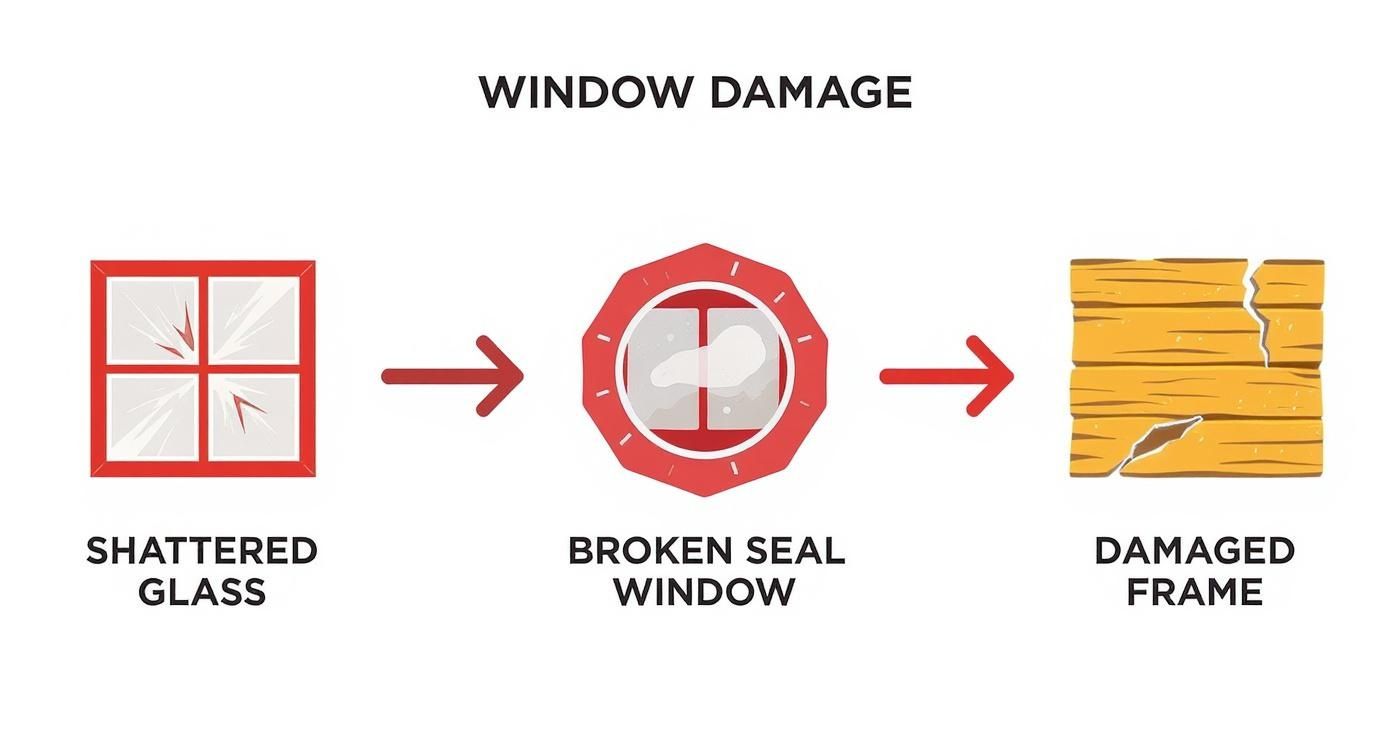
As you can see, too much pressure is the first domino to fall, leading straight to broken glass, failed seals, and wrecked frames. What started as a simple cleaning job can quickly become a very expensive replacement project.
Match Your Method to Your Windows
Let's face it, not all windows are built the same. A modern, beefy vinyl window can handle a lot more than a delicate, single-pane wooden one from a historic home. You absolutely have to adjust your technique based on what you're working with.
Pro Tip: Never, ever spray directly at the window head-on. Always approach it from a 45-degree angle. This lets the water sweep the dirt away sideways instead of hammering straight into the glass and seals, which dramatically cuts your risk of causing damage.
Here's a quick guide to help you figure out the right settings. Think of these as absolute maximums—and always start lower. If you want a more detailed breakdown, our complete guide on cleaning windows with a pressure washer goes even deeper.
Safe Pressure Washing Settings by Window Type
This table gives you a solid starting point for different types of residential windows. Use it as a reference, but let the "start low, go slow" rule be your ultimate guide.
| Window Type | Max PSI | Recommended Nozzle | Minimum Distance | Key Precaution |
|---|---|---|---|---|
| Vinyl Windows | 1200 PSI | 40° (White) or 65° (Black) | 3-4 feet | Watch for flexing in the frame; stop if you see any. |
| Aluminum Windows | 1000 PSI | 40° (White) or 65° (Black) | 4-5 feet | Prone to denting and scratching; keep your distance. |
| Wood Windows | 600-800 PSI | 65° (Black) ONLY | 5-6 feet | Extremely easy to splinter wood or strip paint. Be extra cautious. |
| Double-Paned Windows | 1000 PSI | 65° (Black) | 4-5 feet | High pressure can break the argon gas seal between panes. |
Remember, these are guidelines, not gospel. With wood frames, especially, the risk of gouging the material or blasting off paint is incredibly high. This is where you need to exercise the most caution and use the absolute lowest pressure possible.
Smarter Alternatives for Sparkling Windows
Blasting your windows with a high-pressure jet of water might seem like a quick fix, but it's rarely the right tool for the job. The truth is, the pros almost never do it this way. Why? Because the risk of shattering glass, blowing out a seal, or splintering a frame just isn't worth it.
There are much smarter, safer ways to get that streak-free shine. Instead of asking if you can pressure wash windows, the real question is, what's the best way to get them truly clean? It's all about using finesse, not force.
The Professional's Choice: Soft Washing
Walk onto any professional job site, and you’ll likely see them soft washing. It's the polar opposite of high-pressure cleaning. Rather than relying on brute force to knock dirt loose, soft washing uses specialized, eco-friendly cleaning solutions to dissolve grime on a chemical level.
The cleaner is applied with very low pressure—think garden hose gentle—and allowed to dwell for a few minutes. It breaks down everything from dust and pollen to stubborn algae. Then, a gentle rinse is all it takes to wash it all away, leaving the window spotless without ever putting the glass at risk. It’s the go-to method for any delicate surface, especially windows.
The Timeless Squeegee Method
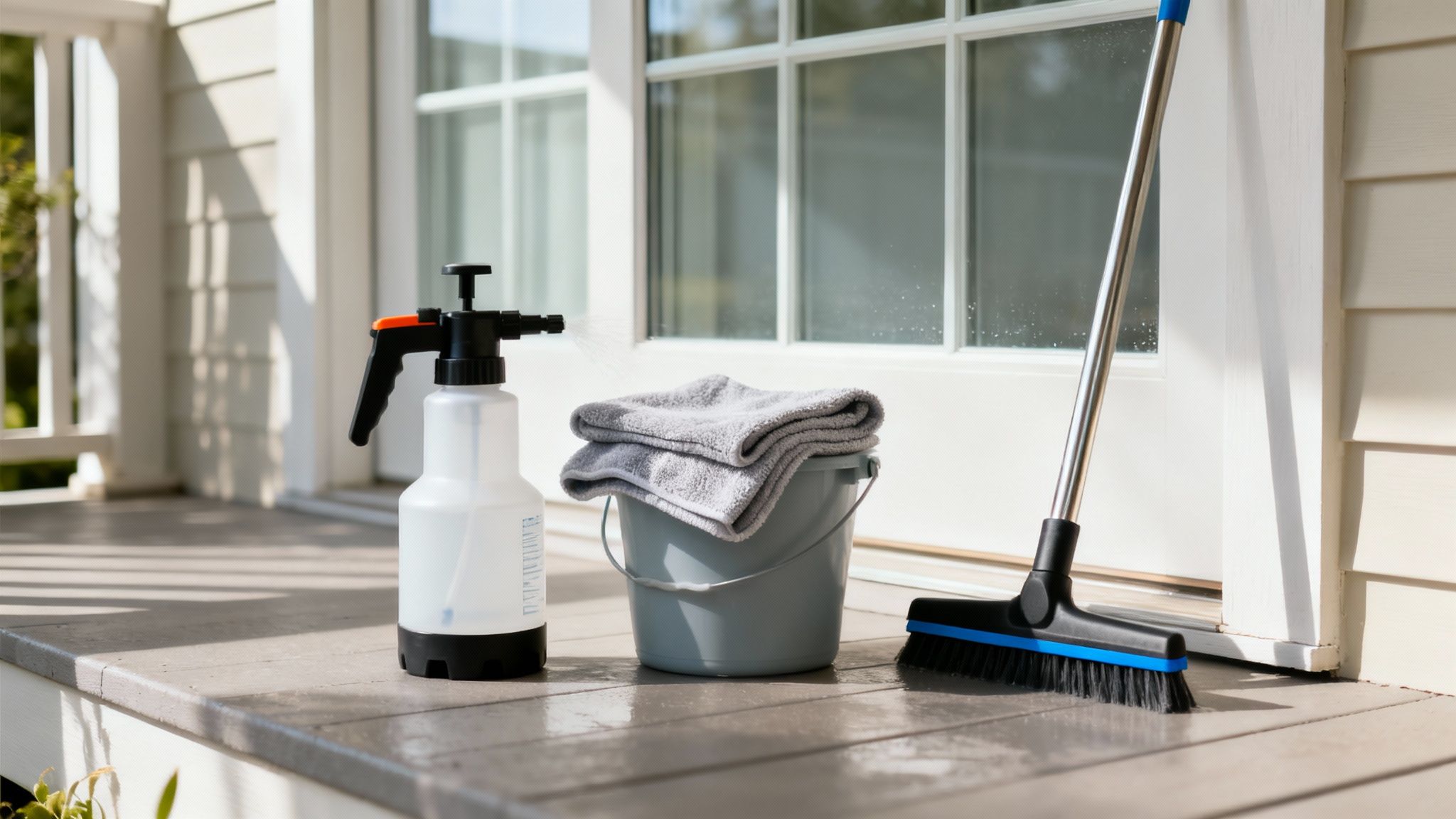
Sometimes, the old ways are the best ways. There's a reason professionals still rely on the classic squeegee, microfiber cloth, and a bucket of soapy water. It's a completely risk-free method that delivers a perfect, streak-free shine every single time.
This hands-on approach gives you total control, so you can be sure every corner of the glass is pristine without worrying about damage. It might take a bit more elbow grease, but the flawless results and peace of mind are well worth it. For a modern take, pros often use specialized equipment to get the same hand-cleaned quality on upper-story windows. You can see how this works by learning more about the water-fed pole window cleaning system.
The shift toward safer cleaning methods is clear. The electric pressure washer market, now valued at USD 1.08 billion, is booming with models designed for lower, safer pressures. In the field, caution is king—about 70% of professionals stick to pressures below 1,500 PSI to avoid any chance of damage. You can find more details on this trend over at Gminsights.com.
When to Call a Professional Window Cleaner
There's a real sense of accomplishment in handling your own home maintenance, but wisdom lies in knowing your limits. Sometimes, what looks like a simple cleaning task is actually a high-risk job where one wrong move could lead to costly damage or serious injury.
Calling a professional isn't throwing in the towel; it's a strategic decision to protect your home and yourself.
Certain situations are clear signs that it's time to bring in an expert. Take second-story windows, for example. Balancing on a ladder while trying to control a powerful pressure washer is a recipe for disaster. The kickback from the wand alone is enough to send you tumbling. Professionals have the right gear, from secure extension wands to safety harnesses, to do the job safely.
Vetting Your Window Cleaning Service
Once you decide to hire out, the job isn't done. You can't just pick the first name you find online. It's crucial to make sure you're bringing a qualified, insured, and reputable company to your home.
An uninsured cleaner could leave you holding the bag for any damage they cause. Before you let anyone start working, always ask for proof of these credentials:
- Full Liability Insurance: This is non-negotiable. It covers your property against accidental damage, whether it's a cracked window or water forced into your siding.
- Bonding: This protects you from theft by a company's employees. It’s an extra layer of security that separates the true professionals from the rest.
- Verifiable Reviews: Don't just take their word for it. Check out their reputation on Google, Yelp, or other trusted sites. A long history of happy customers is the best reference you can get.
A true pro brings more than just equipment; they bring experience. They know how to tackle those stubborn hard water spots that plague Arizona homes or how to gently clean delicate, older glass without a scratch. It's this nuanced knowledge that makes all the difference.
If you're still weighing your options, our guide on knowing when to call a professional window washing company offers a more in-depth look to help you make the right call.
At the end of the day, specialized tasks require experts. Just as you might look for professional power washing services in Lititz for a tough exterior job, finding a vetted, insured window cleaner ensures flawless results without the headaches or the risk.
Got Questions? We've Got Answers
Even the most straightforward project can bring up a few questions. Let's tackle some of the most common things people ask about cleaning windows, making sure you stay on the right track.
What Kind of Soap is Safe for Windows?
Stick with detergents made specifically for pressure washers that are also marked as safe for glass. These are engineered to cut through dirt and grime without leaving behind a streaky film or, worse, eating away at your window seals and special coatings.
Whatever you do, never use dish soap or other household cleaners. They aren't designed for high-pressure application and can leave a stubborn residue that's tough to remove. Over time, they can even degrade the vinyl or rubber parts of your window frames.
I Have a Zero-Degree Nozzle. Can I Just Stand Far Back?
No, you absolutely cannot. That zero-degree nozzle (the red one) is a surgical tool for demolition, not cleaning. It focuses all the pressure into a single, laser-like point that can strip paint off steel.
Even from 10 feet away, that stream has enough power to permanently etch glass, shred a window screen in a split second, or blow out a window seal entirely. For windows, you should only ever reach for the wide-angle nozzles, like the 40-degree (white) or 65-degree (black) tips.
Think of it this way: you want to rinse the dirt away with a gentle fan of water, not blast it off with a water bullet. Using the wrong nozzle is the single fastest way to turn a cleaning project into a costly replacement job.
What About Pressure Washing Second-Story Windows?
This is a huge safety risk and something we strongly advise against for any DIYer. The kickback from a pressure washer is surprisingly strong. When you're standing on solid ground, it's manageable. When you're perched on a ladder, that same kickback can easily push you off balance and cause a serious fall.
Professionals have special gear for this, from long extension wands to scaffolding and safety harnesses, to do the job safely. If you can't comfortably reach the window from the ground, the only truly safe move is to call in a pro.
Ready to get a flawless, risk-free shine without climbing a single ladder? The experts at Sparkle Tech Window Washing are fully insured, bonded, and equipped to handle any job, big or small, anywhere in Arizona. Get your free estimate today!