



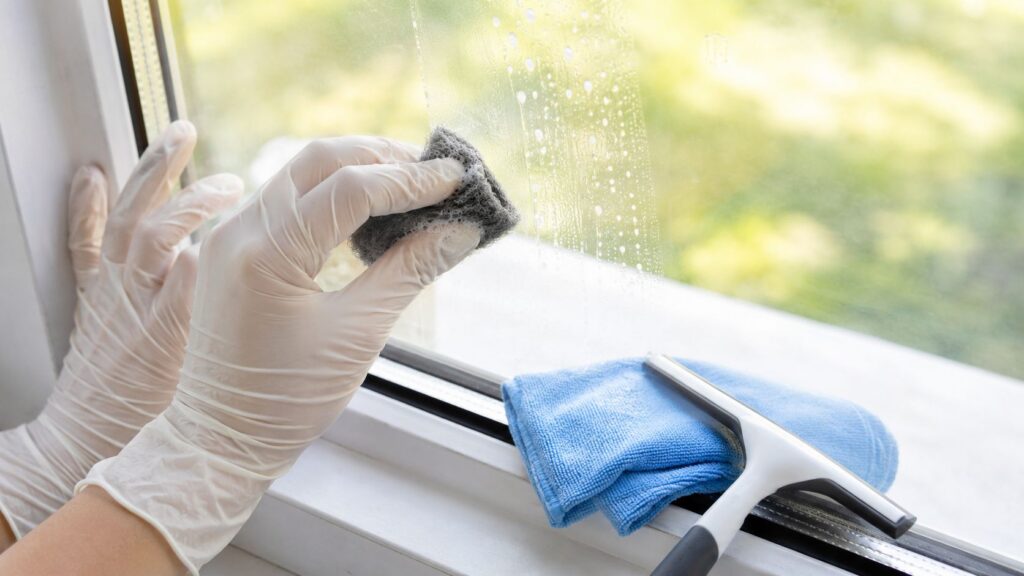
Most advice on steel wool and glass is too simple. It usually says one thing: use 0000 and you're fine.
That's not the actual version.
Ultra fine steel wool can work extremely well on plain glass, especially for mineral deposits, light rust transfer, and stubborn residue. But two problems get skipped in most guides. First, “ultra fine” isn't a universal standard, so one pad sold as 0000 may not behave like another. Second, even very fine wool can leave behind tiny iron particles that turn into rust spots later if you don't clean up correctly.
From a window cleaning standpoint, steel wool is a specialty tool, not a default tool. Used on the right glass, with the right lubrication, and with a clean finish process, it can save a job. Used casually, it can create a bigger one.
Why Grade 0000 Steel Wool Is the Pro's Choice
Pros do not choose 0000 because it is "safe." They choose it because it is the least aggressive steel wool grade that can still cut through bonded residue on plain glass.
That distinction matters on the job. Glass cleaning is controlled abrasion, not blind scrubbing. A pad that is too coarse can mark the surface fast. A pad that is too soft or poorly made just smears contamination around and sheds metal.
Grade 0000 sits in the usable range for glass because the fibers are fine enough for polishing work and light enough to tackle mineral film, paint specks, and transferred residue without the heavy bite you get from lower grades. Grade 00 is already a different tool in practice. On windows, that step down is enough to raise the risk.
The bigger issue, and one many guides skip, is that 0000 is not as standardized as people assume. Two packs can both say "ultra fine" or "0000" and still feel different in the hand. I have opened pads that were dense and even, and others that felt wiry, loose, or full of inconsistent strands. On glass, that inconsistency matters more than the label.
| Grade | Common Name | Real-world use on glass |
|---|---|---|
| 0000 | Ultra fine | Light restoration work on plain glass, with lubrication and cleanup |
| 00 | Very fine | Better kept off glass unless the manufacturer specifically allows it |
That is why experienced window cleaners do not stop at the grade stamp. They check the pad itself.
A good pad looks uniform. It should feel soft, compact, and free of chunky sections. If it flakes in your hand, leaves visible fragments, or has stiff strands poking out, skip it. Cheap steel wool can create two problems at once. It increases scratch risk, and it leaves more microscopic iron behind.
That second problem gets missed all the time. Even with 0000, tiny iron particles can stay on the glass, in the edges, or on nearby frames and sills. If they are not rinsed and detailed off properly, they can oxidize later and show up as rust freckles or orange staining. The wool did not scratch the pane, but the cleanup was still a failure.
For automotive glass, the same caution applies. If you are trying to clean car window stains, 0000 can help on certain mineral deposits, but only on compatible glass and only with a careful rinse and wipe-down afterward.
My buying checklist is simple:
- Buy labeled 0000 only
- Reject pads that look loose, wiry, or uneven
- Keep glass wool separate from wool used on tracks, frames, or metal
- Use a fresh piece for finish work
- Assume cleanup includes removing iron residue, not just dirt
0000 is the pro's choice because it gives you the best margin for correction on standard glass. It is still an abrasive metal product. The grade helps, but the definitive result comes from pad quality, surface compatibility, and how clean you leave the area when you are done.
Proper Technique for Cleaning Glass with Steel Wool
The right technique is what makes ultra fine steel wool useful instead of risky. On plain glass, the job starts before the pad ever touches the surface.

Start with a clean wet surface
Don't scrub dry glass. Don't scrub dusty glass either.
First, wash the window normally with your mop or applicator and a standard window cleaning solution. The goal is to remove loose grit, windblown dust, and anything that could get trapped between the wool and the glass. If you skip that wash, you're not polishing contamination off the glass. You're dragging contamination across it.
For hard water spotting, shower glass, or vehicle side glass, pre-wetting the area thoroughly gives you the lubrication you need. If you're dealing with automotive spotting, this guide on clean car window stains is a useful companion because it helps sort out what's mineral buildup versus what's better handled by another method.
Use lubrication the whole time
This is an essential aspect. Ultra fine steel wool should glide, not chatter.
The reason 0000 works on delicate surfaces is tied to controlled contact. With a layer of soapy water or glass cleaner between the pad and the glass, the wool can shear off buildup more gently. Without that slip, you increase friction and surface marking risk fast.
Wikipedia notes that super fine 0000 steel wool is widely used to remove rust through gentle buffing in a circular motion and that it must be dried thoroughly after wet use to prevent rust formation that can later scratch surfaces if reused, in its steel wool reference entry.
Use light hand pressure. If you feel like you need to lean in, stop and reassess. Good 0000 on a wet pane should sound muted and smooth, not harsh.
Work small areas and inspect
A pro workflow is simple:
- Wet the glass.
- Test a small corner.
- Rub lightly in small circular passes.
- Wipe or squeegee the area clean.
- Check from different angles.
That inspection step matters because some contamination disappears only when the glass is fully dry, while some scratches only show under angled light.
Light pressure solves more problems than heavy pressure. Heavy pressure just gets you to the mistake faster.
Here's a practical example. On a shower door with hard water film, work one hand-sized section at a time. Keep the section wet, make a few circular passes, then pull a squeegee over it. If the deposit remains, repeat. If nothing changes after a reasonable pass, steel wool may not be the right tool for that stain.
A short demonstration helps if you want to see the hand motion and pace in action.
Finish clean or you waste the effort
Once the deposits are gone, rinse or rewash the glass and squeegee it dry. Then wipe edges, seals, and nearby frames. Don't leave slurry, fibers, or residue sitting on the job.
A clean finish is part of the method, not an afterthought. Most steel wool problems show up after the scrubbing, not during it.
When to Never Use Steel Wool on Glass and Windows
The most repeated claim about ultra fine steel wool is also the one that causes the most bad outcomes: “0000 is safe on glass.”
Sometimes it is. Sometimes it absolutely isn't.
One major reason is consistency. As Beaufort Ink explains in its discussion of steel wool grading, manufacturers label products as “0000” or “ultra fine” without a universal industry standard, so one brand's fine wool can be another brand's coarse wool. That means the label alone doesn't guarantee the scratch profile.
Surfaces that are off limits

Never use steel wool on these surfaces:
- Tinted or mirrored glass: Aftermarket films and reflective layers can scratch, haze, or peel.
- Low-E or specialty coated glass: Factory coatings can be damaged even when the glass underneath seems hard enough.
- Glass with privacy film or decorative film: Steel wool can shred the film surface or lift edges.
- Damaged glass: Existing scratches, chips, and fabrication debris issues can get worse fast.
- Automotive windshields: Wiper paths make micro-scratching easier to notice, and modern glass systems often deserve a more cautious approach.
- Solar panels: The panel glass may look tough, but surface treatments change the risk completely.
- Appliance glass with special finishes: Black glass and coated display surfaces are poor candidates.
If you can't identify the coating, film, or finish with confidence, don't test steel wool on the visible area.
Why plain glass and coated glass aren't the same job
A basic window pane and a coated product may look identical. They don't behave the same. The problem isn't always the glass itself. It's the invisible layer on top of it.
That's why scratch diagnosis gets tricky too. If a window already has damage, contamination, or fabrication debris, steel wool may get blamed for marks that were already there, or it may turn a minor issue into a very visible one. If you're trying to sort out whether the glass is scratched, stained, or etched, this guide on removing scratches from your windows helps clarify what can and can't be corrected.
The right mindset
Steel wool is not a universal “glass cleaner.” It's a selective tool for uncoated glass when the surface condition, manufacturer guidance, and test spot all line up. If any part of that chain is missing, use a different method.
Critical Safety and Disposal Tips for Steel Wool
Most steel wool mistakes don't happen during scrubbing. They show up after cleanup, when tiny particles are left behind on frames, seals, sills, and nearby surfaces.
According to JRacenstein's guidance on 0000 steel wool, even 0000 steel wool sheds microscopic iron particles that can embed in stainless steel or glass and oxidize into rust spots over time. That same guidance emphasizes immediate magnet-based cleanup of steel wool dust.
Protect your hands and your work area
Steel wool looks soft in the pad, but the filaments are still metal. They can snag skin, lodge in fingertips, and catch on towels.
Use basic shop discipline:
- Wear gloves: Cut-resistant or snug work gloves are better than bare hands.
- Keep the pad off porous surfaces: Don't set wet wool on stone, unfinished wood, or fabric.
- Isolate your tools: Steel wool should ride in its own bag or container, away from microfiber towels and applicator sleeves.
- Retire dirty pads early: Once the wool picks up grit, it stops being a finishing tool.
Clean up the metal dust
This is the step many homeowners miss.
After using steel wool, inspect the glass edges, the frame, the sill, and any nearby stainless trim. A magnet helps collect loose fragments from dry surrounding surfaces. After that, wipe down the area with a clean damp cloth and do a final dry detail.
If you're cleaning residue or adhesive before switching to a non-abrasive method, it also helps to understand when a solvent is the better fit. This article on using acetone on glass is a good example of where chemistry can outperform abrasion.
Steel wool cleanup isn't optional. If iron particles stay behind, the callback comes later as rust spotting.
Dry it or discard it
Wet steel wool rusts. Rusted steel wool scratches. Reusing a damp piece is asking for trouble.
Best practice is simple:
- If the piece is spent, bag it and throw it out.
- If you keep it briefly during the same task, keep it clean and dry.
- Don't toss loose wet wool into a truck bin, tool bag, or cabinet.
Steel wool is also flammable, so sealing used damp pieces in a disposable plastic bag is a sensible habit before disposal.
Effective Non-Abrasive Alternatives for Tough Stains
Sometimes steel wool is the right call. Sometimes it's just the fastest bad idea available.
When the glass is coated, questionable, or already marked up, switch to methods that give you more control and less surface risk.

Better options for specific messes
Different stains respond to different tools.
| Problem | Better alternative | Why it works |
|---|---|---|
| Adhesive residue | Solvent with microfiber cloth | Softens residue without mechanical scratching |
| Paint specks or decals | Plastic razor blade | Lifts debris with less risk than metal or wool |
| General grime | Mop, squeegee, microfiber detail cloth | Cleans without adding abrasion |
| Light mineral haze | Glass-safe polishing compound with non-scratch pad | More controlled than steel fibers on sensitive surfaces |
A plastic razor blade is one of the most useful substitutes. It's especially good for paint dots, sticker remains, and construction residue on the right glass. If that's the issue you're dealing with, this article on removing paint on glass without razors is worth reading because it covers lower-risk approaches before you escalate.
When chemistry beats abrasion
A lot of people reach for steel wool when dwell time is the primary requirement. Adhesive smears, greasy fingerprints, silicone residue, and some traffic film respond better to a compatible solvent and a quality microfiber cloth than to any abrasive pad.
That matters because abrasion doesn't just remove the stain. It also removes your margin for error.
For mineral deposits, a dedicated glass-safe abrasive paste or restoration product can make more sense than wool on large areas. The pad gives you more even contact, and cleanup is often simpler.
Know when to stop
If the stain covers a large area, if the glass has visible etching, or if you're not sure whether you're dealing with contamination or actual surface damage, stop testing random methods. That's where people create swirl patterns, haze, and edge damage trying to force a result.
The safest tool is the one that matches the stain, not the one that scrubs hardest.
Frequently Asked Questions About Ultra Fine Steel Wool
Can I reuse a piece of 0000 steel wool
Usually, no. Once it's wet, picks up grit, or starts oxidizing, it stops being predictable. A reused piece is more likely to drag contamination or rust back across the glass.
Will ultra fine steel wool remove paint overspray
It can on suitable uncoated glass with lubrication, but it isn't always the safest first move. A plastic razor blade is often easier to control for paint specks and overspray because you're lifting material rather than rubbing metal fibers across the pane.
Is it safe on solar panels
In most cases, it's better to avoid it. Solar panels may have surface treatments that you don't want to disturb, and the risk usually outweighs the upside.
Will 0000 steel wool leave rust stains later
It can if you leave behind metal particles or use it around stainless or finished trim without proper cleanup. That's why post-use wipe-down and particle removal matter as much as the scrubbing itself.
Is all 0000 steel wool basically the same
No. Labels don't guarantee identical scratch behavior. Test first, especially with a new brand or a pad that looks inconsistent.
What if the stain still won't come off
That usually means one of three things: the deposit needs a different chemical approach, the mark is etching, or the surface has a coating that limits your options. At that point, professional help is cheaper than trial-and-error damage. If you're comparing service versus DIY, this guide can help you estimate professional window cleaning expense.
If you want help with glass, screens, and careful window care from a local Arizona team, Sparkle Tech Window Washing & window screens offers professional service for residential windows, glass cleaning, and screen work without the guesswork.