
Window Screen Replacement Service: An Arizona Guide

A standard window screen replacement usually costs $100 to $350 per window, and the final price depends heavily on the screen type and window size. If your window needs a custom screen, the range often moves to $150 to $500 per window, while smaller repairs can be much cheaper.

That's the practical answer most Phoenix homeowners want first. The bigger question is whether you should spend money on a simple fix, a full rescreen, or a smarter upgrade that handles Arizona heat, dust, sun, and seasonal smoke better than the old screen ever did.

A lot of people start looking for a window screen replacement service because of one obvious problem. A tear. A bent corner. A screen that keeps falling out. But in the Valley, the screen itself also affects comfort. The wrong mesh can invite dust, fade fast, or block more light and airflow than you expected. The right one can make an older window feel cleaner, tighter, and more livable without replacing the whole window.

When a Torn Screen Becomes a Bigger Problem

You open a window early in the morning to catch a little fresh air before the heat builds. Then you notice the screen. One corner is split, the mesh is sun-faded, and there's a hole right at eye level that ruins the view and lets bugs in.

A scenic view of a desert mountain landscape through a window screen with a large hole.

That's common in Arizona. Screens take a beating from intense sun, dust, wind, and everyday handling. What starts as a small annoyance can turn into a screen that rattles, sags, or stops doing its basic job. Once that happens, people usually realize they're not just dealing with appearance. They're dealing with airflow, insects, dust, and the feel of the room itself.

In Phoenix homes, I often see screens that are technically still in place but no longer working well. The mesh gets brittle. The frame warps a bit. The fit gets sloppy. Homeowners keep patching them because the damage looks minor, but the screen is already past the point where a patch will hold cleanly.

A torn screen is rarely just cosmetic in the desert. It usually signals sun wear, mesh fatigue, or a frame that's starting to lose shape.

That's why a good window screen replacement service should do more than swap mesh. It should help you decide whether the problem is minor, whether the frame is worth saving, and whether a better material would suit your home more effectively. If indoor comfort is part of the reason you're opening windows in the first place, this expert guide to better indoor air quality is also useful context.

For homeowners deciding between a fix and a larger update, it helps to start with the difference between window screen repair and full replacement options. That decision drives everything else, from cost to material choice.

What people usually want solved

  • Clean airflow: You want to open the window without inviting bugs, loose debris, and visible dust.
  • A better view: Torn, faded screens stand out more than people expect, especially on front windows and patio areas.
  • Less repeat work: Nobody wants to patch the same screen twice in one season.
  • A local fit: In Arizona, screen recommendations should account for sun exposure, dust levels, pets, and smoke-prone days.

Repair or Replace Understanding the Real Threshold

The smartest decision usually comes down to four things. Hole size, frame condition, spline brittleness, and location. These define the threshold.

Ace Hardware's neutral DIY guidance notes that small holes can be fixed with patch kits, while larger tears usually require removing the spline and rescreening the entire frame in its screen repair guidance video. That's the part many service pages skip. They'll tell you they can repair or replace, but they won't tell you where the line is.

A comparison infographic showing the pros and cons of choosing between repairing or replacing window screens.

When repair still makes sense

A patch or minor repair is usually reasonable when the damage is isolated and the frame is still sound.

  • Tiny puncture: A small hole from a branch tip or a minor snag can often be patched neatly.
  • Stable frame: If the frame sits square in the track and doesn't wiggle, the structure may still be worth keeping.
  • Mesh still flexible: If the screen material isn't brittle, dry, or fraying in multiple spots, a repair can buy time.
  • Low-stress location: A bedroom window used occasionally is different from a patio screen or a window pets push against.

For small, practical fixes, this breakdown of what affects the cost to repair a window screen helps set expectations before you commit.

When replacement is the better call

Replacement is usually the smarter long-term move when the damage tells you the whole screen has aged out.

Practical rule: If the tear is large enough that your eye goes to it immediately, the screen is usually a rescreen or replacement candidate, not a patch candidate.

Here are the situations where I'd lean toward replacement:

  1. The mesh is brittle
    You touch it lightly and it feels dry, weak, or crunchy. Patching one spot won't fix overall failure.

  2. The frame has a bend or twist
    Even fresh mesh won't sit right in a frame that no longer fits the opening properly.

  3. The spline won't stay seated
    Old spline loses grip. When it starts backing out, sagging and repeat repairs follow.

  4. It's a high-use opening
    Patio doors, kitchen windows, and pet-favorite openings need durability more than a cosmetic fix.

  5. You want an upgrade anyway
    If your current screen lets in too much dust or doesn't help enough with solar exposure, replacing it with a better mesh makes more sense than repairing outdated material.

The hidden cost of patching the wrong screen

A lot of failed screen repairs don't fail because the person did sloppy work. They fail because the original screen was too far gone. The patch sticks, but the surrounding mesh continues to weaken. Or the frame is slightly out of square, so the screen never seats cleanly again.

That's why repair should solve the problem, not delay the same service call.

Choosing the Right Screen Material for Arizona

By July in Phoenix, you can feel which windows are working against the house. The west side heats up by midafternoon, fine dust finds its way onto the sill, and an older screen that looked acceptable in spring suddenly feels too loose, too open, or too weak. That is why material choice matters here. In Arizona, a replacement screen should match sun exposure, dust levels, and how the window is used.

A lot of homeowners start by asking which mesh is strongest. The better question is which mesh fits that specific opening. A shaded bedroom window has different demands than a west-facing living room or a patio opening a dog pushes on every day.

Window screen material comparison

Material Type Key Benefit Visibility Best For
Fiberglass Flexible and common for everyday use Good Standard household windows
Aluminum Firm feel and crisp appearance Good Homeowners who prefer a more rigid mesh
Pet-resistant Better durability against scratching and pushing Fair to good Homes with dogs or active pets
Solar screen Better sun control and glare reduction Reduced compared with standard mesh West-facing and sun-heavy exposures

If you want a broader overview before choosing, this guide to different window screen material types gives a useful side-by-side breakdown.

Fiberglass for standard openings

Fiberglass is still the most common choice because it is flexible, cost-conscious, and clean-looking in a typical residential frame. For many windows that are shaded or only opened occasionally, it performs well and keeps the view fairly open.

It is not my automatic recommendation for every Phoenix home.

On windows that take hard afternoon sun, frequent handling, or regular pressure at the lower corners, fiberglass can wear out faster than homeowners expect. If the goal is to restore bug protection on a low-stress window, fiberglass makes sense. If the goal is fewer repeat service calls, it is worth considering a stronger upgrade.

Aluminum for a firmer finish

Aluminum mesh has a straighter, more rigid look in the frame. Some homeowners like that appearance, especially on homes where screen lines are visible from the curb.

The trade-off is forgiveness. Aluminum can crease, and once it bends, it does not bounce back cleanly. In houses with kids, pets, or high-use windows, that stiffness can become a drawback instead of a benefit.

Pet-resistant mesh for abuse-prone screens

Pet mesh is a practical upgrade in real households. It holds up better when a dog presses into the screen at the patio door or a cat works the same corner over and over.

You do give up a little visibility and airflow compared with lighter standard mesh. Most homeowners who have replaced the same screen twice do not mind that trade. They want the screen to stay intact.

Solar and tighter-weave screens for heat and dust

Arizona homes often require a more specific recommendation. In Phoenix, some screens are doing more than keeping bugs out. They also help manage glare, cut some solar exposure at the window, and reduce how open the house feels during dusty conditions.

Solar screen material is often the right call for west-facing windows, large glass areas, and rooms that heat up every afternoon. It darkens the view somewhat, but many homeowners gladly accept that in exchange for better comfort and less glare on floors, furniture, and TV screens.

Tighter-weave options can also help in dust-prone areas. They are not an air filter, and I would never oversell them that way, but they can be a better fit than a basic bug screen when blowing dust is a regular complaint.

The trade-offs are straightforward:

  • More open mesh: Better outward visibility and airflow
  • Heavier-duty mesh: Better durability, with a slightly denser look
  • Solar mesh: Better glare and sun control, with less visibility from inside out

For Arizona homes, the best screen material is usually chosen window by window, not house by house. A kitchen window may need airflow first. A west-facing office may benefit more from solar control. A pet-accessible patio screen usually needs durability ahead of everything else.

That kind of matching matters. It turns screen replacement from a simple repair into a comfort upgrade that fits the way the home handles heat, dust, and daily use.

The Professional Window Screen Replacement Process

Professional screen work looks simple when it's done right. The reason it looks simple is that the measuring, fitting, and fabrication were handled correctly from the start.

A five-step infographic showing the professional window screen replacement process from consultation to final client inspection.

Accurate replacement-screen fitting depends on measuring the opening to the nearest 1/16 inch, and common guidance for replacement screens specifies measuring height in the top track to about 1/16 to 1/8 inch above the bottom lip, then subtracting about 1/16 inch from the width for a comfortable fit, as explained in this replacement screen sizing guide.

Step one through three

The first part of the job is diagnosis, not cutting material.

  1. Assess the existing screen
    The technician checks mesh wear, frame shape, corner strength, and how the screen sits in the track.

  2. Measure the opening precisely
    Many DIY attempts experience issues at this step. Close isn't good enough with screens. A slightly oversized frame binds. A slightly undersized frame rattles or falls out.

  3. Match the material to the opening
    Standard mesh, pet mesh, or solar material should be chosen based on use, exposure, and homeowner preference, not just what's on the truck.

Fabrication and installation

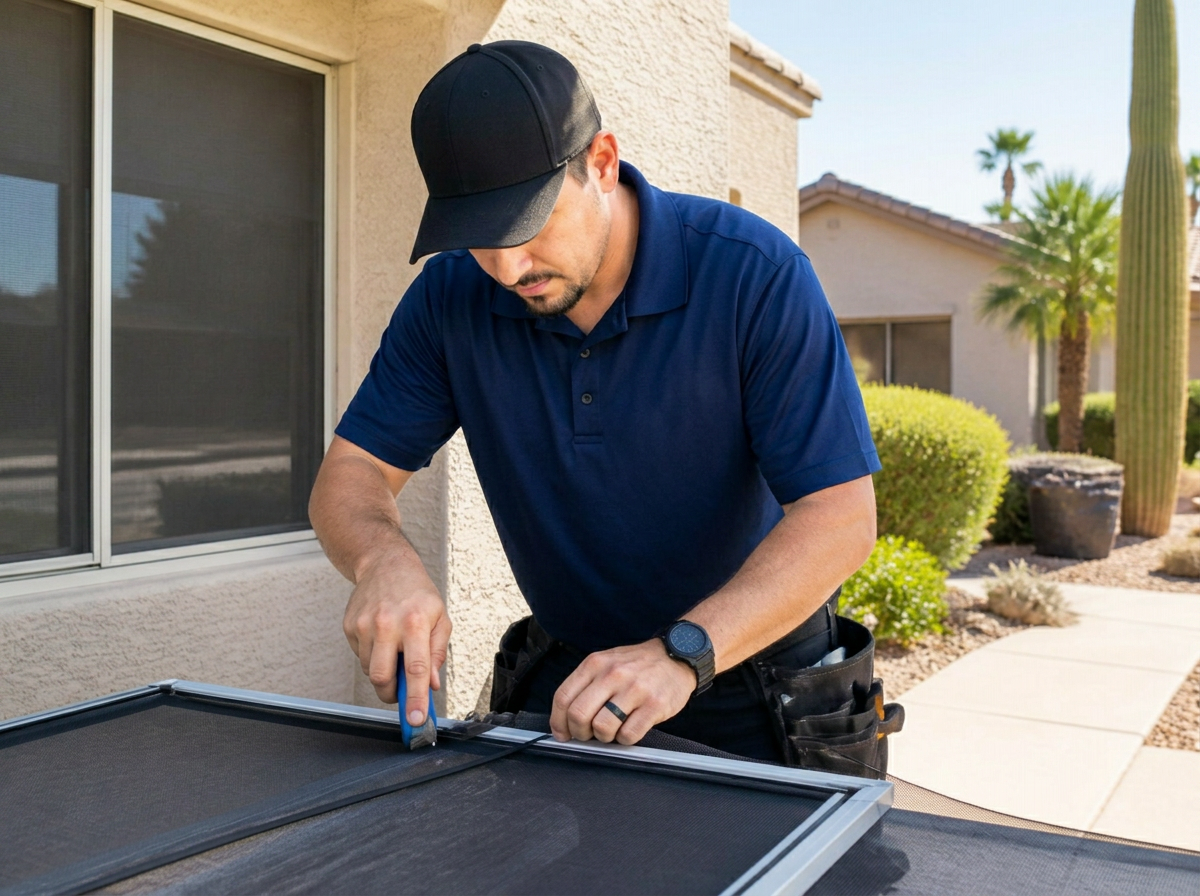
After measurement comes build quality. The frame needs to stay square, the spline needs to seat evenly, and the mesh tension has to be consistent. Too loose and it sags. Too tight and the frame can distort.

A proper install also includes checking the tabs, corners, and final fit in the actual opening. One option homeowners in Arizona use for this kind of work is Sparkle Tech Window Washing & window screens, which provides window screen service as part of its local residential offering.

Good screen installation feels uneventful. The screen slides in, seats correctly, and looks like it belonged there from day one.

Final inspection

Before the job is done, the screen should be checked for:

  • Smooth mesh: No ripples, wrinkles, or obvious over-tension
  • Clean fit: No grinding, forcing, or loose movement in the track
  • Usable pull tabs: Easy removal without stressing the frame
  • Consistent appearance: Especially important when replacing multiple screens on one elevation

Understanding Window Screen Replacement Costs

Pricing makes more sense when you separate repair, standard replacement, and custom or upgraded replacement.

According to HomeGuide, a standard installed replacement typically costs $100 to $350 per window, custom screens often run $150 to $500 per window, and repairs are typically $10 to $120 per window. The same cost breakdown notes that labor is usually $15 to $50 per window on average, while materials account for a larger share at $85 to $300, which is why screen type and size drive pricing so much in the window screen replacement cost guide.

An infographic detailing the estimated cost ranges for various window screen repair and replacement services.

What actually changes the price

The biggest pricing variables are usually the material and the frame requirements.

  • Standard replacement: Usually the most straightforward category when the window size and mesh type are common.
  • Custom screens: These cost more because unusual sizes, nonstandard frames, and specialty materials increase fabrication complexity.
  • Basic repair: This stays lower when the frame is reusable and the damage is limited.

Why materials matter more than most people expect

A lot of homeowners assume labor is the main expense. In many cases, it isn't. Material selection changes the quote fast because stronger mesh, solar materials, and custom frame setups cost more than a basic bug screen.

That's also why two homes with the same number of damaged screens may get very different estimates. One may need simple replacement mesh in standard sizes. Another may need specialty material on large, sun-exposed windows.

The practical way to budget

If you're trying to budget without overthinking it, use these buckets:

Service Type Practical expectation
Minor repair Lowest cost if the frame and most of the screen are still sound
Standard replacement Middle range for common windows and common materials
Custom or specialty replacement Highest range when size or material requires more fabrication

The useful question isn't just “What's the cheapest option?” It's “What will stop me from paying again for the same opening?” In Arizona, the cheapest invoice can become the expensive choice if the material wasn't right for the window.

Why Choosing a Professional Service Matters

A lot of Phoenix homeowners call after trying one screen themselves and realizing the rest of the house is a different job. One window goes fine. Then the next frame is slightly bowed, the patio screen rolls poorly, or a west-facing opening needs a tougher mesh than the basic material from the hardware store.

That is usually the turning point. Screen replacement stops being a simple repair and starts becoming a fit, material, and longevity decision.

What professional service changes

The main value in hiring a pro is judgment. A good screen technician can tell whether the frame is still worth saving, whether the corners have loosened too much, and whether the window would perform better with a different mesh because of sun load, dust, or daily use.

In Arizona, that matters more than it does in milder climates. Heat dries out spline, UV exposure weakens cheaper mesh, and fine dust finds its way through poor fits and tired frames. A screen that is measured correctly and built for the opening helps the window look better, stay quieter, and hold up longer.

Good installation also shows up in small details homeowners notice right away. The frame sits square. The mesh tension is even. The screen does not rattle when the AC kicks on or when afternoon wind hits the house.

Why local trust signals matter

“Professional” should also mean the company is set up properly. Insurance, bonding, and a legitimate Arizona business presence are not extras. They are part of hiring someone to work on your home with less risk to you if something goes wrong.

Local experience matters too. Phoenix-area homes deal with intense sun, monsoon dust, and long cooling seasons. Screen recommendations should reflect that reality. If a company treats every home like it is in a mild coastal climate, the result usually looks acceptable at first and wears out sooner than it should.

Homeowners often check a company's reviews, business details, and online presence before booking. That is smart. For anyone comparing providers, this article on local SEO for contractors gives a useful look at how established home-service businesses present themselves online.

The best screen replacement work is quiet. The windows look clean, the fit feels solid, and the room is more comfortable without drawing attention to the screen itself.

If your current screens are loose, faded, bent, or unsuitable for Arizona conditions, professional replacement is often a home-comfort upgrade, not just maintenance. Better material choices, accurate fabrication, and a properly insured local provider usually mean fewer callbacks, better airflow control, and less frustration during the hottest part of the year.

If you want help choosing between repair, rescreening, or a climate-smart upgrade, Sparkle Tech Window Washing & window screens offers window screen service throughout Arizona. As a family-owned Arizona LLC with Workers Compensation, General Liability Insurance, and bonding, the company handles screen work with practical care for fit, appearance, and long-term performance.