
Most homeowners can typically expect a window screen repair to cost between $65 and $150 when the frame is still serviceable. For those seeking a window screen repair service near me in Phoenix, that range gives you a solid starting point before you decide whether you need a simple re-screen, frame work, or full replacement.
A lot of people notice the problem at the worst time. You open a bedroom window before a summer storm, check the patio before friends come over, or finally get around to cleaning up the house and spot a torn screen, a bowed frame, or mesh that has pulled loose at the corner. In Phoenix, that small problem gets annoying fast. Dust gets in, bugs get in, and a screen that looked “good enough” a month ago suddenly isn't.
The good news is that many screen problems are fixable without replacing the whole unit. The bad news is that not every torn screen is just a torn screen. Some failures start in the mesh, but others come from a bent frame, weak spline groove, worn rollers, or the wrong material for the opening.
Your Guide to Local Window Screen Repair
A common Phoenix call goes like this. The homeowner thinks they need “just a patch” on one screen. After a closer look, the mesh is brittle from sun exposure, one corner of the frame is slightly out of square, and the screen no longer sits tight in the channel. A patch might hold for a little while, but it won't fix why the screen failed.
That's why local screen repair works best when somebody looks at the whole assembly, not just the hole. In this trade, long operating history matters because homeowners usually hire businesses they trust to handle small but important repairs around the home. Local providers such as A-Lynn's and Faith Glass & Screen built authority over time, with service histories dating back to 1986 and 2000 as noted by A-Lynn's Window Repair and Faith Glass & Screen Repair.
What homeowners usually want
Individuals searching for a window screen repair service near me want a few simple things:
- A fair price without paying for a full replacement they don't need
- A clear answer on whether the frame is worth saving
- Material guidance that fits Arizona heat and sun
- Convenient service that doesn't turn a small repair into a full project
A good screen repair visit should answer one question first: is the frame still worth repairing?
What actually saves money
The cheapest option on day one isn't always the cheapest option over time. If a contractor installs the wrong mesh on a weak frame, or ignores a bent edge because “the new mesh will tighten it up,” the screen often fails again. Good repair work saves money by matching the repair to the condition of the frame, the location of the opening, and how the screen is used every day.
That matters even more in Phoenix, where sun exposure and heavy use can wear out screen material long before a homeowner expects it.
Common Screen Problems We Solve Every Day
The volume of screen repair providers in a single metro shows this isn't some rare specialty issue. In Orlando alone, the market includes multiple screen and adjacent repair companies, and one regional provider, A Screen Repair Inc., claims more than 800 Google reviews with a 4.7/5 rating through a regional service page, which points to steady local demand for this kind of work in a major metro area, as referenced by Screenmobile Orlando.

Small tears and corner splits
These are the most common problems homeowners notice first. A little rip near the bottom corner or along one side usually starts from age, sun wear, or repeated flexing when the screen is removed and reinstalled.
Small damage doesn't always mean small repair. If the mesh has become dry and weak across the whole panel, replacing only one area won't hold well. In those cases, a full re-screen is usually cleaner and more durable than trying to save old material.
Pet damage and impact holes
Larger holes usually have a story behind them. A dog pushed against the screen. A child leaned into it. A patio chair got bumped into the frame during cleanup. This kind of damage often stretches the mesh and tweaks the frame at the same time.
When I see a big puncture, I don't assume the job is only about replacing mesh. I check whether the frame still sits flat and whether the corners stayed tight after the impact.
- One clean hole may only require new mesh if the frame stayed square.
- Repeated clawing or pushing usually points to a material upgrade, not just another basic repair.
- Damage near the edge can mean the spline has loosened or the groove has started to fail.
If the same screen keeps tearing in the same area, the material choice is usually wrong, or the frame is moving more than it should.
Loose mesh and screens that won't stay put
Sometimes the screen looks mostly intact, but it sags, flaps, or pulls loose from the channel. That often means the old spline has lost grip, the groove is worn, or the frame has twisted enough that the mesh can't stay evenly tensioned.
Poor quality work quickly becomes evident. Over-tightening the mesh to make a loose frame look better only shifts the problem. The screen may look crisp for a short time, then bow, pop out, or tear along the edge.
Bent frames and worn hardware
A torn screen can be the visible symptom, not the root problem. Industry repair listings routinely include frame repair, roller repair, and complete re-screening because bent frames and worn parts cause screens to drag, bow, and fail early. That relationship between frame condition and mesh failure is reflected in screen door repair guidance from Door Repair Tampa.
Watch for these signs:
- The frame rocks on a flat surface because it's bent
- Corners separate slightly when you handle it
- The screen rubs during opening or closing
- Rollers don't track smoothly on sliding assemblies
If those conditions are present, replacing mesh alone usually won't solve the problem for long.
The Window Screen Repair Process Step by Step
A professional repair call should feel straightforward, not mysterious. You contact the company, describe the problem, and the technician checks more than the visible tear. The best repairs happen when somebody looks at the opening, frame condition, fit, and material use before cutting new mesh.
This graphic shows what a proper service flow looks like from first contact through final installation.

Step 1 through Step 3
Initial contact is where the job gets framed correctly. A useful conversation includes the type of screen, where it's located, whether the frame is bent, and whether pets, sun exposure, or repeated failures are part of the issue. That helps separate a routine re-screen from a more involved repair.
On-site assessment is the point where the technician should inspect the frame, corners, spline channel, and hardware. A torn screen can hide a weak groove, a warped frame, or fit issues that make new mesh fail early.
Material selection is the technical step many homeowners never get explained. According to Accurate Screens Tampa, standard fiberglass is typically used for basic insect control, pet-resistant mesh is thicker and more tear-resistant, and solar mesh is designed to reduce heat and glare but can also reduce visible light transmission and airflow. The wrong material can also put more stress on an older frame.
Practical rule: Don't let anyone choose screen mesh by price alone. The right material depends on the opening, the exposure, and the condition of the frame holding it.
A quick visual makes the process easier to picture before the work starts.
Step 4 through Step 6
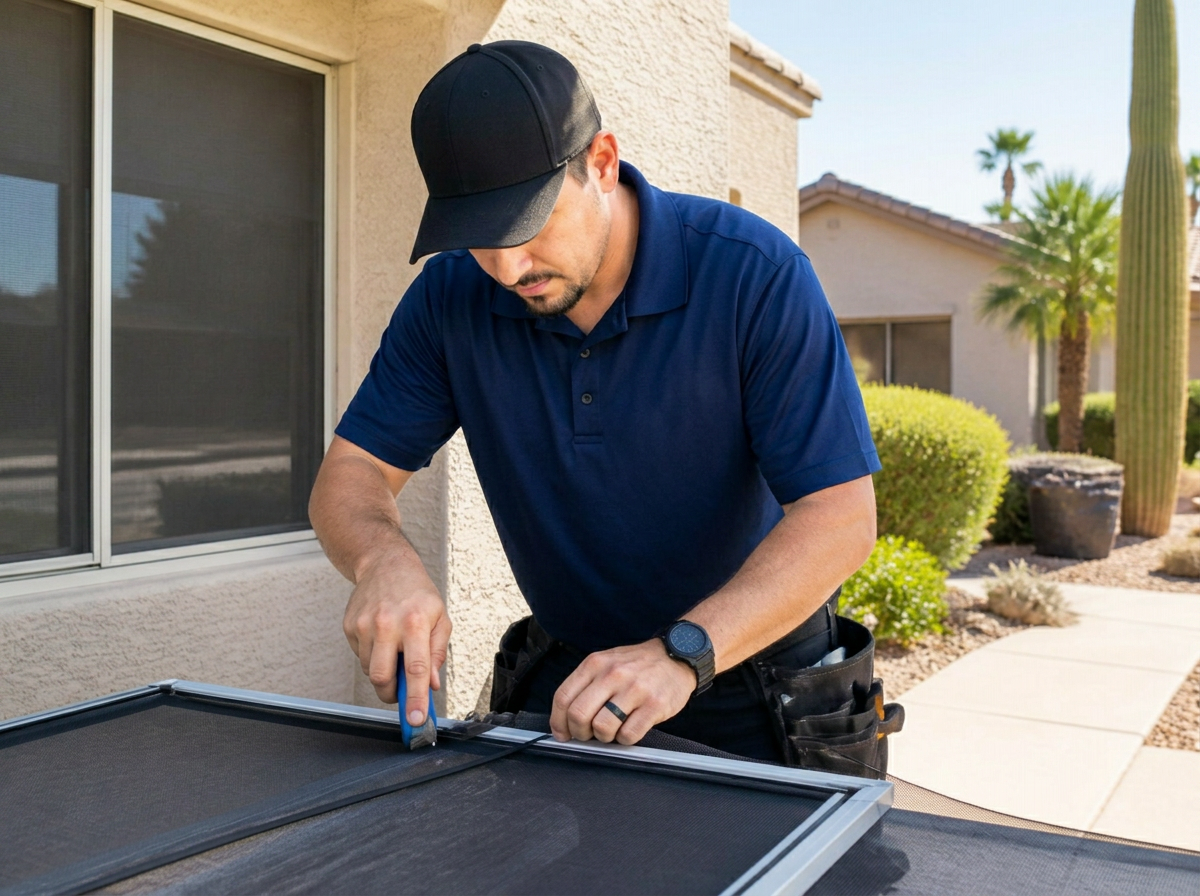
Expert repair starts with removing the old spline and mesh without damaging the frame channel. Then the technician cleans the groove, checks the corners, squares the frame if possible, and cuts the new mesh with enough margin to tension it properly.
Rolling in the spline is where craftsmanship shows. Too loose, and the mesh sags. Too tight, and the frame bows or the screen gets a wavy look that never sits right. This part is why many DIY jobs look acceptable on the workbench but fail after installation.
Quality check and final installation should include more than “it fits.” The screen needs to sit flat, stay secure in the opening, and look evenly tensioned without puckers or distortion.
A solid repair visit usually includes these checks before the job is done:
- Frame fit against the opening, not just on the ground
- Mesh tension that's firm but not overstretched
- Corner stability so the frame doesn't rack during handling
- Clean edge work with no loose strands or uneven spline
- Function test for any sliding or removable assembly
That's the difference between a repair that lasts and one that only looks good for a week.
Choosing the Right Screen Material for Arizona
Phoenix homeowners deal with a different set of screen problems than someone in a mild climate. Heat, UV exposure, dust, and heavy patio-door use change what “best material” means. In Arizona, the right choice often has less to do with convenience and more to do with how the screen will hold up after months of direct sun and daily use.
Independent hardware guidance also shows why material choice deserves more attention than most service pages give it. In hot, high-UV markets like Arizona, options such as standard aluminum and thicker pet-resistant screening involve real trade-offs in durability and wear resistance, as noted by Oakland Hardware screen repair services.
What each material does well
Some materials are forgiving and economical. Others hold up better under stress. Others are chosen because they reduce glare and solar load, even if they slightly change light and airflow.
Here's a practical way to compare them.
| Arizona Window Screen Material Comparison | ||||
|---|---|---|---|---|
| Material Type | Durability | Visibility | Sun Blocking | Best For |
| Standard fiberglass | Good for routine insect control | Good | Low | Basic window screens in lower-stress areas |
| Pet-resistant mesh | Higher durability against clawing and pushing | More reduced than standard fiberglass | Low to moderate | Patio doors, pet areas, busy openings |
| Solar mesh | Good when matched to the right frame | Reduced compared with standard mesh | Higher | Sun-exposed windows where glare and heat matter |
| Standard aluminum | Useful where a tougher screen option is preferred | Varies by product | Low | Homeowners focused on wear resistance and traditional screen feel |
For a deeper breakdown of options, this guide to window screen material types is useful if you want to compare common products before you schedule service.
Best choices by location
The same house can need more than one screen type. That's normal. A patio slider, a west-facing family room window, and a shaded bathroom window don't all need the same material.
- High-traffic patio door calls for a tougher screen, especially if pets push against it.
- West-facing or strongly sun-exposed window may benefit from solar mesh if reducing glare matters.
- Standard bedroom or bathroom window often does fine with basic fiberglass if the frame is in good shape.
- Older frame with weak corners or marginal spline groove may not tolerate heavier mesh well.
A screen material upgrade only helps if the frame can support it. Thicker mesh on a weak frame often creates a different failure instead of solving the first one.
What doesn't work well
The biggest mistake is using one material everywhere because it's available or cheap. That creates predictable problems. Heavy mesh can overwork an older frame. Light mesh in a high-traffic opening tears too easily. Solar mesh installed without discussing visibility leaves some homeowners disappointed because the light changes more than they expected.
Good advice sounds specific. It should account for sun exposure, daily use, pets, and frame condition. If a quote doesn't mention those things, it's probably incomplete.
How Much Does Window Screen Repair Cost in Phoenix
If you want a fast benchmark, the typical repair range is about $65 to $150 when the frame and hardware are still structurally serviceable, based on screen door repair pricing guidance. That's why repair is often the smarter move when you're dealing with torn mesh and a frame that still has life left in it.
What affects the final price
That range isn't random. The final number usually comes down to labor, material, access, and whether the problem is only in the mesh or extends into the frame.
A simple re-screen on an easy-to-access opening is one type of job. A second-story screen with a bent frame, weak corners, or hardware issues is another.
Common price drivers include:
- Screen size because larger screens take more material and are harder to tension cleanly
- Access difficulty such as upper-story windows or awkward removal conditions
- Frame condition if the unit needs more than mesh replacement
- Material upgrades such as pet-resistant or solar mesh
- Type of assembly because some screens remove and reinstall more easily than others
Service call versus per-screen price
Homeowners often get confused here. Some companies quote by the screen. Others include a trip charge or service call fee. That doesn't automatically mean the quote is inflated. It may reflect travel time, on-site measuring, removal, installation, and minor adjustment work.
What matters is whether the estimate is clear.
Ask these questions before approving the job:
- Is this quote for mesh only, or does it include frame adjustment if needed?
- Are upgraded materials priced separately?
- Will the screen be repaired on site, taken for shop work, or rebuilt?
- Does the total include reinstallation and fit testing?
When replacement makes more sense
Repair is usually the economical option when the frame still holds shape and the screen fits the opening correctly. Replacement starts making more sense when the frame is badly bent, the corners are failing, or the assembly no longer sits securely even after adjustment.
That's why the cheapest quote isn't always the best quote. If one provider prices only the visible tear and ignores the condition of the frame, you may end up paying twice.
Finding a Trusted Provider Like Sparkle Tech
Screen repair is a local, reputation-driven trade. Homeowners usually hire the company that answers clearly, shows up prepared, and gives them confidence that the job will be done correctly. Long operating history matters in this business because people trust continuity. That's part of why established providers with service histories going back decades tend to stand out in local markets, as shown earlier by businesses with roots dating to 1986 and 2000.

What to verify before you hire
When you compare providers, credentials matter because they protect you if something goes wrong at your property.
Look for a company that is:
- A registered LLC so the business is formally established
- Carrying general liability insurance to cover property-related risk
- Covered by workers' compensation insurance so worker injuries don't become your problem
- Bonded for another layer of consumer protection
- Properly registered for its trade work in Arizona
One local option is Sparkle Tech's guide on why screens matter and what to look for in a provider, which outlines window screen and related service coverage in Arizona.
Questions worth asking on the phone
A short call tells you a lot. You don't need a sales pitch. You need direct answers.
Ask things like:
- Do you repair existing frames, or only replace screens?
- What screen materials do you offer for sun-exposed or pet-heavy openings?
- Is the work done on site, or will my screens be taken away?
- Are you insured and bonded?
- What happens if the frame is too far gone to repair?
If a company can't explain material options or frame condition in plain language, they probably aren't doing careful screen work.
A smart provider should also understand local search and reputation, because homeowners often choose from map listings and recent reviews. If you want to understand how that trust gets built online, this article on how Magnitude Marketing helps Indiana businesses rank higher on Google Maps gives useful context that applies to local home service companies in any state.
Frequently Asked Questions About Screen Repair
Is repair better than replacement
Usually, yes, if the frame is still solid and the screen fits the opening correctly. Repair makes the most sense when the problem is worn or torn mesh, not a failing frame.
Can my screen be fixed on site
Often, yes, but it depends on the condition of the frame and the type of screen. On-site service is convenient in a large metro like Phoenix because it saves a trip, but some damaged frames need more bench work than a quick visit allows.
How do I know if I need stronger mesh
Look at how the screen failed. Pet pressure, repeated punctures, and heavy-use doors often need tougher material. A quiet guest room window usually doesn't.
Will solar screen make my room darker
It can. Solar mesh is designed to reduce heat and glare, but that trade-off can also reduce visible light compared with standard insect screen. That's why it's important to choose by room and exposure, not by trend.
How far should a company travel for a repair
That depends on the provider's service model. Some companies stay hyper-local. Others cover the wider Valley or more of Arizona. For homeowners, the important part is whether the trip charge, scheduling, and scope of work still make sense for the size of the job.
What should I have ready before I call
Have a few details handy:
- The number of damaged screens
- Whether they're windows, doors, patio, or porch screens
- If the frame looks bent or loose
- Whether pets or harsh sun are part of the problem
- Photos of the damage if the company requests them
If you need help sorting out whether your screen should be repaired, re-screened, or rebuilt, Sparkle Tech Window Washing & window screens handles window screen service in the Phoenix Valley and anywhere in Arizona, including new, repaired, and rescreened bug and sun screens.