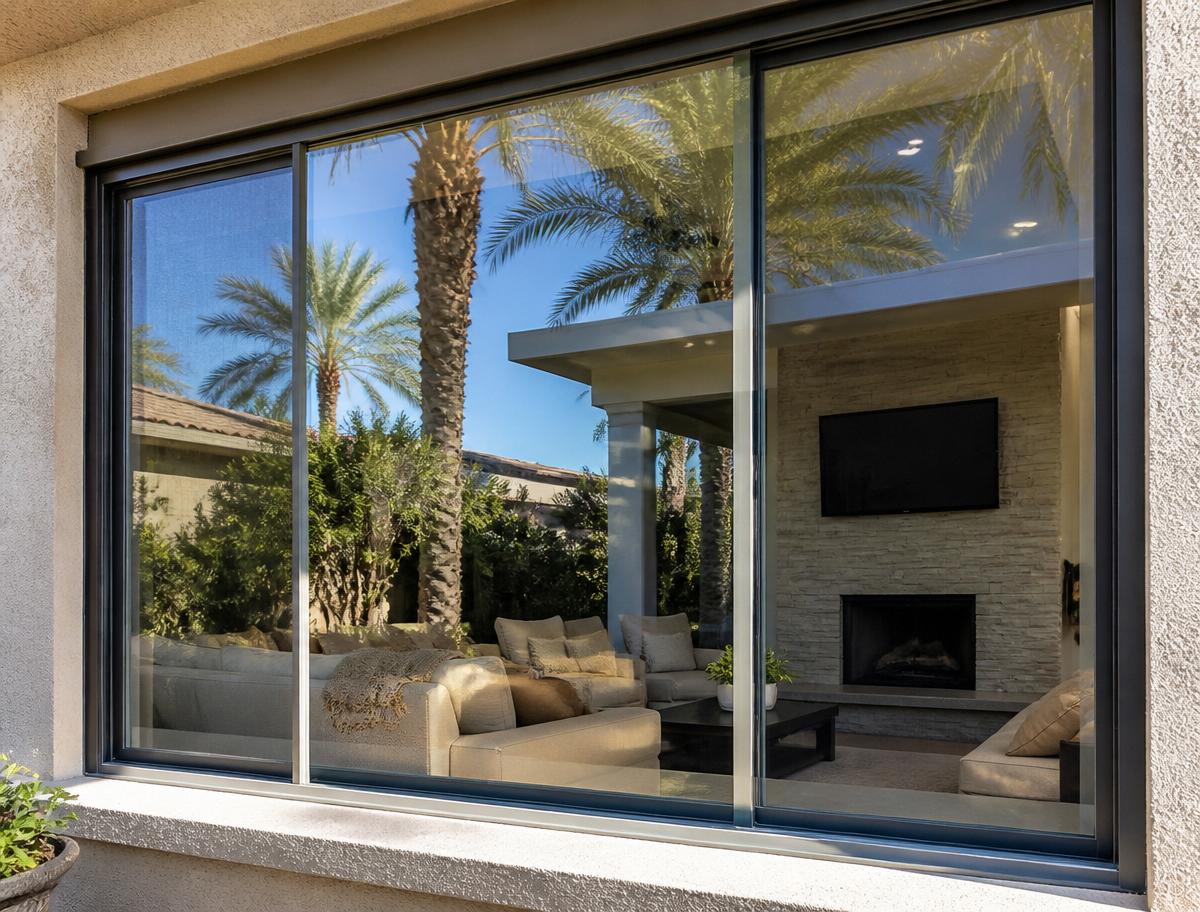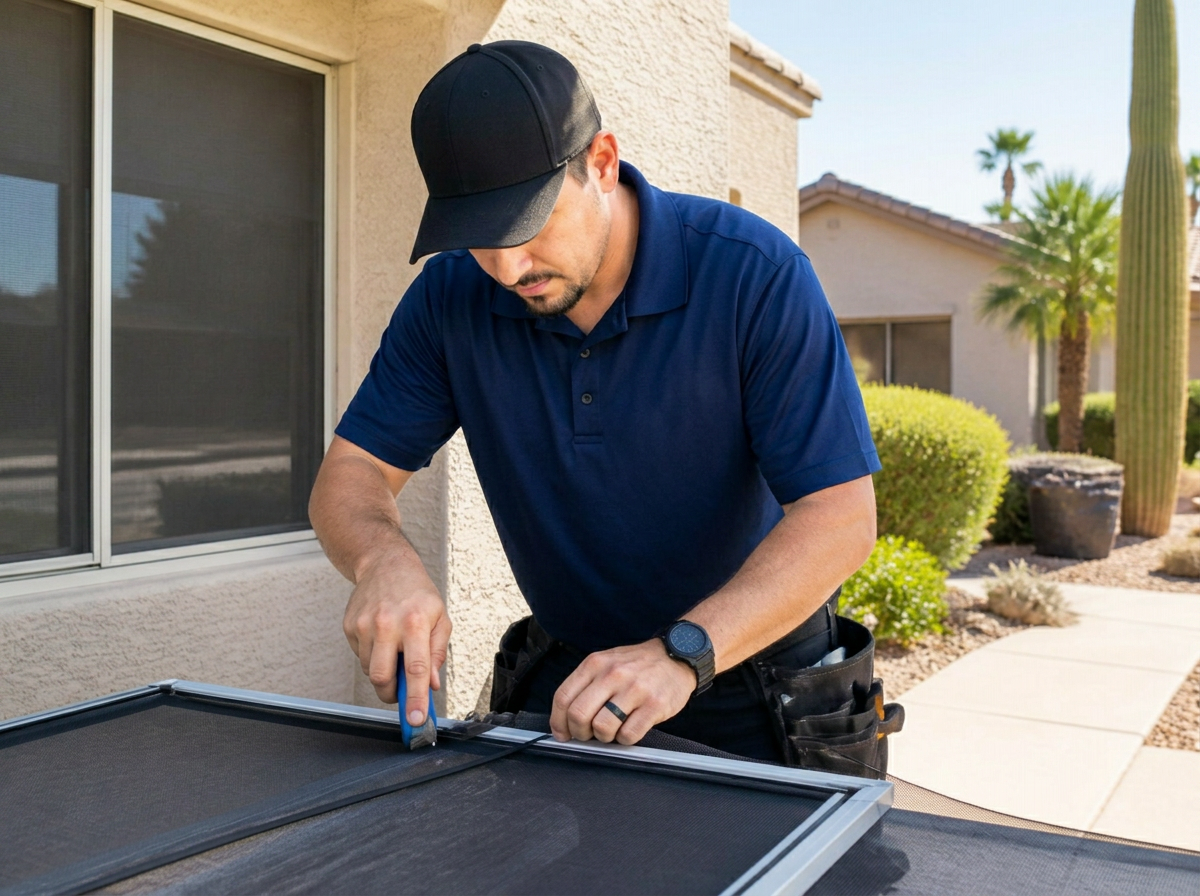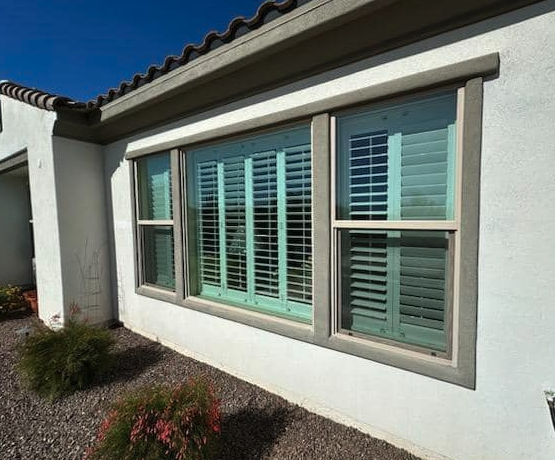

A lot of Phoenix homeowners end up here the same way. A dog pushes through the lower corner of a screen. A kid sends a ball into a bedroom window. Or the mesh gives up after years of hard sun, dust, and repeated use. What looked like a minor tear starts spreading, the screen sags, and now you're deciding whether this is a quick fix, a weekend project, or something worth handing to a pro.
In the Valley, window screens take more abuse than generic home-maintenance articles usually account for. Heat dries materials out. Sun makes older mesh brittle. Dust settles into everything. And for many homes, the conversation isn't only about bug screens anymore. Screen work now includes custom fabrication, pet-resistant mesh, and solar screen options, especially in Arizona where solar exposure speeds up wear, as noted by this industry-adjacent overview of window screen repair services.
Is Your Damaged Screen an Easy Fix or a Bigger Problem
The first question isn't whether the screen is damaged. That part is obvious. The actual question is what kind of damage you're looking at.
A screen with one clean puncture near the corner is a very different job from a screen that looks faded, loose, and wavy across the whole frame. In Phoenix, I see plenty of screens where the tear is just the symptom. The bigger issue is that the mesh has spent too many summers baking in direct sun. You touch it and it feels dry, weak, and ready to split somewhere else next week.
The damage that stays small
Some problems really are simple. A small puncture from a branch, a snag from moving patio furniture, or a single spot where the mesh pulled loose can sometimes be handled without replacing the whole unit.
That usually works when the frame is still square, the spline still holds, and the rest of the mesh has life left in it. If the screen still fits the window properly and the damage is isolated, repair makes sense.
The damage that keeps spreading
Other screens aren't good repair candidates even if the hole looks manageable at first glance. Common signs include:
- Brittle mesh that cracks when you touch it
- Loose corners where the material has started pulling away
- Warped frame rails that won't sit flat in the opening
- Old spline that has shrunk, dried out, or stopped gripping
Practical rule: If one fix is likely to uncover three more weak spots, a patch won't save you money for long.
Phoenix homes also bring up another decision that national guides skim past. A lot of homeowners start with “Can you fix this?” and end with “Should I switch to a different screen material while we're at it?” That's especially true on west-facing windows, patios, and rooms that deal with heavy afternoon sun.
A good window screen repair service should help you sort that out. Sometimes the answer is a basic repair. Sometimes it's rescreening the existing frame. Sometimes replacement is the cleaner path because the screen system has aged past the point where patching is worth the trouble.
Understanding Common Types of Screen Damage
Before you call anyone, it helps to know what you're seeing. Most screen problems fall into a handful of categories, and each one points to a different repair decision.

Punctures and tears
These are the easiest to recognize. A pet claw, a branch, or an impact leaves a hole or slit in the mesh.
For fiberglass screens, Home Depot advises using a patch that extends about 1/2 inch larger than the hole on every side in patch repairs, and a repair guide notes that tears larger than 2 inches in any direction usually call for replacement because patches become less reliable and can hurt appearance and function, according to this screen repair and replacement guide.
That lines up with what homeowners see in real life. Tiny damage can stay local. Long tears usually don't.
Fraying and sun damage
This one matters in Phoenix more than many people realize. The mesh doesn't always rip first. It can thin out, fade, and start unraveling at the edges or around the middle where it gets the most exposure.
Look for these clues:
- Discoloration where one side of the house has visibly older-looking mesh
- Dry texture instead of flexible material
- Multiple weak spots rather than one obvious tear
- Loose weave that no longer looks even
If you see widespread wear, don't focus only on the biggest hole. The whole screen may be nearing the end of its useful life.
Bent frames and corner issues
Frames often get damaged when someone removes a screen roughly, stores it badly, or steps on it in the garage. A bent frame can cause rubbing, poor fit, and gaps that let bugs or dust through even if the mesh itself looks decent.
A quick check helps:
| What to inspect | What it means |
|---|---|
| Frame won't sit flush | The frame may be bowed or twisted |
| One corner lifts | The frame may be out of square |
| Screen pops out easily | Retention problem, bent frame, or worn hardware |
| Mesh looks fine but fit is bad | Structural issue, not just fabric damage |
Spline failure
The spline is the rubber cord that locks the mesh into the frame channel. When it loosens, shrinks, or breaks down, the mesh starts pulling away from the edge.
A screen can fail at the perimeter even when the center looks fine.
If the spline is missing in sections or the mesh has slipped from the groove, a quick patch won't solve the underlying problem. That usually points to rescreening.
What a Window Screen Repair Service Should Cost in Arizona
Cost questions are fair. Homeowners usually want to know whether they're looking at a small repair bill or something much closer to replacement.
The broad national numbers give useful context. Major U.S. home-improvement cost data places window screen replacement at about $322 per screen on average, with a typical range of $147 to $523, and notes labor at about $20 to $50 per screen or $50 to $80 per hour, based on Angi's cost guide for window screens.

Those numbers matter for one reason. They show that screen work isn't all the same job. A simple rescreen on a good frame sits in a different category from replacing a damaged custom screen.
What actually drives the price
In Arizona, especially around Phoenix, the final quote usually comes down to a few practical variables rather than a flat menu price.
- Mesh type matters. Standard insect screen is one tier. Pet-resistant, solar, and other specialty materials are another.
- Frame condition matters just as much as mesh. If the frame is bent, weak, or no longer fits right, repair can move closer to replacement.
- Window size and shape change labor time. Large patio openings, odd sizes, and specialty frames take more handling.
- Job count affects efficiency. A technician already on site for several screens can often work more efficiently than on a one-screen call.
Why Phoenix pricing can feel inconsistent
Homeowners sometimes get confused when one company talks about “repair” and another recommends “replacement.” Both may be acting reasonably.
A small tear in a standard frame might justify a basic repair. But once you're dealing with brittle mesh, dried spline, or upgraded products like solar screens, the labor and material choices shift. That's why it helps to ask for a breakdown of what's being replaced, what's being reused, and why.
Bottom line: The cheapest quote isn't always for the same scope of work.
If you want a better sense of how contractors think through line items and estimates in service work, Estimatty's contractor software guide is a useful read. It gives homeowners a better feel for why detailed estimating matters and why clear scope descriptions are worth paying attention to.
For a Phoenix-specific breakdown focused on local service considerations, Sparkle Tech also has a page on window screen repair cost in Arizona. The useful part isn't chasing a universal price. It's understanding the decision behind the number.
When repair stops being the budget option
Repair sounds cheaper, and sometimes it is. But if a frame is bent or the material choice needs to change, trying to save an old screen can become false economy.
A good quote should tell you plainly whether you're paying for:
- A patch
- A full rescreen using the existing frame
- A new screen or custom rebuild
That distinction saves homeowners a lot of frustration.
The Tradeoffs of DIY vs Professional Screen Repair
DIY screen repair has its place. If you've got one simple screen, a little patience, and the right tools, you can absolutely handle some jobs yourself. But many homeowners underestimate what separates a repair that looks okay on day one from a repair that still looks right after wind, repeated use, and another Phoenix summer.
A durable repair depends on uniform mesh tension and a secure spline fit. One repair guide shows the mesh cut about 1 inch larger than the frame on each side, then rolled into the groove with a spline tool while held taut. If tension isn't even, the screen can wrinkle, sag, or pull loose with use and wind, as shown in this screen repair video demonstration.

Where DIY works well
DIY makes the most sense when the screen is straightforward and the stakes are low.
- Single standard screen with simple access
- Minor mesh issue where the frame is still square
- You already have tools like a spline roller, utility knife, and flat work surface
- Appearance isn't critical because it's a garage, side window, or utility area
There's also value in learning the process if you like hands-on home maintenance.
Where DIY usually goes sideways
Most failed DIY screen jobs come down to one of three things:
- Uneven tension that leaves waves or sagging
- Wrong spline fit that lets the mesh creep out of the channel
- Misreading the problem when the frame itself is the issue
That's why the first screen often takes much longer than people expect. Homeowners can patch a hole successfully, then struggle on the next one because the frame is twisted or the old spline won't hold.
This video gives a useful look at the hands-on side of the process before you decide which way to go.
For door applications or heavier-use openings, material durability matters even more. If you're comparing tougher mesh options for high-traffic spots, it can help to find durable mesh door replacement strips and understand how heavier materials differ from standard insect mesh.
Why people hire a professional
Professional service usually wins on consistency. The screen is measured correctly, tensioned correctly, trimmed cleanly, and checked for fit before the job ends.
That doesn't mean every screen needs a pro. It means the value shows up when the job includes custom sizing, premium mesh, awkward windows, or damage that isn't limited to the fabric. Sparkle Tech Window Washing & window screens is one local option for homeowners who want new, rescreened, or repaired sun and bug screens without sorting through the tool and material side themselves.
"If the screen has to look right, fit right, and last, workmanship matters more than most people think."
What to Expect When You Hire Sparkle Tech
Hiring a screen company shouldn't feel vague. The process should be simple, clear, and easy to follow from the first contact to the final fit check.

Sparkle Tech Window Washing LLC is a family-owned Arizona business that provides window washing and window screen service statewide. The company states that it carries Workers Compensation and General Liability Insurance, is bonded, and is registered in Arizona for window cleaning and window screen service work.
The first conversation
The process usually starts with a description of what's damaged. Homeowners often know the visible issue, but not whether it's a patch, rescreen, or replacement job. That's normal.
The useful details are simple:
- How many screens need attention
- What kind of windows or doors they belong to
- Whether the frame is damaged or only the mesh
- Whether you want standard bug screening or a specialty option
On-site review and measurement
A proper visit should confirm fit, frame condition, and material choice before work begins. This process eliminates a lot of guesswork.
If the screen frame is still in good shape, rescreening may be enough. If it's bent, twisted, or no longer seats correctly, replacing the whole unit can be the cleaner answer. For homeowners comparing service details, Sparkle Tech outlines its window screen service options here.
What matters most: A contractor should tell you what can be saved, what can't, and why.
Repair, replacement, and final check
Once the scope is clear, the work itself is usually straightforward. The old material comes out, the frame is inspected, the new mesh is installed or the damaged section is addressed, and the finished screen is checked for tension and fit.
Before the job is done, the screen should go back into the opening properly. It shouldn't bow, rattle, or fight the frame. A final inspection matters because a screen that looks fine on the ground can still fit poorly once it's back in the window.
Tips for Maintaining Your New or Repaired Screens
Good screens last longer when homeowners treat them like part of the window system, not like an afterthought. In Phoenix, maintenance is mostly about reducing strain from dust, sun, and rough handling.
Clean them gently
Don't scrub hard and don't blast them with high pressure. That can stretch mesh, loosen spline, or damage corners.
A better routine is simple:
- Dust first with a soft brush or vacuum attachment
- Wash lightly with mild soap and water
- Rinse gently and let the screen dry before reinstalling
- Handle from the frame, not the center of the mesh
If you want a step-by-step method, Sparkle Tech has a practical guide on how to clean window screens without damaging them.
Check the edges, not just the middle
Homeowners usually notice the big hole in the center, but the first signs of failure often show up along the perimeter.
Take a quick look for:
- Spline lifting out of the groove
- Corners separating
- Mesh pulling at one side
- Frame bends from storage or removal
Watch the sunniest side of the house
West-facing and south-facing screens often age faster in the Valley. If one side of your home gets intense afternoon exposure, inspect those screens more often. That's also where many homeowners decide that solar screen material makes more sense than standard mesh.
Small issues stay small when you catch them early.
Frequently Asked Questions About Screen Repair Services
Can a small hole be repaired, or do I need a full rescreen?
It depends on the size of the damage, the condition of the rest of the mesh, and the frame. Neutral DIY guidance says small holes under about 3 inches can often be patched, while larger tears usually point toward full rescreening, according to this screen repair guide for homeowners.
If the mesh is brittle, loose, or failing in several spots, patching one area usually isn't the smart long-term choice.
Do I need to be home during the service?
That depends on access and the scope of work. If the technician needs to inspect windows from inside, confirm specialty material choices, or remove screens that are only accessible indoors, someone should be there. For exterior-accessible work, some jobs can be arranged more flexibly.
The important thing is making sure the contractor has clear access and knows exactly which screens are being serviced.
Are solar screens worth considering in Phoenix?
For many homes, yes. They're especially worth discussing on the hot, sunny sides of the house where standard mesh takes the most punishment.
The tradeoff is that every mesh type changes the balance between visibility, airflow, privacy, and sun control. That's why material selection should be based on the room, exposure, and how you use the window, not just on whether the old screen had a hole.
How long does screen repair take?
There isn't one honest answer for every job. A simple patch on one standard screen is different from rescreening several custom-fit units or working through damaged frames.
What matters more than speed is whether the finished screen is taut, properly seated, and suited to the opening. Fast work that leaves wrinkles or a loose fit just creates another service call later.
What if my frame is bent?
A bent frame changes the whole recommendation. Even if the mesh can technically be replaced, the screen still has to fit the window correctly.
If the frame is only slightly out and still seats well, a repair may be workable. If it's twisted, bowed, or won't stay in place, replacement is often the cleaner fix.
Do window screen services handle more than standard bug screens?
Yes. Many now handle custom fabrication, specialty mesh, sliding screen doors, pet-resistant products, and solar screen options. That matters in Phoenix because climate and sun exposure make screen choice a performance decision, not just a cosmetic one.
What should I ask before hiring a company?
Ask practical questions:
- Are you repairing the existing screen or replacing it?
- Is the frame reusable?
- What mesh material are you recommending and why?
- Will the finished screen be checked for fit in the opening?
- Are you insured and bonded?
Those questions tell you a lot about how the company works.
If your screens are torn, sun-damaged, loose in the frame, or you're trying to decide whether repair still makes sense, Sparkle Tech Window Washing & window screens is a practical local resource for Phoenix homeowners. Reach out if you want a straightforward opinion on whether your current screens should be patched, rescreened, or replaced with a better material for Arizona conditions.