
There's nothing quite like letting a fresh breeze roll through your home—as long as it doesn't bring a swarm of mosquitos with it. That's where a good window screen comes in. Getting it installed correctly is a project most homeowners can handle, and we're here to walk you through it. This isn't just a list of steps; it's a guide to getting it done right the first time.
Your Guide to Flawless Window Screen Installation

A well-installed window screen does more than just block bugs. It’s your first line of defense against pollen and debris while improving your home's ventilation and overall comfort. Knowing the full scope of the job helps you decide if it's something you want to take on yourself. For many, it's a satisfying and budget-friendly weekend project, but you have to be precise.
Why Proper Installation Is Key
A tight, secure fit is everything. Even the smallest gap is an open invitation for pests, making your hard work pointless. A screen that's too loose will sag and wrinkle, not only looking unprofessional but also obstructing your view. When you take the time to get the tension just right, your screens will look great and last for years.
This is a bigger deal than you might think. The global market for window screens is on track to hit $4.6 billion by 2033, and a lot of that growth comes from energy efficiency. In hot climates like Arizona, the right screen can slash cooling costs by up to 25%. But here's the catch: about 30% of DIY screen jobs fail because of wrong measurements or poor installation. You can learn more about this trend by checking out the latest window screen market analysis.
Pro Tip: Before you buy any materials, give your existing screen frames a hard look. If a frame is bent, cracked, or feels brittle, just replacing the mesh is a waste of money. A brand-new screen in a damaged frame is a recipe for failure.
To help you get organized, here’s a quick snapshot of the entire project from start to finish.
Window Screen Installation At a Glance
This table breaks down the core phases of the project, so you know exactly what to expect and what tools you’ll need on hand.
| Phase | Key Action | Essential Tools |
|---|---|---|
| Preparation | Accurately measure the window frame's height and width. | Tape Measure, Notepad |
| Assembly | Cut the screen mesh and spline to the required size. | Utility Knife, Scissors |
| Installation | Press the spline into the frame's channel to secure the screen. | Spline Roller, Flathead Screwdriver |
| Finishing | Trim any excess screen material for a clean, professional look. | Utility Knife |
Having these tools ready before you start will make the entire process smoother and help you avoid any frustrating mid-project trips to the hardware store.
Choosing the Right Materials and Tools for Success
Before you even start pulling out the old screen, your project’s success really begins with picking the right gear. Getting the materials and tools sorted out first makes the entire job go from a potential headache to a smooth, satisfying project. It's the prep work that makes all the difference.
Your first big decision is the screen mesh. Don't just grab the first roll you see—different materials are designed for different situations, and choosing correctly now will save you from redoing the work later.
Selecting the Perfect Screen Material
For most general-purpose jobs, fiberglass mesh is the go-to. It's affordable, flexible (so it won't crease on you), and offers great visibility. It’s a fantastic all-around choice, though it can be more prone to tearing than some of the heavy-duty options.
Have pets that like to climb or scratch? You’ll definitely want to invest in a pet-resistant screen. Made from a tough, vinyl-coated polyester, this stuff is about seven times stronger than standard fiberglass. It might cost a bit more and slightly reduce your view, but it’s a small price to pay for a screen that can actually withstand claws and paws.
If you live in a particularly sunny climate, solar screens are an absolute must. These aren't just for keeping bugs out; they're specifically engineered to block a huge portion of the sun's heat and UV rays before they can bake your home.
It's worth noting that coated screens can be a smart investment, especially in sunny regions. They often resist UV damage 50% longer than uncoated mesh. On top of that, Department of Energy studies show they can lower energy bills by 15-20% by cutting down on solar heat gain.
This push for better performance is why the North American plastics coating window screen market is expected to become a $2.6 billion industry by 2033. It’s clear that homeowners are moving toward more durable, energy-saving options.
To really get into the nitty-gritty of what’s best for your home, take a look at our complete guide on window screen material types.
Gathering Your Essential Toolkit
Once you've decided on the mesh, it's time to gather your tools. Having everything within arm's reach means you won't have to stop mid-project to hunt for something. You don't need a professional workshop, just a few key items:
- Tape Measure: Accuracy is everything. Measure twice, cut once!
- Utility Knife: This is for trimming the excess mesh. Make sure you start with a fresh, sharp blade—a dull one will just snag and ruin the screen.
- Spline Roller: This is the one specialty tool you absolutely need. It has two wheels: a convex (rounded-out) one for pushing the spline into the channel and a concave (rounded-in) one for setting it securely.
- Flathead Screwdriver: Invaluable for getting the spline seated perfectly in those tight corners where the roller just can't fit.
After your new screens are in, knowing how to care for them will make them last. For tips on upkeep, you can learn how to clean and maintain different types of window screens.
Mastering the Installation Process From Start to Finish
Alright, you’ve got your materials and your tools are laid out. This is where the real work begins—and honestly, it's the most satisfying part. All that prep is about to pay off as you turn a simple roll of mesh and a frame into a perfect, new window screen. The most important advice I can give you is to take your time. Rushing is the enemy of a good finish.
The absolute foundation of a tight-fitting screen is an accurate measurement. A classic rookie mistake is measuring the old, saggy screen material itself. Don't do it! It has likely warped or shrunk over the years. Instead, you need to measure the inside of the window frame's screen channel—the little groove where the screen sits.
Measure the height and width from corner to corner. I always measure in two or three different spots for both height and width, just in case the frame isn't perfectly square (which is more common than you'd think). Always use the smallest of your measurements to guarantee a snug fit.
I can't tell you how many times I've seen a simple project go wrong because of a forgotten number. Get a small notepad, write down your measurements the second you take them, and keep it with you. It sounds simple, but it will save you a massive headache.
Laying Out and Cutting Your Materials
With your measurements confirmed, find a big, flat surface to work on. A clean garage floor or a large workbench is perfect. Unroll your new screen mesh and lay the frame right on top of it.
You need to give yourself some extra material to work with, so cut the mesh to overlap the frame by at least one to two inches on every side. This "fudge factor" gives you something to grip while you're pulling the screen taut and ensures you have plenty of mesh to tuck into the channel. A sharp utility knife is your best friend here for a clean cut.
Next up is the spline. Even if you're reusing the frame, you'll want new spline. The old stuff gets brittle and just isn't worth the trouble. Cut four separate pieces, one for each side of the frame, and make each piece a few inches longer than its corresponding side. That extra length makes it so much easier to handle.
Securing the Screen With the Spline
This is the moment of truth in learning how to install window screens. Pick one of the shorter sides to start. Lay the screen mesh over the frame, holding it taut. Now, grab your spline roller and use the convex (rounded) wheel to gently press the mesh into the channel. This creates a neat little pocket for the spline.
Take one of your pre-cut spline pieces and use your fingers or a flathead screwdriver to push one end firmly into a corner. With one hand holding the screen taut, use the concave (grooved) wheel of your roller to push the spline down into the channel, right on top of the mesh. Use steady, firm pressure and roll it all the way down.

As you work, it's a good time to double-check that you've got the right material for the job. The options above—standard, pet-resistant, or solar—all serve very different purposes, so confirming your choice now is better than after it's installed!
Achieving a Taut and Clean Finish
Once the first side is splined in, here’s the pro tip: move directly to the opposite side of the frame. This technique is the secret to preventing wrinkles and sags. Gently pull the screen mesh taut—you want it firm enough to remove slack, but not so tight that you risk bending the frame.
Repeat the process you just did: crease the mesh into the channel with the convex wheel, then roll the spline in with the concave wheel. With the two opposing sides finished, do the last two sides. The corners can be a little fussy, so use the tip of a flathead screwdriver to poke the spline down deep where the roller can't quite reach.
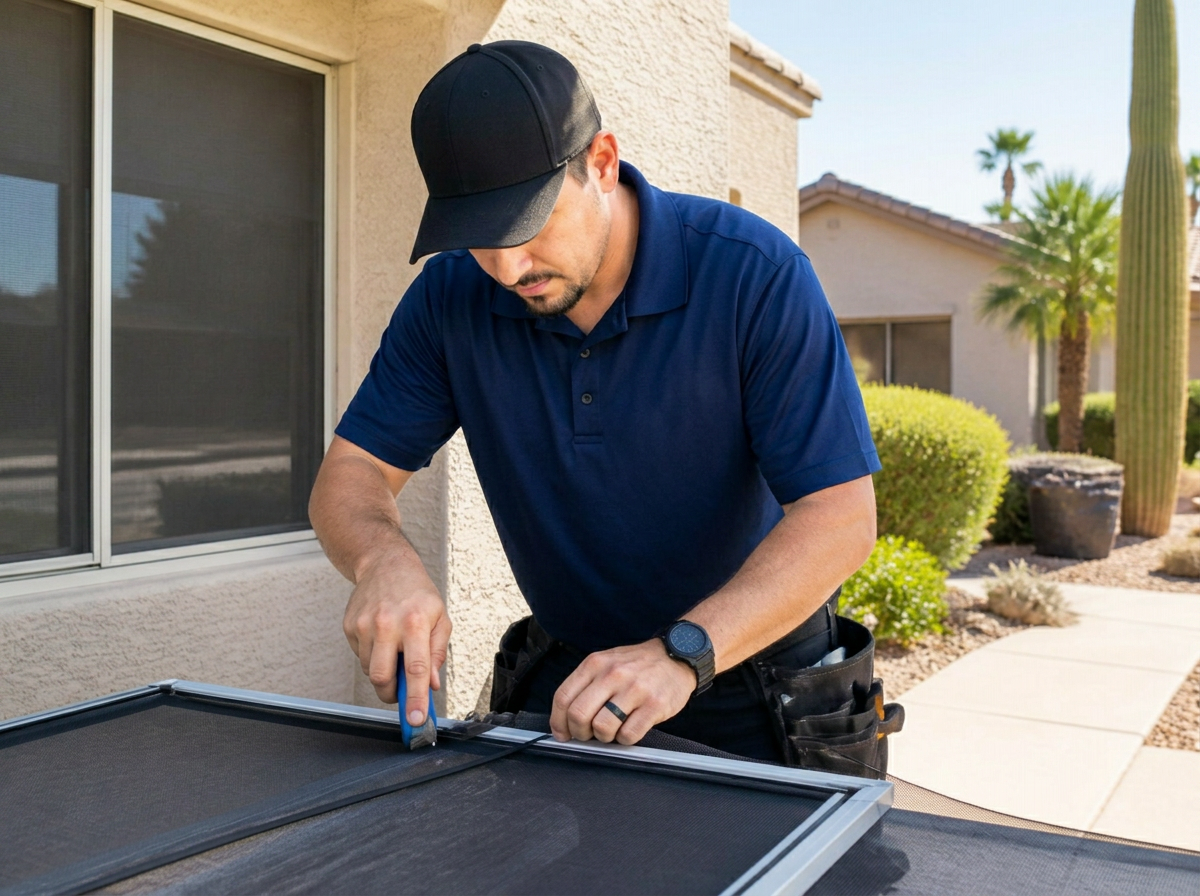
With all the spline installed, your screen should be perfectly tight. The last step is to trim the excess mesh. Grab that utility knife and carefully run the blade along the outside edge of the spline. Make sure to angle the knife away from your new screen to avoid any heartbreaking, last-minute slips.
And remember, a brand-new screen won't do much good on a damaged frame. If you notice any bends or cracks, you'll want to look into a window screen frame replacement to make sure your hard work lasts.
Troubleshooting Common Installation Mistakes

Even when you follow every step perfectly, a DIY screen replacement can throw you a curveball. It happens to everyone. A screen that looks great on the workbench suddenly looks wavy in the window, or the spline just refuses to cooperate. Don't throw your tools across the yard just yet—most of these hiccups are common and surprisingly easy to fix.
One of the most frequent frustrations I see is a screen that ends up wrinkled or sagging. This is almost always a tension issue. If you’ve got waves or loose spots, it means the screen wasn’t pulled tight enough when the spline went in.
Fixing a Sagging or Wrinkled Screen
The good news is you don’t have to start from scratch. The fix, while a little tedious, is straightforward. Just use a flathead screwdriver to carefully pry out the spline from the last two sides you installed. Now, pull the screen material gently but firmly across the frame to create even tension, and then re-roll the spline back into its channel.
On the flip side, if your frame is bowing inward like a banana, you’ve pulled the screen too tight. This is especially common with more flexible aluminum frames. The solution is the same: pull out the spline and try again, but this time, ease up on the tension.
The goal is to find that sweet spot—the screen should be taut and smooth, but not so tight that it’s warping the frame itself. Think of it like stretching a canvas for painting; you want it firm and flat, not strained to the breaking point.
Dealing With Stubborn Spline
Sometimes the spline is the real enemy. If you’re fighting to get it into the channel, a couple of things could be going on. First, stop and double-check that you’re using the right spline diameter. A spline that’s even a hair too thick for the channel will feel impossible to seat properly.
If the size is correct, your channel might be clogged with old dirt and debris. Clean it out with a small wire brush or the tip of a screwdriver. Also, make sure you’re using your spline roller correctly. Always use the convex (rounded) wheel first to press the mesh down into the channel, creating a perfect little groove for the spline to follow.
Here's a pro tip for uncooperative spline, particularly on a cooler day: warm it up!
- Sun-Soaking: Let the coil of spline sit in direct sunlight for about 15 minutes.
- Hairdryer Help: A quick pass with a hairdryer on low heat will make the vinyl soft and much more pliable.
The "Oops, I Cut It Too Short" Scenario
It's the moment that makes your stomach drop: you’ve made your final trim, only to realize you cut the mesh too short on one side. Before you panic, see if it’s salvageable. If the shortage is only on the very last side, you might be able to pull the spline from the opposite side and gently shift the whole screen over to gain the slack you need.
If the gap is just too big to close, there's no magic fix. You'll have to start over with a new piece of screen. I know it’s a frustrating mistake, but it's far better than leaving a gap that invites mosquitoes and flies inside.
When to Call a Professional Screen Installer
There’s a special kind of pride that comes from tackling a home project yourself. But when it comes to installing window screens, knowing your limits is key. Sometimes, calling in a professional isn't giving up—it's the smartest, safest, and even most affordable choice you can make.
Recognizing when a job is out of your league can save you a ton of frustration, not to mention wasted money on materials you might end up ruining.
Beyond the Basic Rectangle
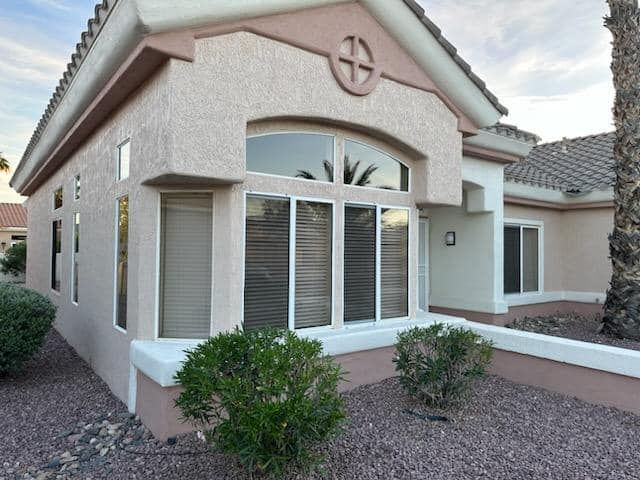
Some window screen jobs are just plain tricky and go way beyond what a standard DIY kit can handle. If your home has arched, circular, or any other kind of custom-shaped window, don't even think about winging it. These require specialized tools and an expert's touch to create a perfect template and build a frame that fits without any gaps.
Another huge factor is accessibility. Are the screens on a second or third story? Getting up on a tall, wobbly ladder to wrestle with a screen frame is a serious safety hazard. Professionals have the right safety equipment and experience to work at heights, keeping themselves and your property safe.
Specialty materials can also throw a wrench in the works. High-performance solar screens or the tough, heavy-duty pet screens are often much thicker and less flexible than standard fiberglass. Trying to roll these into the frame's channel without the right technique can easily lead to a bowed frame or a torn screen, completely defeating the purpose of the upgrade.
When you're facing a complex job, hiring a pro guarantees a flawless fit, saves you a ton of time, and ensures everything is done safely. This is especially true if you live somewhere with harsh weather, where a secure screen is your first line of defense.
The Value of Professional Expertise
There's also a layer of security that comes from hiring a bonded and insured company like Sparkle Tech Window Washing. Think about it: on average, homeowners in the U.S. replace their screens every 7-10 years. A significant 40% of them choose to hire a professional, specifically to avoid the common mistakes that plague DIY projects.
Those little mistakes can add up. A small gap in the screen might not seem like a big deal, but it can allow up to 20% more insects inside. For folks in the Phoenix Valley, where monsoon seasons damage screens at a rate 2x higher than the national average, a professional installation becomes critical. A poorly installed screen won't stand up to the wind and rain, which can lead to water damage averaging $1,200 per incident. Hiring a registered LLC with the right insurance means your investment is protected, giving you total peace of mind. You can see more on these trends by checking out residential window screen market analytics.
At the end of the day, it's about weighing the project's complexity against your own skills and the time you have. If you have a few standard-sized, ground-floor windows, go for it—it’s a great DIY project. But for anything custom, high-up, or involving specialized materials, a pro will give you a superior result that lasts.
Answering Your Window Screen Questions
When you’re gearing up to install new window screens, a few questions are bound to come up. It's only natural. We get calls about these things all the time, so I’ve pulled together the most common questions homeowners ask before they dive in.
Getting these details sorted out first will make your project go much smoother and ensure your new screens look and function perfectly for years.
What Is the Best Screen Material for a Hot, Sunny Climate?
If you live somewhere with intense sun, like we do here in the Phoenix valley, solar screens are the hands-down winner. These aren't your average bug screens. They are specifically engineered to block a huge chunk of the sun's UV rays and heat before they ever hit your glass. This can make a real difference, often trimming your cooling costs by 15-25%.
On top of the energy savings, they also cut down on that blinding afternoon glare and protect your furniture, rugs, and wood floors from fading. While they do cost more upfront than standard fiberglass mesh, the long-term savings on your energy bill usually make them a smart investment. If you need durability against both sun and pests, vinyl-coated polyester is another fantastic, tough-as-nails option.
Key Takeaway: In a hot, sunny climate, upgrading to solar screens is one of the smartest moves you can make. The immediate comfort and long-term energy savings are well worth it.
How Often Should I Replace My Window Screens?
How long your screens will last really comes down to two things: what they're made of and the weather they face every day. In a place with punishing sun and dry heat, a basic fiberglass screen can become brittle and start tearing in as little as 5-7 years.
On the other hand, sturdier materials like aluminum or vinyl-coated polyester can easily last 10-15 years, sometimes even longer if you take care of them. A good habit is to give your screens a quick once-over every year.
Here’s what to look for:
- Obvious rips, holes, or fraying along the edges.
- A brittle feel or a chalky residue when you run your hand over it.
- Major fading or discoloration.
- A bent or damaged frame that no longer sits tight in the window.
If you see any of these signs, it’s time for a replacement. A compromised screen isn't doing its job, and keeping them clean can help them last longer, too. We have a whole guide on how to clean window screens that you might find helpful.
Is It Cheaper to Rescreen an Old Frame or Buy New?
This is a great question. If your existing frames are still in good condition—not bent, cracked, or falling apart—it is almost always cheaper to rescreen them yourself. A roll of new mesh and some spline costs a fraction of what you'd pay for a brand-new, fully assembled screen.
But, if the frame itself is damaged, it’s time to buy new. You can't get a tight, effective screen without a solid frame. For common window sizes, you can find pre-made or adjustable screen kits at most hardware stores. If you have custom-sized or odd-shaped windows, that's when calling a professional is usually the most reliable and efficient route.
Feeling a bit out of your depth or just don't want to mess with high, hard-to-reach windows? The team at Sparkle Tech Window Washing has all the right tools and expertise to handle the job for you, guaranteeing a perfect fit every time. Visit us at https://sparkletechwindowwashing.com to get your free quote.